






The Fungal Threat in Your Footwear
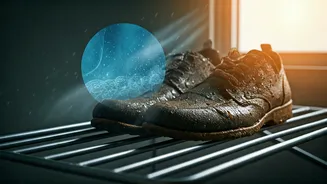
That damp, dark environment inside your wet shoes is a paradise for fungi and bacteria. Conditions like athlete's foot (tinea pedis) thrive in these warm, moist settings created by sweaty or rain-soaked footwear. When your skin is waterlogged for extended
periods, it can become wrinkly and prone to tears, blisters, and infections. Simply wearing shoes that haven't fully dried from the previous day can keep your feet in this danger zone, allowing fungi to multiply. This is why getting your shoes completely dry is the first and most critical line of defence against monsoon-related foot ailments.
Essential Prep Steps for Soaked Shoes
Before you even think about drying, a few preparatory steps are crucial. As soon as you get indoors, take off the wet shoes. If they are muddy, wipe them down first; drying shoes with dirt on them can lock in stains and odours. Next, remove the insoles and laces and let them dry separately. This opens up the shoe and allows air to circulate more freely, dramatically speeding up the drying time. Pulling back the tongue of the shoe also helps improve airflow to the interior.
Fast and Safe Drying Methods
While 'instantly' isn't realistic, these methods are the next best thing. The classic newspaper trick is effective for a reason: crumple up balls of newspaper and stuff them tightly inside your shoes. The paper absorbs moisture from the inside. For best results, change the damp newspaper every couple of hours. For a faster, more active approach, use a fan. Place your prepped shoes in front of a room fan, propping them up so the air can blow directly inside. You can even use S-hooks made from a wire hanger to hang the shoes from the fan's grille for optimal airflow. This method uses air circulation, not heat, making it safe for all shoe materials.
Drying Dangers: What to Avoid
In your rush to dry your shoes, do not turn to direct heat. Placing shoes on or near a radiator, heater, or open fire can cause irreversible damage. The intense heat can make leather crack and stiffen, melt the glue holding the shoe together, and cause rubber soles to become brittle. Using a hairdryer on a high heat setting is similarly risky and can deform the shoe's materials. Even leaving shoes in direct sunlight for too long can cause fading and make materials like leather brittle. Gentle, gradual drying is always the safest route.
Beyond the Shoe: Protecting Your Feet
Keeping your shoes dry is only half the battle. Your personal foot hygiene is just as important for preventing fungal infections. Always dry your feet thoroughly after washing, paying special attention to the areas between your toes. Consider using an over-the-counter antifungal powder on your feet to keep them dry. It’s also crucial to wear the right socks. Moisture-wicking synthetic fabrics are often better than cotton, which tends to hold moisture against the skin. Always change your socks as soon as they feel damp. Finally, try not to wear the same pair of shoes on consecutive days. Rotating between at least two pairs gives each one a full 24 hours to air out and dry completely, preventing fungus from making a permanent home in your footwear.