






The Planet's 'Blue Carbon' Banks
To understand the issue, we first need to talk about 'blue carbon'. This is the carbon captured by the world's oceans and coastal ecosystems. Ecosystems like mangrove forests, tidal marshes, and seagrass meadows are incredibly efficient at pulling carbon dioxide
from the atmosphere and locking it away in their soil and biomass. In fact, on a per-area basis, these coastal habitats can sequester and store far more carbon than terrestrial forests, making them vital allies in the fight against climate change. This carbon can remain stored for centuries or even thousands of years in the dense, waterlogged soil, forming a massive and crucial carbon sink.
When the Land Gives Way
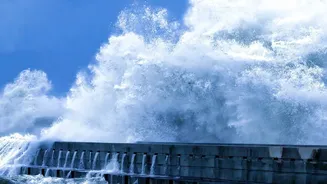
Coastal erosion, accelerated by climate change through rising sea levels and more intense storms, is a well-known threat to infrastructure and communities. India, with its extensive 7,500-kilometre coastline, is particularly vulnerable. A significant portion of this coastline is already experiencing erosion, with states like West Bengal, Kerala, and Gujarat facing severe challenges. The Sundarbans delta, a critical mangrove ecosystem, is a prime example of a fragile environment where land loss is a pressing reality. But erosion doesn't just wash away land; it attacks these vital blue carbon banks, disturbing the soil that holds ancient carbon.
A Climate Wild Card: Source or Sink?
Herein lies the critical question for researchers: What happens to all that carbon when the coast erodes? The answer is complicated and is a major focus of current climate research. On one hand, when these carbon-rich soils are disturbed and exposed to air, the organic matter can decompose, releasing carbon dioxide back into the atmosphere. If this happens on a large scale, these powerful carbon sinks could transform into significant carbon sources, creating a dangerous feedback loop that accelerates climate change. However, some research offers a different possibility. Studies, including those on Arctic permafrost coasts, suggest that a portion of the eroded organic matter is washed out to sea and quickly buried in marine sediments. In this scenario, the carbon remains locked away, moving from a coastal bank to a deep-sea vault. The net effect—whether erosion leads to a net release or a net burial of carbon—is a climate wild card, with huge implications for the accuracy of global carbon budget models.
Implications for India's Climate Strategy
For a nation like India, understanding this dynamic is not just an academic exercise. Cities like Mumbai and Chennai are already facing the dual threats of urban expansion degrading their natural coastal defences, like mangroves, and the rising threat of sea-level rise. These blue carbon ecosystems are not only vital carbon sinks but also provide crucial protection against storm surges and erosion. The degradation of these habitats not only heightens physical risks but could also be releasing stored carbon, complicating India's path to its net-zero goals. Protecting and restoring these ecosystems is now seen as a 'no-regrets' strategy, as it simultaneously boosts coastal resilience, preserves biodiversity, and helps with climate mitigation by protecting these immense carbon stores.