









The Old Ordeal: A Journey Before the Journey
Anyone living in Noida, Greater Noida, Ghaziabad, or the eastern parts of Delhi knows the drill. A flight out of Indira Gandhi International (IGI) Airport traditionally involved a cross-city trek that could rival the flight time itself. Factoring in unpredictable
traffic on the DND Flyway or along Ring Road, the journey required a buffer of at least 90 minutes to two hours, turning the start of any trip into a stressful race against time. This reliance on a single, distant airport has long been a pain point for the nearly 35 million people residing in the eastern and southeastern belts of the National Capital Region. The question wasn't just about distance, but about navigating some of the city's most congested arteries to get there.
A New Gateway on the Horizon
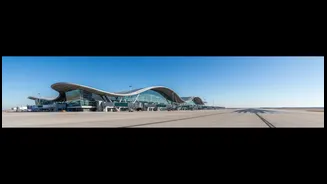
Enter the Noida International Airport (NIA) at Jewar. After years of planning and construction, commercial flights officially began on June 15, 2026, marking a historic shift in the region's aviation landscape. Located in the Gautam Buddha Nagar district, NIA is strategically positioned along the Yamuna Expressway, designed to directly serve Western Uttar Pradesh and the sprawling sub-cities of Eastern NCR. Developed by Yamuna International Airport Private Limited, a subsidiary of Zurich Airport International AG, the first phase of the airport is designed to handle 12 million passengers annually. IndiGo and Akasa Air are among the first airlines to operate from the new terminal, with an initial network that is rapidly expanding.
More Than Just an Airstrip
An airport is only as good as its accessibility, and NIA is being woven into the region's fabric with a web of multi-modal connectivity. The Yamuna Expressway already provides a direct, high-speed link. Beyond that, a 31-km greenfield expressway is under construction to connect the airport to the Delhi-Mumbai Expressway. But the game-changer for many will be the upcoming rail links. Plans are firming up for a Namo Bharat (RRTS) corridor to connect Ghaziabad directly to Jewar, promising a journey of under an hour. Furthermore, proposals aim to integrate the airport with the Delhi-Varanasi high-speed bullet train corridor, creating unprecedented connectivity and turning the airport into a true multi-modal hub.
A Ripple Effect of Growth
The impact of NIA extends far beyond passenger convenience. Large-scale infrastructure projects like this are powerful economic engines. The airport is expected to create a significant number of jobs and trigger a boom in logistics, warehousing, hospitality, and real estate in the surrounding region. Property markets in Greater Noida and along the Yamuna Expressway have already seen significant appreciation, a trend that is expected to accelerate as the airport's operations scale up. This development is not just about adding another airport; it's about creating a new economic epicentre for Uttar Pradesh, attracting investment and fostering commercial activity on a massive scale.
Complementing, Not Competing, with IGI
The arrival of NIA doesn't signal the decline of IGI. Instead, it marks the evolution of Delhi-NCR into a mature, two-airport system, similar to other major global metropolises. IGI Airport, which handled over 70 million passengers in recent years, was rapidly approaching its capacity limits. NIA is designed to absorb this overflow and cater to a geographically distinct catchment area. For the foreseeable future, IGI will remain the primary hub for those in Delhi and Gurugram, while NIA becomes the default choice for the eastern corridor. This division will ease congestion at IGI, improve overall efficiency in NCR's airspace, and provide travellers with much-needed choice. While the first month has seen a slow start as operations stabilise, the airport is already expanding its flight network, with plans to nearly triple daily services in July and commence international operations by the end of 2026.