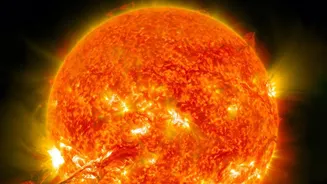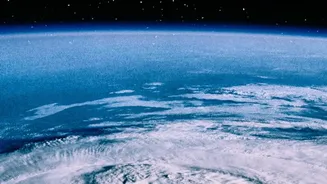




The sun gives life, but it also poses a hidden threat. Massive eruptions of charged particles, known as solar storms, can wreak havoc on our power grids. New research confirms that the danger isn't the same everywhere. Your local geology matters.
What is a Solar Storm?
A solar
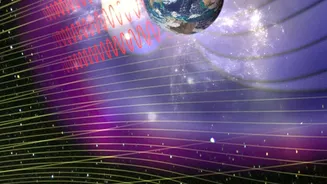
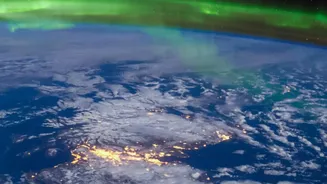
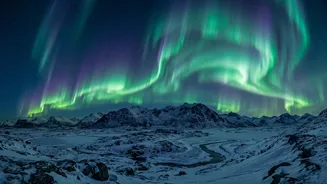
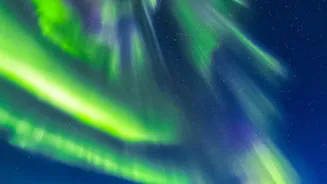
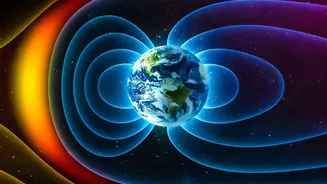
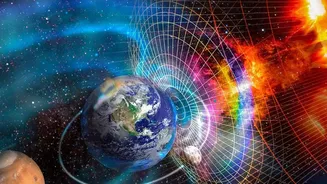
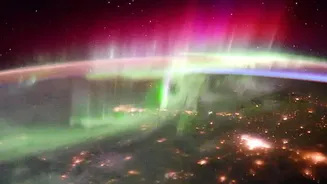
storm is a disturbance on the sun, which can emanate outward across the solar system. The most significant for Earth are coronal mass ejections (CMEs), which are massive, balloon-like bubbles of magnetised plasma and hot gas blasted from the sun's outer atmosphere. These clouds of particles can travel at speeds up to nearly 7 million miles per hour. If a CME is aimed at Earth, it can interact with our planet's protective magnetic field, causing a geomagnetic storm. While these events can create beautiful auroras, they can also induce powerful electric currents on the ground that our infrastructure is not designed to handle.
How Storms Threaten the Grid
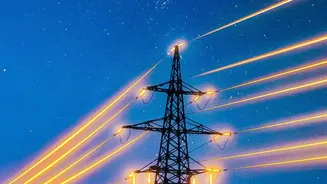
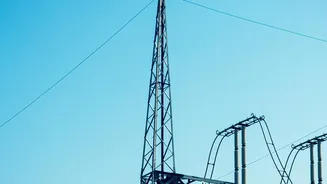
The primary threat to power grids comes from something called geomagnetically induced currents (GICs). When a geomagnetic storm disturbs Earth's magnetic field, it creates electric fields on the surface. Power grids, with their long transmission lines, act like giant antennas, picking up these currents. This quasi-direct current flows into the high-voltage transformers that are the heart of the grid. Transformers are designed for alternating current (AC), and the introduction of GICs can cause their magnetic cores to saturate, leading to overheating, damage, and even a complete meltdown. This can trigger protective relays to trip, potentially leading to cascading blackouts across a region.
The Decisive Role of the Ground Beneath You
Recent studies have underscored that the risk of GIC-related damage is not uniform across the country. The key variable is the local geology, specifically the electrical conductivity of the ground. When a geomagnetic storm induces an electric field, the resulting current will always take the path of least resistance. In areas with highly conductive ground, much of this current can safely dissipate into the earth. However, in regions with highly resistive bedrock, the current has nowhere to go. Instead of dispersing, the electrical energy is more likely to flow into the power grid, which offers a more conductive path.
Mapping the High-Risk Zones
By mapping the electrical conductivity of the Earth's crust, scientists can now create geoelectric hazard maps that pinpoint areas of greatest vulnerability. Studies from the U.S. Geological Survey and other institutions have identified that regions with resistive or complex geological structures are at higher risk. For example, areas with ancient, crystalline bedrock are generally more resistive than those with deep sedimentary basins. Coastal areas can also present a higher risk due to the sharp contrast in conductivity between seawater and land, which can amplify the induced electric fields. These findings allow for a more targeted approach to grid protection, focusing on the substations and transmission lines in the most susceptible locations.
Strengthening Our Electrical Defences
Understanding these localised risks is the first step toward mitigation. Power companies and grid operators can use this geological data to conduct more accurate risk assessments. Several technological solutions exist to protect the grid. These include installing neutral blocking devices, which are like capacitors that can block the flow of GICs into transformers. Some modern transformers are also designed to be more resistant to these currents. With advance warnings from satellites that monitor solar activity, which can be anywhere from 45 minutes to a few days, operators can also take preemptive measures. These might include altering the grid's topology by opening or closing switches to change power flow and reduce the strain on the most vulnerable components.