



The Scientific Payoff: Why Go Back?
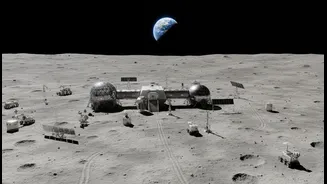
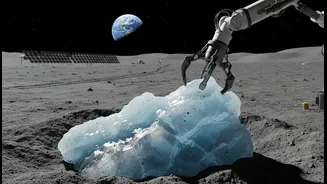
Returning to the Moon isn't just about planting a flag; it's about establishing a permanent scientific outpost. The primary location for the proposed Artemis Base Camp is the lunar South Pole, chosen for a crucial reason: water ice. This ice, hidden in permanently
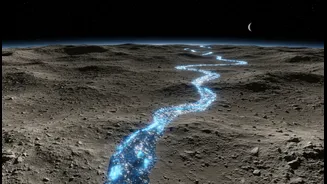
shadowed craters, could be mined and converted into drinking water, breathable air, and even rocket fuel. This concept, known as In-Situ Resource Utilization (ISRU), is a game-changer, potentially making long-term missions more sustainable and affordable by reducing the supplies launched from Earth. Beyond resource extraction, the Moon is a 4.5-billion-year-old time capsule. Its surface, untouched by the erosion that erases history on Earth, holds clues to the formation of our solar system. Astronauts could investigate lunar geology, analyze ancient rocks, and potentially find materials from the early Earth, blasted to the Moon by asteroid impacts billions of years ago. The base would also serve as a unique platform for astronomy and physics, and a crucial testing ground for understanding the long-term effects of low gravity and radiation on the human body, essential knowledge for an eventual journey to Mars.
The Unavoidable Risks: A Hostile Environment
Life on the Moon would be far from a walk in the park. The lunar environment is one of the harshest imaginable. With no atmosphere or magnetic field, astronauts would be exposed to dangerous levels of space radiation from solar flares and cosmic rays, requiring habitats to be shielded, possibly by being buried under several meters of lunar soil (regolith). Then there's the lunar dust. This isn't like sand on a beach; it's a fine, abrasive powder of sharp, electrostatically charged particles. During the Apollo missions, this dust damaged spacesuits, clogged mechanisms, and caused respiratory irritation. Over long durations, it could pose a severe threat to both equipment and human health. The extreme temperature swings, from scorching highs of 127°C to freezing lows of -173°C, demand robust power and life support systems. Finally, the psychological toll of living in a small, confined space so far from home cannot be underestimated, adding another layer of complexity to ensuring crew health and mission success.
The Technology: Building a Lunar Home
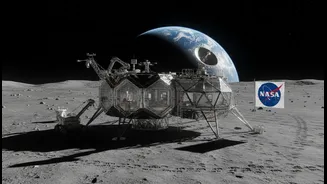
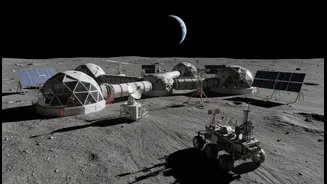
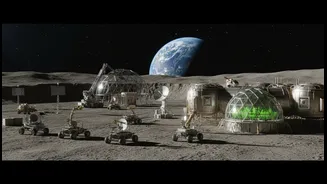
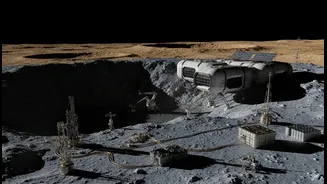
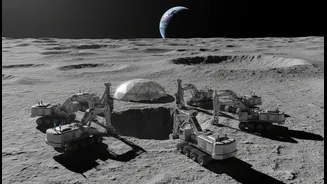
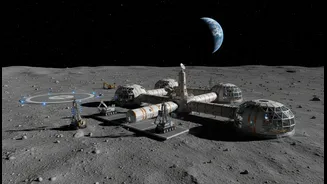
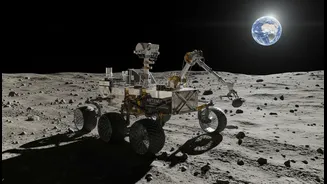
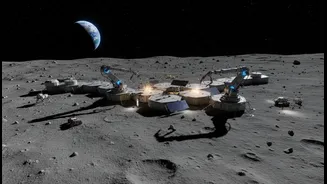
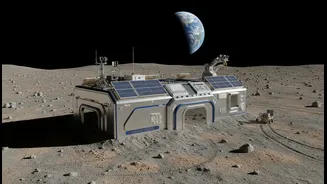
Establishing a permanent presence requires a new generation of technology. The Artemis Base Camp concept includes several core elements: a foundation surface habitat for short stays, a pressurized rover or 'camper van' for long-range exploration, and an unpressurized Lunar Terrain Vehicle (LTV) for local transport. Power is a fundamental challenge. While initial missions will rely on solar panels, the long, two-week lunar night makes them insufficient for a permanent base. The long-term solution is likely a fission surface power system—a small nuclear reactor capable of providing continuous power regardless of sunlight. Construction itself is another hurdle. The cost of launching materials from Earth is astronomical, estimated at around $1 million per kilogram. To overcome this, NASA and its commercial partners are developing technologies to 3D print structures like landing pads and habitats using the local regolith, essentially turning moon dust into concrete. This involves advanced robotics and laser sintering, where lasers fuse the dust into solid forms.
The Practical Next Steps: A Phased Approach
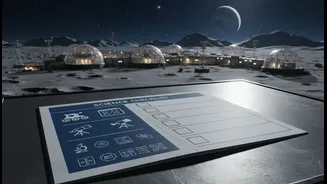
NASA's plan for the Moon Base is not a single leap, but a gradual, phased approach. The current phase, running through approximately 2029, focuses on robotic missions, technology demonstrations, and scouting the South Pole region. This involves numerous landings by commercial partners to deliver scientific payloads and test key systems. The second phase, from roughly 2029 to 2032, would see the beginning of semi-permanent infrastructure and early human habitation missions. Astronauts would stay for short durations, using landers and early mobility platforms to explore and set up initial systems. The final phase, from 2032 onwards, aims for a sustained human presence. This would involve routine crew rotations, an expanded habitat, and continuous surface activity supported by a fully operational power grid and rovers. The Artemis missions are the backbone of this plan, with each flight building on the last to deliver the components and crews needed to turn the blueprint into a reality.