



A Telescope the Size of Continents
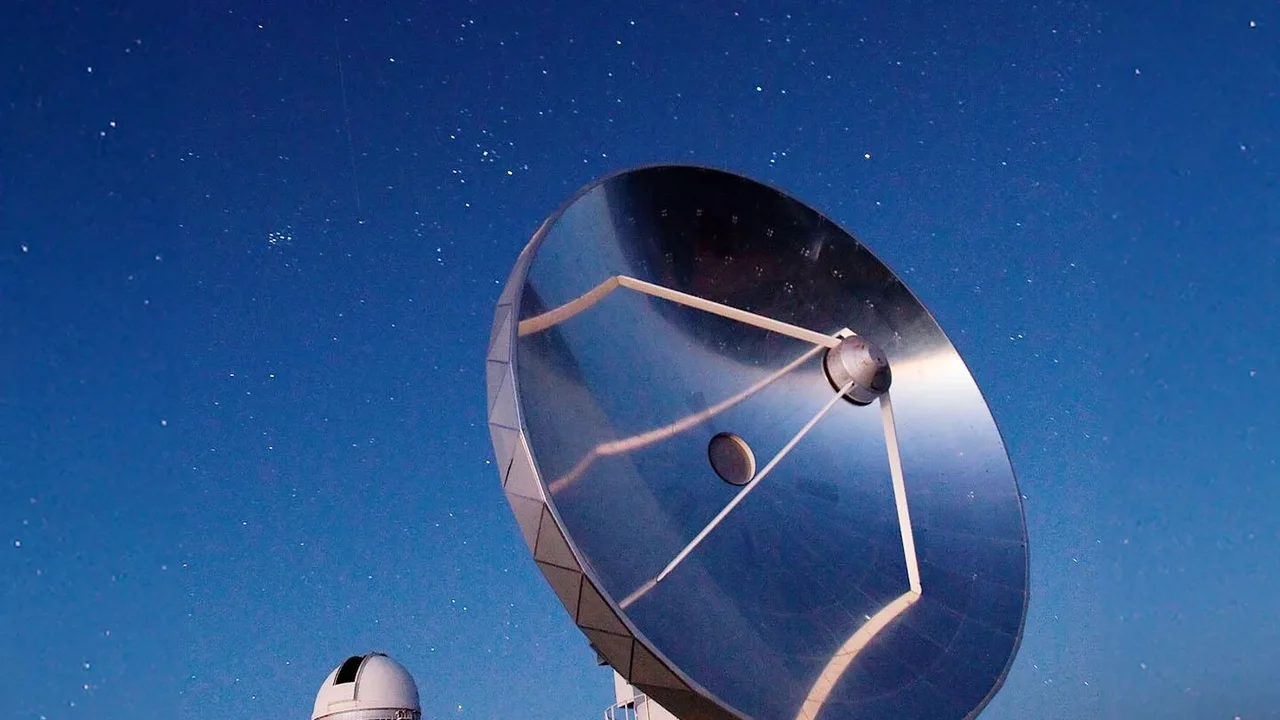
The Square Kilometre Array isn't a single telescope but a global network of thousands of radio antennas spread across two continents. The project is so vast it's split into two main sites chosen for their remoteness and 'radio quietness', far from the electronic
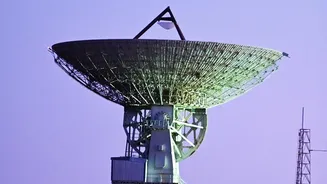
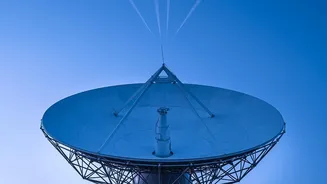
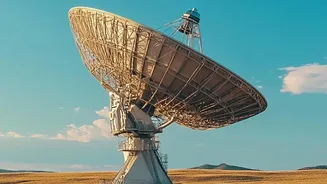
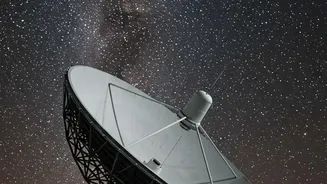
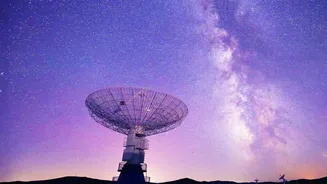
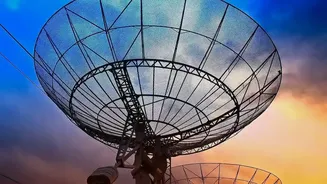
noise of human civilisation. In South Africa's Karoo desert, 197 traditional satellite-style dishes will make up the 'SKA-Mid' telescope. Meanwhile, in the sparse outback of Western Australia, 131,072 smaller, tree-like antennas will form the 'SKA-Low' telescope. These two sites, along with a global headquarters at the UK's Jodrell Bank Observatory, will work together, using a technique called interferometry to function as one gigantic, planet-sized eye on the universe. Construction is well underway, with precursor telescopes already making discoveries and full science operations expected to ramp up through the end of the decade.
Hunting for the First Light
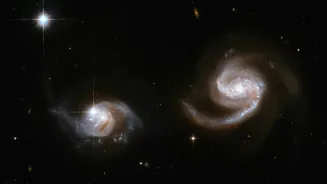
The observatory's primary mission is to solve one of the biggest mysteries in cosmology: exploring the 'Cosmic Dawn'. This refers to a period roughly 50 million to one billion years after the Big Bang when the universe emerged from a cosmic 'dark age'. After the Big Bang, the universe was a dark, dense fog of neutral hydrogen gas. The Cosmic Dawn began when gravity slowly pulled this matter together to form the very first stars and galaxies. Their brilliant light began to shine, ending the darkness and kicking off a process called the 'Epoch of Reionization', which made the universe transparent as it is today. The SKA telescopes are specifically designed to detect the faint, ancient radio signals from the neutral hydrogen that dominated this era, allowing scientists to create a 3D map of how the universe lit up.
How to See 13 Billion Years Ago
Seeing back in time is possible because light, even radio waves, takes time to travel across the vastness of space. When we look at the Sun, we see it as it was eight minutes ago. When the SKA looks at the Cosmic Dawn, it's capturing radio waves that have travelled for over 13 billion years to reach us. These signals are incredibly faint and have been stretched to longer, lower-frequency wavelengths as the universe has expanded—a phenomenon known as 'redshift'. This is why the SKA requires such extreme sensitivity and why the SKA-Low array in Australia, which focuses on low-frequency radio waves, is crucial for this research. The challenge is immense, as these ancient signals are drowned out by radio noise from our own galaxy that is thousands of times brighter, requiring incredibly sophisticated data processing to isolate the whisper from the past.
India's Pivotal Role in the Quest
This monumental undertaking is a collaboration between 16 countries, and India is a key player. India became a full member of the SKA Organisation, and its involvement is coordinated by the National Centre for Radio Astrophysics (NCRA) in Pune, which leads a consortium of over 20 institutions. Indian scientists and engineers have played a significant role from the beginning, including leading the design of the Telescope Manager—the complex software system that acts as the 'brain and nervous system' for the entire observatory. With a financial commitment of ₹1250 crore, India is also making major contributions to digital signal processing hardware and data processing software. This involvement not only places Indian scientists at the forefront of astronomical discovery but also drives innovation in the nation's software and technology industries.