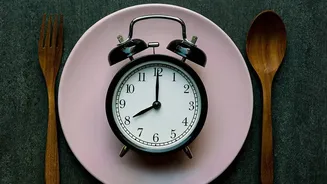








The Body’s 24-Hour Clock
Deep inside our bodies, a master timekeeper known as the circadian rhythm governs everything from our sleep-wake cycles to our metabolism. This internal 24-hour clock is programmed to perform certain functions at optimal times of day. For instance, our bodies are
naturally more prepared to process food and use energy during daylight hours. When we eat, our body releases insulin to help shuttle glucose (sugar) from the bloodstream into our cells for energy. The efficiency of this process isn't constant; it changes throughout the day, guided by our circadian clock.
How Irregular Meals Cause Disruption
Modern life often involves skipping breakfast, working late, and eating dinner just before bed. This erratic schedule can create a conflict between our behaviours and our internal clock, a state known as 'circadian misalignment'. When you eat at odd hours, especially late at night, you're essentially asking your body to perform a daytime task during its scheduled downtime. Research shows that our insulin sensitivity—how well our cells respond to insulin—is naturally lower in the evening. Eating late can therefore lead to higher and more prolonged blood sugar spikes, as the body struggles to manage the glucose influx efficiently.
What the Science Reveals
Multiple studies now link irregular eating patterns to poorer metabolic health. Research has shown that eating a late dinner can result in significantly higher blood sugar levels compared to eating the same meal earlier in the day. One study found that every hour the first meal of the day was delayed was associated with higher insulin resistance. Another found that women with type 1 diabetes who had irregular mealtimes showed poorer glycemic control, while men with type 2 diabetes with the same habits were more likely to have a higher BMI. This growing body of evidence, often called chrononutrition, suggests that aligning our eating habits with our natural body clock could be a powerful tool for preventing and managing metabolic conditions like type 2 diabetes.
Practical Steps for Better Timing
The good news is that you don't need a perfect schedule to reap the benefits of meal timing. The key is consistency. Try to eat your meals at roughly the same time each day. Starting your day with a balanced breakfast is also beneficial, as studies suggest that people who eat before 8:30 a.m. tend to have lower insulin resistance. Spacing your meals four to five hours apart can also help your insulin levels return to a baseline between eating. Perhaps most importantly, aim to finish your last meal of the day at least two to three hours before you go to sleep. This gives your body ample time to digest before its metabolic processes slow down for the night, preventing the blood sugar spikes associated with late-night eating.