

The Soul of the Feast: Bhoger Khichuri
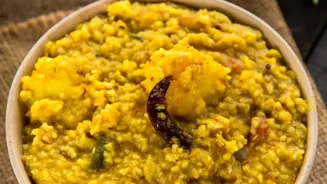
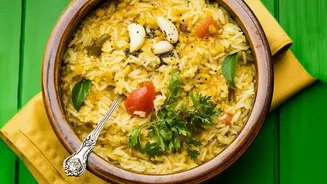
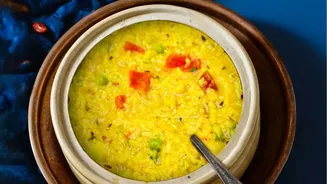
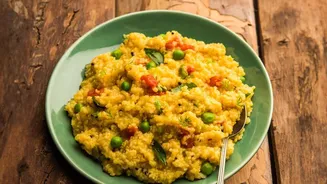
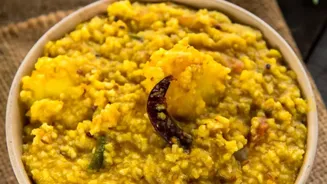
At the very heart of the Durga Puja community feast, or bhog, is a dish that radiates warmth and simplicity: bhoger khichuri. This is not just any khichuri; it is a sacred offering, prepared with devotion and specific ingredients that set it apart. Typically
made with aromatic Gobindobhog rice and roasted yellow moong dal, this version is strictly 'niramish' or vegetarian, meaning it contains no onion or garlic. The preparation itself is a ritual, cooked with ghee and a delicate blend of spices like ginger and bay leaf, often seasoned with the Bengali five-spice mix, panch phoron. Its significance is twofold. Spiritually, it's considered a pure, sattvic food fit for the gods, symbolizing a humble yet wholesome offering of the harvest. Socially, it's the great unifier. As it is distributed as 'prasad' (a blessed offering) in pandals, it brings together people from all walks of life, erasing social distinctions in a shared act of devotion and community.
The Perfect Partner: Labra's Vegetable Medley
No plate of bhoger khichuri is complete without its faithful companion, labra. This unique mixed-vegetable dish is a celebration of seasonal produce, a colourful jumble of potatoes, pumpkin, brinjal, sweet potato, radish, and more, all cooked together until they soften and their individual flavours meld into a harmonious whole. Like the khichuri, labra is also cooked without onion or garlic, seasoned with panch phoron and cooked in mustard oil, which imparts its characteristic pungent flavour. The beauty of labra lies in its symbolism. The coming together of various vegetables in one pot represents unity and harmony. Just as diverse vegetables contribute their unique tastes and textures to create a single, delicious dish, Durga Puja brings together a diverse community to celebrate as one. Labra is a culinary metaphor for the spirit of the festival itself: togetherness and the beauty found in a collective whole.
A Tangy Counterpoint: The Sweet and Sour Chutney
To complete this divine trinity is the glistening, sweet, and tangy tomato chutney. Often studded with dates (khejur) and sometimes mango leather (aamshotto), this condiment acts as a perfect palate cleanser. Its vibrant flavour profile cuts through the richness of the ghee-laden khichuri and balances the earthy notes of the labra. The preparation involves cooking down ripe tomatoes with sugar or jaggery until they become jam-like, then tempering the mixture with spices like panch phoron and dried red chillies in mustard oil. This chutney is more than just a side dish; it represents the sweet conclusion to a divine meal and is an essential element that elevates the entire plate. It brings a final burst of flavour that makes the bhog experience truly unforgettable, a taste that lingers long after the meal is over.
A Meal That Nourishes Body and Soul
Together, khichuri, labra, and tomato chutney form a perfectly balanced and deeply satisfying meal. From an Ayurvedic perspective, this combination is considered wholesome and easy to digest, meant to purify both body and soul. But its importance goes far beyond nutrition. This meal is a taste of nostalgia, a reminder of childhood Pujas, and a symbol of homecoming. Preparing and sharing this bhog is an act of love and community bonding. It reinforces the idea that food is not just for sustenance but is a powerful vehicle for culture, faith, and connection. Eating bhog is an act of receiving the Goddess's blessings, a sacred tradition that nourishes devotees and strengthens the communal fabric of the festival.