





The Limits of Calorie Counting
Counting calories has long been the go-to strategy for weight management. It provides a precise, data-driven way to track energy intake. However, it's not a perfect system. Calorie logging can be time-consuming and prone to fatigue, and studies show that
many people struggle to stick with it long-term. More importantly, a calorie number doesn't tell you about nutrient density or, crucially, volume. Dining out presents a unique challenge, as restaurant meals are often significantly higher in calories than home-cooked food. While menu labeling is a helpful step, research indicates that when people are served more food, they simply eat more, often without realizing it. This is where the focus needs to shift from numbers alone to the physical amount of food on the plate.
Understanding 'Portion Distortion'
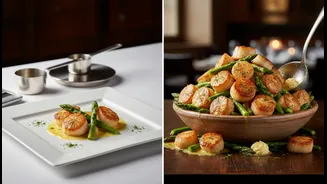
Over the past few decades, what we consider a 'normal' portion has been dramatically skewed, a phenomenon known as 'portion distortion'. Restaurant portions have grown significantly, driven by a marketing push to offer perceived value. A meal that might have seemed huge 20 years ago is now considered standard. This shift has a powerful psychological effect. We use our eyes, not just our stomachs, to gauge how much to eat. When a large plate arrives, our brain registers that as a single meal, and we tend to eat more to finish it, regardless of our actual hunger levels. This isn't a failure of willpower; it's a subconscious response to visual cues that have been reshaped by the food environment around us.
The Psychology of the Restaurant Plate
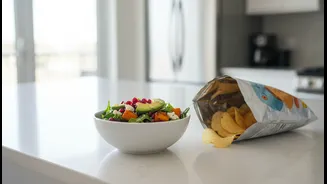
Restaurants are businesses, and they know how to appeal to our instincts. The desire to get 'value for money' is a powerful motivator. When faced with a large, appealing plate of food, our brains can even release natural pain-dulling chemicals, a process called ingestion analgesia, which allows us to keep eating past the point of fullness. This is compounded by the social aspect of dining out. It can be difficult to manage portions when you don't have control over how the food is served. Even so-called 'healthy' options like salads can become calorie-dense traps when they are super-sized and loaded with high-fat dressings, cheeses, and croutons, undoing the benefits of choosing a lighter dish.
Your Action Plan for Smart Dining
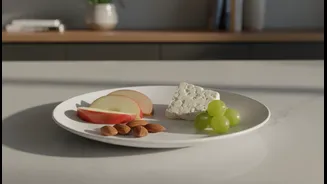
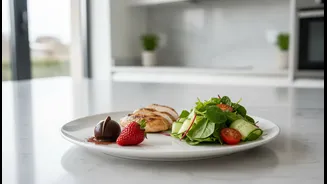
Regaining control doesn't mean giving up on eating out. It's about being strategic. One of the most effective tactics is to decide on your portion before you start eating. Ask for a takeaway box when your meal arrives and immediately put half of it away for another meal. This simple act removes the temptation to mindlessly eat what's in front of you. Another strategy is to share a main course with a friend or order an appetizer as your main dish. Don't be shy about asking for half portions, especially for carb-heavy sides like rice or naan. Using smaller plates when possible can also trick your brain into feeling more satisfied with less food. Finally, eat slowly and without distractions like your phone. It takes about 20 minutes for your brain to register fullness, so giving it time can prevent overeating.