



Listening to Spacetime's Echoes
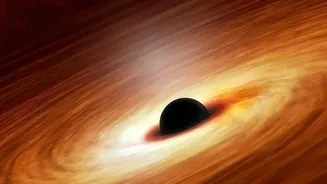
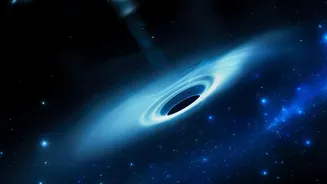
Imagine dropping a stone into a perfectly still pond. The ripples that spread out are a lot like gravitational waves. A century ago, Albert Einstein predicted that when massive objects like black holes accelerate through space, they create waves in the very
fabric of spacetime itself. For decades, this was just a theory. But in 2015, scientists made a historic breakthrough by directly detecting these waves for the first time. The signal, produced by two black holes merging over a billion years ago, traveled across the universe to finally nudge incredibly sensitive detectors here on Earth. This discovery didn't just prove Einstein right; it gave humanity a completely new way to observe the universe, opening the era of gravitational-wave astronomy.
The Ultimate Cosmic Collision Detectors
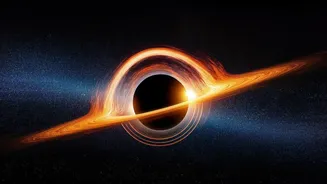
You can't see gravitational waves with a telescope. Instead, scientists use instruments called interferometers. The premier observatories are the Laser Interferometer Gravitational-wave Observatory (LIGO) in the United States, and its partners Virgo in Italy and KAGRA in Japan. These L-shaped facilities shoot lasers down multi-kilometer-long tunnels. When a gravitational wave passes through, it infinitesimally stretches and squeezes spacetime, changing the distance the lasers travel by less than the width of a proton. By measuring these impossibly small changes, scientists can reconstruct the cosmic event that created the waves, such as the violent inspiral and merger of two black holes. This global network of detectors works together to pinpoint where in the sky these cataclysms occur.
Finding a New Population of Black Holes
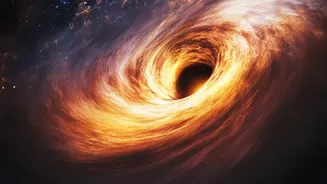
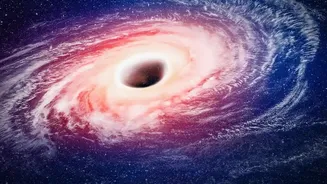
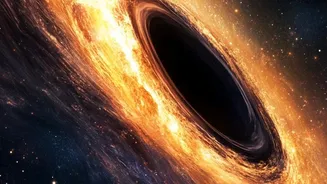
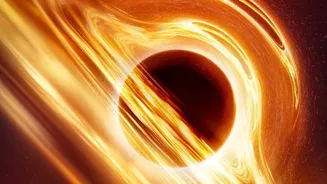
Before gravitational waves, our knowledge of black holes was limited to what we could infer from their effects on nearby stars and gas. Gravitational wave data has revealed a hidden population of black holes, including some with masses that challenge our understanding of how stars live and die. For example, detections have pointed to black holes in the so-called 'mass gap,' a range where black holes were not expected to form from the collapse of a single star. This suggests there may be other formation channels, such as hierarchical mergers where black holes themselves merge multiple times, growing larger with each collision. These findings force astrophysicists to refine their models of stellar evolution and the dynamics of dense star clusters where these exotic mergers likely happen.
Solving the Universe's Expansion Crisis
One of the biggest debates in cosmology today is the 'Hubble tension'. Essentially, different methods for measuring how fast the universe is expanding yield conflicting results. Measurements of the early universe suggest a slower expansion rate than measurements of the modern, local universe. This discrepancy could hint at new, undiscovered physics. Gravitational waves offer a completely independent way to weigh in on this debate. When a merger of neutron stars produces both gravitational waves and light, scientists can calculate the distance to the event directly from the wave signal and use the light to determine its redshift. This allows for a new, clean measurement of the Hubble constant. Recent results from these 'standard sirens' are adding crucial data points, and while not yet definitive, they are bringing us closer to resolving this fundamental cosmic puzzle.
Testing Einstein's Theory to Its Limits
Every gravitational wave detection from a black hole merger is also a high-stakes test of Einstein's theory of general relativity in the most extreme conditions imaginable. So far, Einstein's theory has passed every test with flying colors. The precise shape of the signals, from the inspiral to the final 'ringdown' as the new, larger black hole settles, has matched the predictions of relativity remarkably well. Scientists scrutinize these signals for any tiny deviation that might point to a flaw in our understanding of gravity or the existence of new physics. While no such deviations have been found, the increasing precision of detectors means we are probing the nature of gravity more deeply than ever before, strengthening the foundations of modern physics with each cataclysmic cosmic collision we observe.