
The Soul of the Meal: Bhoger Khichuri
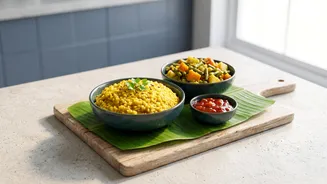
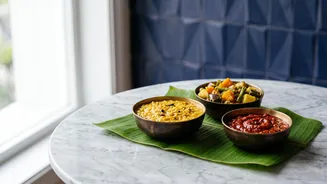
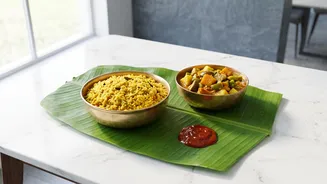
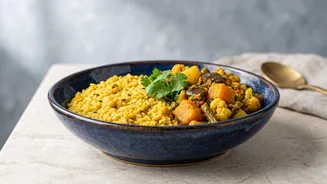
The star of any bhog platter is the khichuri, a soul-satisfying mix of rice and lentils that’s far more than just a simple porridge. The secret to its unique flavour lies in its ingredients and preparation. Traditionally, it uses Gobindobhog rice, a short-grained,
fragrant variety native to Bengal, and Sona Moong dal, which is dry roasted until it releases a nutty aroma before being cooked. This roasting step is crucial and sets it apart from everyday khichdi. The dish is strictly vegetarian, with no onions or garlic, which aligns with 'sattvic' principles for divine offerings. Instead, its flavour comes from ginger paste, whole spices like cinnamon, cloves, and bay leaves, and a generous medley of vegetables such as potatoes, cauliflower, and green peas. The final flourish of ghee and a sprinkle of Bengali garam masala elevates it to something truly divine.
The Perfect Partner: Niramish Labra
No khichuri is complete without its faithful companion, labra. This seemingly humble mixed vegetable dish is a complex and delightful medley of textures and tastes. It's a 'niramish' (vegetarian, without onion or garlic) preparation that embodies the spirit of using seasonal produce. A typical labra features a mix of vegetables like pumpkin, potatoes, brinjal, sweet potato, and radish, all chopped into similar-sized pieces to ensure even cooking. The defining characteristic of labra is the use of 'panch phoron', a Bengali five-spice blend of mustard, fennel, cumin, nigella, and fenugreek seeds. When these spices splutter in hot mustard oil, they release an aroma that is quintessentially Bengali. The pumpkin and a touch of sugar lend a subtle sweetness that perfectly balances the earthy spices and vegetables, creating a dish that is both simple and profoundly flavourful.
The Sweet and Tangy Finale: Tomato Chutney
In Bengali cuisine, the chutney course acts as a bridge between the savoury main meal and the sweet dessert. The perfect chutney to accompany khichuri and labra is a sweet and tangy tomato chutney, often enriched with dates (khejur) and mango leather (aamshotto). This vibrant red condiment provides a burst of flavour that cleanses the palate. The preparation involves slowly cooking down ripe tomatoes with a tempering of panch phoron and dried red chilli in mustard oil. Sugar is added to create a jam-like consistency, while chopped dates and aamshotto introduce a delightful chewiness and depth. Some recipes also include raisins and cashews for added texture. The result is a glossy, flavour-packed condiment that harmonises with the richness of the khichuri and the spiciness of the labra.
Bringing the Bhog Experience Home
To create an authentic bhog experience, it's about more than just the individual dishes; it's about how they come together. Begin by dry roasting the moong dal for the khichuri to get that signature nutty flavour. While the khichuri심mers, you can prepare the labra, allowing the vegetables to cook slowly in their own juices. The chutney can be made ahead of time, as its flavours often deepen over a day or two. To serve, place a generous helping of khichuri in the center of the plate, with a portion of labra on one side and a spoonful of chutney on the other. Many bhog platters also include 'bhaja' (fritters), such as Begun Bhaja (fried eggplant slices), which you can easily add. The key is to cook with devotion and serve with love, transforming a simple meal into a blessed offering.