


The Power of Bodyweight Training
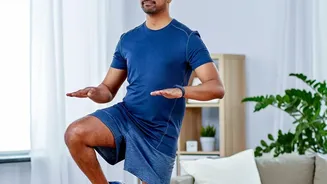
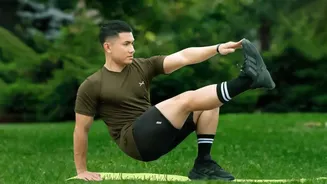
Before jumping in, it's worth understanding why bodyweight exercises are so effective. These movements are often 'functional', meaning they mimic everyday actions like pushing, pulling, and squatting. By mastering them, you not only build muscle but also
improve your balance, flexibility, and coordination, making daily tasks easier and reducing the risk of injury. The beauty of bodyweight training is its convenience and adaptability; you can do it anywhere, and as you get stronger, you can modify the exercises to keep challenging yourself. Consistency is more important than intensity when you're starting out. Aim for a few sessions a week, focusing on good form.
The Foundational Squat
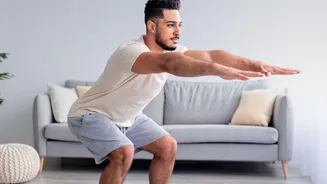
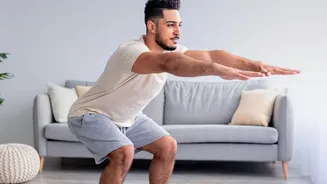
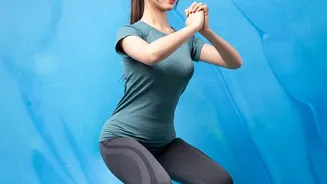
The bodyweight squat is a powerhouse exercise, targeting your quadriceps, hamstrings, and glutes. To perform it correctly, stand with your feet slightly wider than your hips and your toes pointing slightly outward. Keeping your chest up and your core engaged, push your hips back as if you're sitting in a chair. Lower yourself until your thighs are parallel to the floor, or as low as you can comfortably go while maintaining good form. Pause for a moment, then drive through your heels to return to the starting position. Avoid letting your knees collapse inward. For beginners, aiming for 10-15 repetitions for 2-3 sets is a great start.
The Classic Push-Up
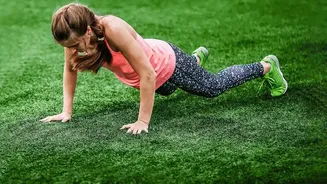
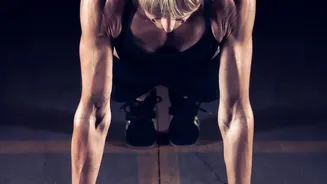
Push-ups are fundamental for building upper-body and core strength, working the chest, shoulders, and triceps. If a full push-up is too challenging, start with a modification. You can perform them on your knees or with your hands on an elevated surface like a sturdy table or wall. For any variation, begin in a plank position with your hands slightly wider than your shoulders. Brace your core to keep your body in a straight line from your head to your heels (or knees). Lower your body until your chest is close to the floor, keeping your elbows at about a 45-degree angle from your torso, then push back up.
The Stabilising Plank
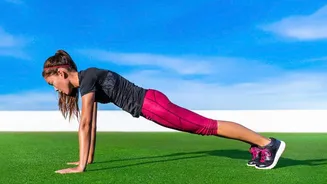
The plank is an isometric exercise, meaning you hold a position under tension. It is fantastic for developing core stability, which is crucial for almost every movement you make. To start, get into a push-up position, either on your hands or forearms. Ensure your shoulders are stacked directly over your wrists or elbows. Engage your abdominal muscles and glutes to keep your body in a rigid, straight line—avoid letting your hips sag or rise too high. Hold this position for 20-30 seconds to start, focusing on maintaining your form. As you get stronger, you can gradually increase the hold time.
The Versatile Lunge
Lunges are excellent for targeting the legs and glutes individually, which helps improve balance and correct muscle imbalances. Stand tall with your feet hip-width apart. Take a big step forward with one leg, lowering your hips until both knees are bent at a 90-degree angle. Your front knee should be directly above your ankle, and your back knee should hover just above the ground. Push off your front foot to return to the starting position, and then repeat on the other side. Aim for 10-12 lunges per leg.
The Powerful Glute Bridge
This exercise specifically targets the glutes and hamstrings, which are often underused if you spend a lot of time sitting. Lie on your back with your knees bent, feet flat on the floor about hip-width apart, and your arms at your sides. Drive through your heels and squeeze your glutes to lift your hips off the floor until your body forms a straight line from your shoulders to your knees. Pause at the top, squeezing your glutes, before slowly lowering your hips back down. This is a great move to activate your posterior chain and support lower back health.