







The Logic of Seasonal Cooking
For generations, Indian kitchens operated on a simple yet profound principle: cook what the land provides. This wasn't just about tradition; it was about peak flavour, nutrition, and cost-effectiveness. A carrot pulled from the ground in winter is sweeter
and crunchier, just as a summer mango is juicier and more fragrant. While modern supply chains make most vegetables available year-round, they can't replicate the superior taste and texture of produce eaten in its prime season. By syncing our cooking with the local harvest cycle, we not only enjoy better food but also support a more sustainable food system. This guide breaks down the Indian calendar into three main culinary seasons—Winter, Summer, and Monsoon—suggesting perfect pairings for your daily curries and stir-fries.
Winter's Bounty (November - March)
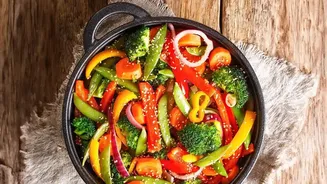
Winter in India brings a harvest of robust, hearty vegetables perfect for rich, warming dishes. Markets are flooded with vibrant root vegetables and lush leafy greens. This is the time for cauliflower, carrots, peas, spinach (palak), fenugreek (methi), and mustard greens (sarson). These vegetables lend themselves beautifully to classic North Indian curries. Think of a smoky Baingan Bharta made with winter eggplant, a creamy Palak Paneer with the freshest spinach, or a simple yet elegant Aloo Gobi. Carrots and peas can be transformed into a comforting Gajar Matar curry. For a quick weeknight meal, a stir-fry of finely chopped carrots, beans, and cauliflower with a pinch of turmeric and cumin seeds is both healthy and satisfying. The season's star is undoubtedly Sarson da Saag, a Punjabi delicacy made from mustard greens, best enjoyed with makki di roti.
Summer Staples (April - July)
As temperatures rise, the produce shifts to lighter, water-rich vegetables that help cool the body. Look for gourds of all kinds: bottle gourd (lauki), ridge gourd (turai), and bitter gourd (karela). Okra (bhindi), cluster beans, and cucumber also peak during these months. These vegetables are ideal for quick stir-fries and lighter curries. A simple Bhindi Masala or a stir-fried okra seasoned with cumin and green chillies is a summer favourite. Bottle gourd, often seen as bland, shines in dishes like Lauki ki Yakhni, a yogurt-based curry from Kashmir. In the south, gourds like snake gourd (pudalangai) and ash gourd are used in cooling 'kootu' (lentil and vegetable stews) or light 'poriyal' (stir-fries with coconut). A refreshing cucumber raita is a perfect accompaniment to any spicy summer meal.
Monsoon Delights (July - October)
The monsoon brings relief from the summer heat and a unique variety of vegetables. This is the season for corn (bhutta), pointed gourd (parwal), ivy gourd (tindora), and certain leafy greens like colocasia leaves (arbi ke patte). Corn is often roasted and enjoyed on its own, but its kernels can be used to make a delicious Masala Corn Chaat or added to vegetable stir-fries for a sweet crunch. Parwal and tindora are excellent for stir-frying; a simple dish of sliced parwal sautéed with turmeric and mustard seeds is a classic. The season is also famous for fritters. While pakoras are a beloved snack, the principle can be applied to meals by making 'koftas' (fried vegetable dumplings) from grated radish (mooli) or bottle gourd and simmering them in a spiced gravy. Khichdi, a comforting mix of rice and lentils, is a monsoon staple, often enjoyed with a simple vegetable stir-fry or pickle on the side.