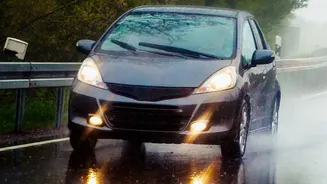







The Danger of Hydroplaning
One of the most immediate dangers in a sudden downpour is hydroplaning. This happens when a layer of water builds up between your tyres and the road surface, causing you to lose traction and control. It can feel like suddenly skidding on ice. The first
10 minutes of a storm are often the most dangerous, as the rain mixes with oil and grime on the road, creating an exceptionally slick surface. At speeds as low as 55 km/h, your tyres may not be able to channel water away fast enough, causing them to float on top of the water. If you feel your vehicle start to hydroplane, the most important thing to do is not panic. Ease your foot off the accelerator and steer straight until your tyres regain their grip. Do not slam on the brakes, as this can cause a complete loss of control.
When Visibility Vanishes in Seconds
An intense burst of rain can reduce visibility to near zero in an instant. The sheer volume of water overwhelms even the fastest wiper settings, and spray from large vehicles ahead can create a blinding wall of water. In these situations, your ability to see hazards, other cars, and lane markings is severely compromised. It is crucial to turn on your headlights—not high beams, which can reflect off the rain and worsen visibility—to help other drivers see you. The best course of action when visibility becomes dangerously low is to slow down significantly. If conditions are too severe, find a safe place to pull completely off the roadway, turn off your lights so other drivers do not follow you, and wait for the storm to pass.
Hidden Dangers: Potholes and Waterlogging
After months of monsoon activity, Indian roads are often left with a legacy of potholes and damage. A sudden downpour can quickly conceal these hazards under a sheet of water. What looks like a shallow puddle could be a deep pothole capable of damaging your tyres, suspension, or even causing you to lose control of your vehicle. Furthermore, poor drainage in urban areas can lead to rapid waterlogging on roads. It is impossible to tell how deep the water is or what debris might be hidden beneath the surface. Driving through flooded areas is risky; just a few inches of moving water can be enough to carry a car away. The safest rule is simple: if you cannot see the road surface, do not drive through the water. Turn around and find an alternate route.
The Threat of Flash Floods
September’s intense rainfall can trigger flash floods, particularly in hilly areas or regions with saturated ground. These are not slow-rising floods; they are sudden, violent surges of water that can occur with little to no warning, washing away roads and sweeping vehicles away. Studies show that flash floods are becoming more common in areas once considered safe, making it a nationwide risk. Be extremely cautious when driving near rivers or low-lying areas during a heavy downpour. Unusual sounds like cracking trees or rocks hitting each other could signal an impending landslide or flash flood. If you are caught in such a situation, abandon the vehicle and move to higher ground immediately.
Essential Safety Preparations
Preparation is your best defence. Before heading out, ensure your vehicle is ready for wet conditions. Check that your tyres have adequate tread depth—at least 3mm is recommended for wet roads—to effectively channel water and prevent hydroplaning. Worn-out tyres are a major risk factor. Replace wiper blades that leave streaks or fail to clear the windshield effectively. Also, ensure your headlights, taillights, and brake lights are all in working order to maintain visibility. When driving, slow down, double your following distance from the vehicle in front, and avoid using cruise control, as you need to be in full control of your speed and acceleration. Gentle braking and steering inputs are key to maintaining traction on slippery surfaces.