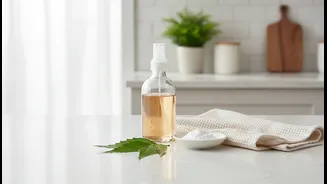









White Vinegar: The Acetic Acid All-Star
White vinegar is a powerhouse in the world of natural cleaning, thanks to its primary component, acetic acid. This acidic nature makes it incredibly effective against many of the common problems that plague Indian homes during the monsoon. It's a non-toxic
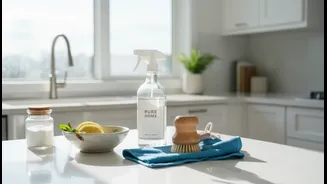
and biodegradable alternative to harsh chemical sprays. To combat the unsightly and unhealthy growth of mould and mildew on walls and other surfaces, a simple solution of equal parts white vinegar and water is your best friend. Pour the mixture into a spray bottle and apply it directly to the affected areas. Let it sit for about an hour before wiping it clean. The vinegar works to kill the fungus at its root. For musty smells that linger in damp cupboards and rooms, wiping down the interiors with this solution or simply placing a small bowl of vinegar in the corner can help neutralize odours. It's also a fantastic streak-free cleaner for windows that get grimy from the constant rain.
Baking Soda: The Gentle Deodoriser and Scrubber
Baking soda, or sodium bicarbonate, is another kitchen staple with a surprising range of cleaning applications. Its gentle abrasive quality makes it perfect for cleaning surfaces without scratching them, and its ability to absorb moisture and odours is a game-changer during the damp monsoon months. To fight dampness in wardrobes and prevent that musty smell on your clothes, place an open box or a small cloth pouch of baking soda inside. It will absorb excess moisture from the air. For cleaning kitchen counters, sinks, or even tile grout, create a paste with baking soda and a little water. Apply the paste, let it sit for a few minutes, and then scrub gently with a sponge or brush before wiping clean. This method is excellent for lifting grease and stains. You can also freshen up carpets and rugs by sprinkling baking soda over them, letting it sit for at least 15 minutes to absorb odours, and then vacuuming it up thoroughly.
Neem: The Traditional Protector
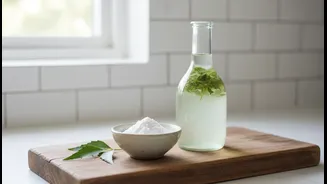
Neem has been a cornerstone of traditional Indian home remedies for centuries, and its potent properties extend to cleaning and pest control. Its natural antifungal and insect-repelling qualities make it particularly useful during the monsoon when pests and fungal growth are rampant. To keep insects like mosquitoes, ants, and silverfish at bay, you have several options. Boiling a handful of neem leaves in water creates a powerful disinfectant liquid. Once cooled, you can use this water to mop your floors or wipe down surfaces. The compounds in neem act as a natural repellent. Alternatively, a few drops of neem oil can be added to your regular mopping water. To protect clothes and stored items, place dried neem leaves in cupboards and drawers. This is a traditional method that effectively deters cloth-eating insects. For tackling mould on walls, a spray made from boiled neem water can be a great natural fungicide.
Practical Choices and Powerful Combinations
While these ingredients are powerful on their own, they can sometimes be combined for even greater effect. One of the most well-known reactions is the fizz created by mixing baking soda and vinegar. This can be used to clear slow-moving drains. Pour about half a cup of baking soda down the drain, followed by a cup of vinegar. Let it fizz and bubble for about 15 minutes, then flush with hot water. For tough stains on clothes, a paste of baking soda and vinegar can be applied before laundering. However, it's important to use these ingredients wisely. Never mix vinegar and baking soda in a closed container, as the pressure can build up. Also, be mindful of surfaces. Vinegar's acidity can damage natural stone like marble and granite, so it's best to avoid using it on those countertops. Always test any cleaning solution on a small, inconspicuous area first.