




A New Wave of Investment
In early July 2026, NASA announced a significant investment in the future of Martian robotics through its Science Transport and Robotic Innovation for Deployment and Exploration (STRIDE) initiative. The agency awarded contracts totaling approximately
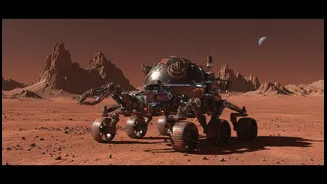
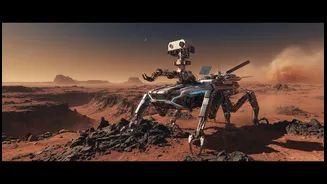
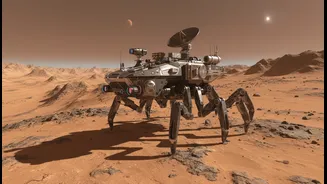
$17 million to seven private companies to develop next-generation mobility systems. These firms, including names like Intuitive Machines and AeroVironment, are tasked with creating technologies that will allow future robots to explore more challenging terrain, travel greater distances, and access scientifically valuable regions currently out of reach. This isn't just about building better wheels; it's about fundamentally rethinking how robotic exploration is done, with a focus on creating a commercial ecosystem to support NASA's goals.
From Lone Explorers to Robotic Teams
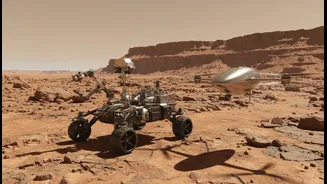
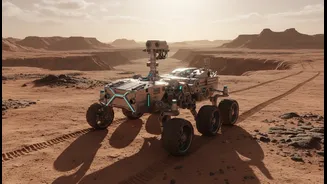
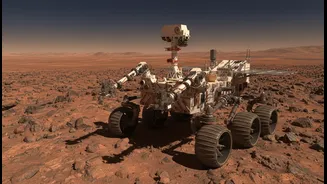
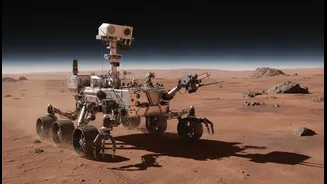
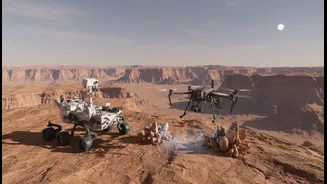
For decades, our image of Mars exploration has been defined by solitary, sophisticated rovers like Spirit, Opportunity, Curiosity, and Perseverance. These remarkable machines have acted as our remote geologists, driving alone across the red plains. However, the future NASA is investing in looks very different. A key inspiration for this new phase is the CADRE (Cooperative Autonomous Distributed Robotic Exploration) mission. Although destined for the Moon in 2026, CADRE is a crucial testbed for Mars. It involves a trio of suitcase-sized rovers that will map an area autonomously, communicating with each other and making decisions without direct commands from Earth. This model of a distributed, cooperative network is the blueprint for future Martian endeavors, where a team of robots could accomplish tasks far more complex than a single explorer ever could.
Why Teamwork Makes the Dream Work
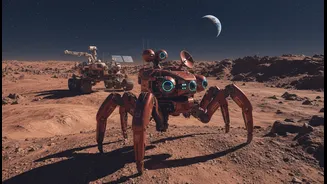
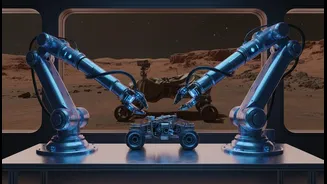
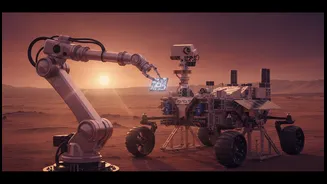
The shift toward multi-robot systems is driven by efficiency and ambition. A team of smaller, specialized robots can cover more ground and gather more diverse data than one large, general-purpose rover. For example, one robot could drill for samples while another analyzes the terrain ahead and a third provides a communication relay. This collaborative approach allows for simultaneous measurements from different locations, which is impossible for a single robot. It also builds in redundancy; if one robot in a swarm fails, the mission can continue. This new generation of autonomous systems will be able to navigate tricky landscapes like steep crater walls or subsurface caves that were too risky for their predecessors, unlocking new frontiers for scientific discovery.
Paving the Way for Human Arrival
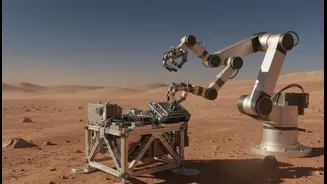
Ultimately, this enhanced robotic capability is about preparing Mars for human astronauts. Future robotic missions will do more than just scientific analysis; they will be the advance construction crew. These autonomous teams will be tasked with critical infrastructure projects, like identifying and extracting resources such as water ice, building habitats, deploying power systems, and even producing rocket fuel for the return journey. By having robots handle the dangerous and laborious setup tasks, NASA can ensure that when the first humans arrive, they will step into a prepared and partially self-sustaining environment. This robotic vanguard significantly reduces the risks for human explorers and allows them to focus on high-level research from the moment they land.