




More Than Just Tang
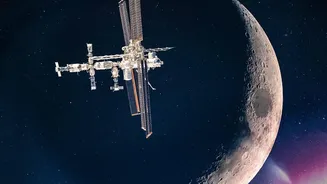
The early days of space food were about basic survival, with astronauts squeezing nutrient paste from tubes. Today, on the International Space Station (ISS), the menu is more varied, but the core challenges remain and are amplified by the prospect of longer
missions. Astronauts aren't just fighting boredom with freeze-dried meals; they're fighting physiology. In microgravity, the human body changes. Bone density can decrease, muscles atrophy, and fluid shifts can alter the sense of taste and smell. This requires a precisely calibrated diet, rich in specific nutrients like calcium, to counteract these effects. Research has shown that without these countermeasures, astronauts would face significant health risks. Furthermore, menu fatigue is a serious psychological issue; a monotonous diet can negatively affect morale and even lead to astronauts eating less, creating nutritional deficiencies.
The Mars Mission Multiplier
A trip to Mars presents these problems on an entirely new scale. A round trip could take up to three years, meaning food must have a shelf life of five years or more—far beyond the current 1.5-year capability of most space-ready meals. There's no possibility of resupply. Everything must be brought along or grown in-situ. This limitation has forced scientists to rethink the entire food production chain. The challenges are immense: protecting food from degradation due to radiation, ensuring vitamin stability over several years, and creating a varied, palatable menu to support astronauts' mental and physical health. A six-member crew on a Mars mission would require an estimated 10,000 kg of food, making in-space production not just a goal, but a necessity.
The High-Tech Cosmic Kitchen
To meet these challenges, space agencies and private companies are pioneering a new generation of food technology. On the ISS, the Veggie production system allows astronauts to grow small quantities of fresh produce like lettuce and tomatoes, providing both vital nutrients and a psychological boost. Researchers are also studying how to grow plants like alfalfa and spirulina algae, which are not only nutritious but can help recycle air and water. Looking further ahead, 3D food printing is emerging as a transformative technology. Systems are being designed that can print meals from powdered, long-lasting base ingredients—starches, proteins, and fats—and then add flavour, texture, and micronutrients via an inkjet system. This would allow for personalized nutrition on demand, tailoring meals to an individual astronaut's health needs, and could dramatically reduce waste and storage mass.
From Space to Your Plate
The incredible irony is that solving for the most remote and hostile environment imaginable is yielding profound benefits for us on Earth. The food safety standard HACCP, which is now a cornerstone of the global food industry, was originally developed by NASA to ensure astronaut food was safe. Research into algae for life support systems led to the development of a nutritional supplement containing DHA and ARA, now found in 99% of infant formulas. The drive for circular life support systems, where water and waste are fully recycled to grow food, is providing a model for sustainable urban agriculture and resource management in cities. Technologies developed for growing plants in space, from specialised LED lighting to water-efficient hydrogels, are being adapted to improve crop yields in harsh environments and disaster zones on Earth. Even the fast-cooking ovens designed to give astronauts a hot meal quickly have spun off into commercial appliances that cook food up to four times faster.