


The Zero-Gravity Problem
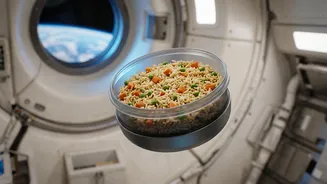
On Earth, we rarely think about gravity’s role in our meals. In the microgravity of space, however, the rules of dining are completely rewritten. A simple bread crumb doesn't fall to the floor; it floats. These floating particles can become serious hazards,
capable of clogging air vents, contaminating sensitive equipment, or even being inhaled by an astronaut. Liquids are equally problematic, as spilled droplets can drift into electrical systems and cause short circuits. This is why you won’t find fizzy drinks, salt and pepper shakers, or crumbly biscuits on a spacecraft. Food must be specially designed to be contained, with low fragmentation to prevent any stray bits from escaping.
A Taste of Home in Orbit
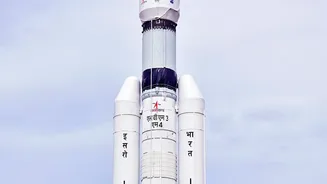
For India’s Gaganyaan mission, the Mysuru-based Defence Food Research Laboratory (DFRL) has been tasked with creating a menu that is both space-safe and distinctly Indian. The lab, which has experience developing food for the armed forces, has curated a menu featuring familiar favourites. Astronauts will be able to enjoy dishes like vegetable biryani, dal chawal, aloo paratha, sambar, and sooji halwa. The menu includes both vegetarian and non-vegetarian options like chicken katti rolls and egg rolls. These meals provide a crucial psychological boost, offering a comforting taste of home to counter the isolation and stress of space travel. To ensure the food is palatable, the meals are mildly spiced, with optional spice sachets for those who prefer more flavour.
The Science of Preparation and Packaging
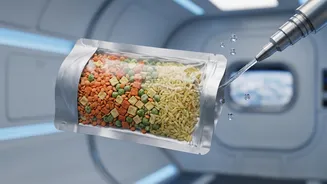
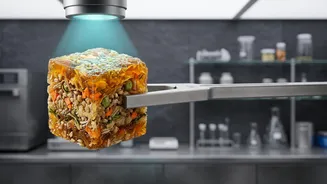
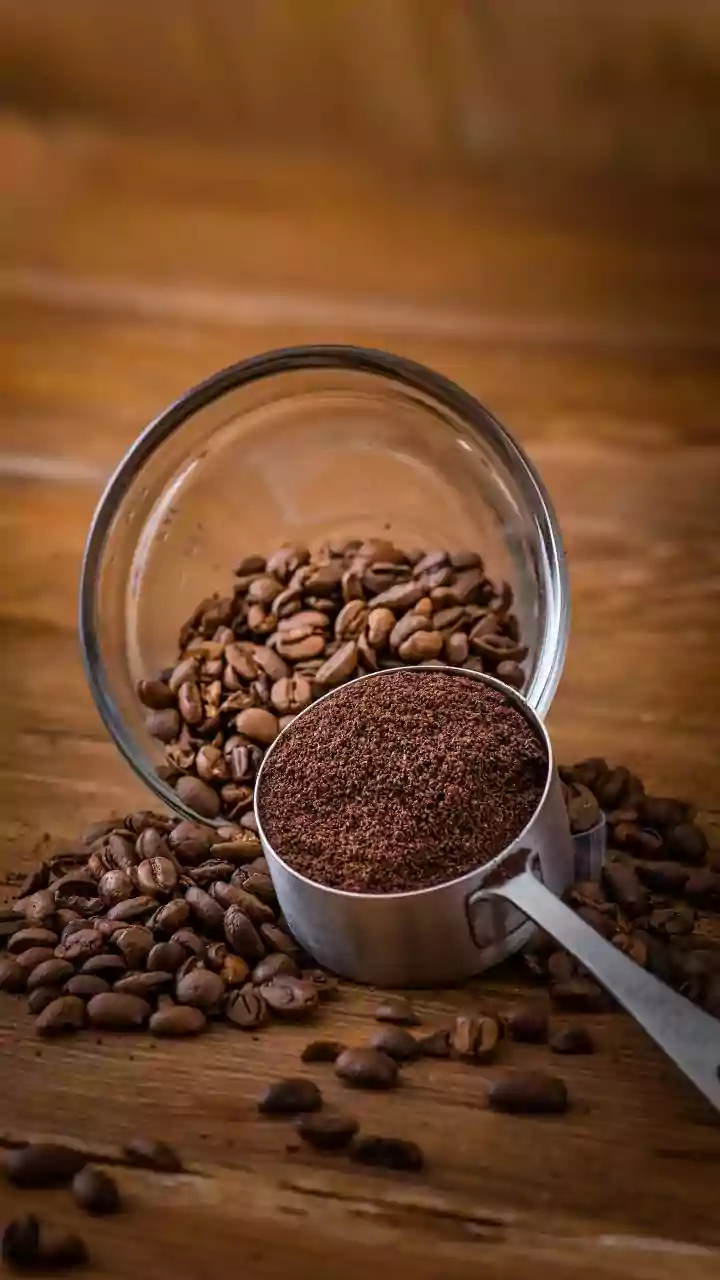
Making food last for a long mission without refrigeration requires advanced preservation techniques. Much of the food is thermostabilized (heat-treated to kill microbes) or freeze-dried. Freeze-drying involves freezing the food and then removing the water in a vacuum, making it incredibly lightweight and compact. Astronauts rehydrate these meals in their special packages by adding water. Liquids like juice and coffee are provided in powdered form inside sealed pouches, and specially designed straws prevent any liquid from escaping. Everything must be precisely engineered to be easy to handle and consume in a weightless environment.
Why Food Tastes Different in Space
One of the most common complaints from astronauts is that food tastes bland in space. This isn't because the food itself is tasteless, but due to the physiological effects of microgravity on the human body. On Earth, gravity pulls bodily fluids downwards. In space, these fluids shift upwards, causing a stuffy-nosed sensation similar to having a cold. This congestion dulls the sense of smell, which is a huge component of how we perceive flavour. To compensate for this, space food is often formulated to be spicier or more intensely flavoured than its terrestrial counterpart. Indian astronaut Shubhanshu Shukla, during a 2025 mission, recalled craving salty and spicy food while in orbit, an experience that provides valuable feedback for the Gaganyaan menu planners.
Nutrition Engineered for Space
An astronaut's diet is a critical component of mission success, directly impacting their health, strength, and cognitive performance. Each meal is carefully planned to provide a precise balance of calories, vitamins, and minerals. Astronauts need to consume between 1,900 and 3,200 calories per day, depending on their size and activity level. Because living in microgravity can lead to bone and muscle loss, their diets must be rich in calcium and Vitamin D, while sodium intake is carefully controlled. The food developed by DFRL, for example, is engineered to be nutrient-dense but low in fat and salt, and easy to digest. This ensures the crew remains in peak physical condition throughout their time in space.