



A Journey Begins in Orbit
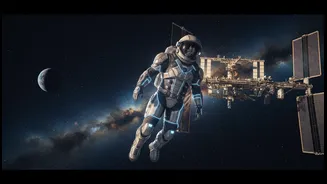
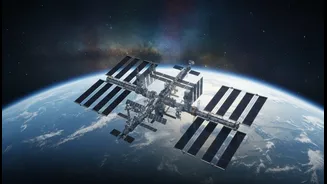
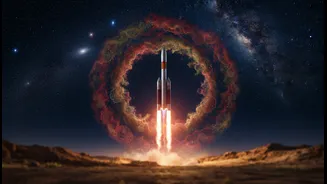
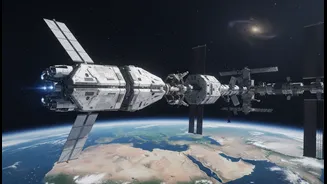
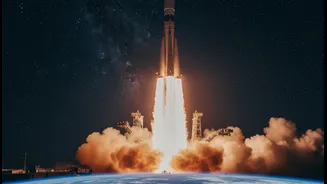
On July 14, 2026, Anil Menon, alongside two Russian cosmonauts, launched from the Baikonur Cosmodrome in Kazakhstan, docking with the International Space Station (ISS) just hours later. This marks the beginning of an ambitious eight-month residency in orbit,
his first-ever spaceflight. As a flight engineer for Expeditions 74 and 75, Menon has joined the handful of humans living and working 400 kilometres above Earth. His mission is a cornerstone of NASA’s efforts to push the boundaries of human endurance and technology, with a direct line to the goals of the Artemis program and eventual crewed missions to Mars.
From Kerala Roots to a Space Force Colonel
Menon’s journey to the stars is a story of exceptional drive and diverse talent. Born in Minnesota to a father from Kerala, India, and a Ukrainian mother, his background is as multifaceted as his career. A graduate of Harvard and Stanford, he is not only an astronaut but also a practicing emergency medicine physician and a decorated Colonel in the U.S. Space Force. His path was anything but linear; it included serving as a first responder in disasters in Haiti and Nepal, treating soldiers in Afghanistan, and working as a Rotary Scholar in India on polio vaccination efforts. Before his selection as a NASA astronaut in 2021, he was the first-ever flight surgeon at SpaceX, helping launch the company’s first human spaceflight mission.
The Doctor Is In… Space
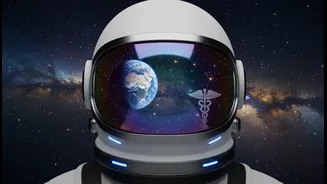
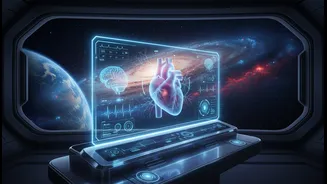
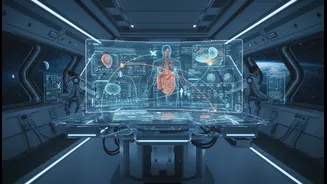
Menon’s expertise as a physician is central to his mission. Long-duration spaceflight takes a significant toll on the human body, and understanding how to mitigate these effects is the biggest hurdle for sending astronauts on multi-year journeys to Mars. Menon will serve as both a researcher and a test subject, studying how microgravity affects blood flow, vein structure, and the human body's overall physiology. His work is crucial for developing the countermeasures that will keep future deep-space explorers healthy. He is married to Anna Menon, who is also an astronaut and flew on the private Polaris Dawn mission in 2024, making them a true space-faring family.
A Laboratory Above the World
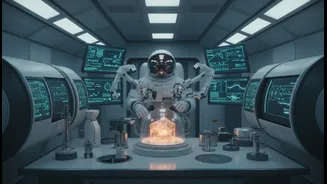
The ISS is more than just a home in orbit; it's a unique laboratory. A key part of Menon’s work involves testing technologies that are critical for medical self-sufficiency. One experiment aims to produce intravenous (IV) fluids directly from the station's own water supply—a capability that would be life-saving on a Mars mission where resupply from Earth is impossible. He will also pioneer the use of AI-assisted ultrasound, a tool that could allow astronauts to diagnose medical issues without needing a doctor to be physically present, guided by experts on the ground. These innovations are designed to make future crews more autonomous and resilient.
Paving the Path to the Red Planet
While his mission is on the ISS, its implications stretch much further. Menon is also conducting research into manufacturing semiconductor crystals in microgravity. The unique environment of space allows for the creation of more perfect crystals, which could lead to breakthroughs in high-performance computing, AI, and medical devices back on Earth and in space. Every experiment—from bioprinting tissues to studying fluid physics—is a piece of the complex puzzle of deep-space exploration. Each finding from his eight-month stay will directly inform how NASA plans and equips the Artemis generation of astronauts who will return to the Moon and take the first human steps on Mars.