


A Sweet Finding Near Our Galaxy's Heart
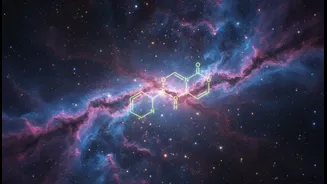
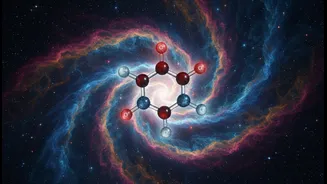
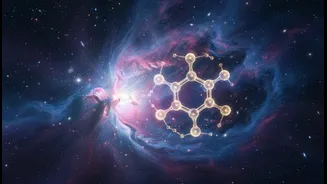
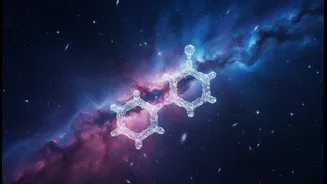
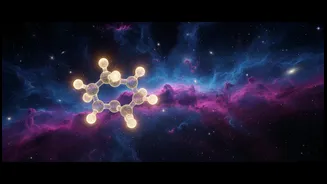
An international team of scientists has identified a four-carbon sugar called erythrulose within a vast, cold cloud of gas and dust near the center of the Milky Way. This molecular cloud, known as G+0.693-0.027, is a known hotspot for complex chemistry,
but finding a true sugar here is a major breakthrough. Using powerful radio telescopes in Spain, researchers detected the unique radio frequency signature emitted by erythrulose molecules, matching it to laboratory samples to confirm its identity. On Earth, this same sugar is found in small amounts in raspberries and is used in sunless tanning lotions, but finding it floating freely between stars is a profound first.
Why This Sugar Is a Big Deal
Sugars are fundamental to life as we know it. They form the structural backbone of RNA and DNA, the molecules that carry our genetic code, and are crucial for metabolism. For decades, scientists have puzzled over how these vital molecules could have formed on a barren, early Earth, as laboratory experiments simulating those conditions have struggled to produce them in sufficient quantities. The discovery of erythrulose in interstellar space suggests an answer: the ingredients for life may have been cooked up in space and delivered to our planet via asteroids and comets. What makes this finding even more shocking is the sugar's abundance. Researchers found that erythrulose is at least eight times more plentiful than any simpler, three-carbon sugars, which weren't detected at all. This defies the common assumption that larger molecules should be rarer in space.
A Cosmic Kitchen on Icy Dust
The surprising abundance of erythrulose points to an efficient cosmic recipe. Scientists believe the sugar isn't formed atom by atom in the gas cloud itself. Instead, the chemistry likely happens on the frigid surfaces of tiny, interstellar dust grains. Simpler molecules, like the two-carbon sugar glycolaldehyde, which is already known to be common in space, stick to these icy grains. Bombarded by cosmic radiation, these simpler ingredients can break apart and recombine into more complex structures like erythrulose. This process offers a plausible pathway for creating a large supply of prebiotic molecules in the vast, cold expanse between stars, ready to be incorporated into newly forming planetary systems.
Building on Decades of Discovery
This latest discovery is a major leap, but it stands on the shoulders of previous finds. The first simple sugar in space, glycolaldehyde, was detected back in 2000 in a star-forming region near the galactic center. This two-carbon molecule, a simpler cousin to erythrulose, was later found by the ALMA telescope in 2012, this time in the gas and dust surrounding a young, Sun-like star. Those findings proved that the basic chemical precursors to life exist in the right places—the planet-forming disks around young stars. The detection of the more complex erythrulose in the general interstellar medium now shows these ingredients are not just confined to stellar nurseries but are widespread throughout the galaxy.
From Stardust to Biology
The implications are staggering. If complex sugars can form naturally and abundantly in interstellar clouds, it strengthens the theory that Earth wasn't solely responsible for creating its own biological starter kit. Instead, our planet may have been seeded with these crucial compounds during a period of heavy bombardment by comets and asteroids billions of years ago. Sugars like ribose and glucose have already been found in meteorites and samples from the asteroid Bennu, but proving they also exist in the space between stars has been a long-sought goal. This finding is the most direct evidence yet that the raw materials for life are not a cosmic fluke but a common feature of our galaxy's chemistry.