



1. A Tectonic Collision Zone
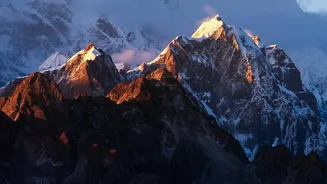
Nepal sits directly on the boundary where the Indian tectonic plate pushes north into the Eurasian plate at a rate of about 4-5 cm per year. This relentless collision is what created the Himalayas, but it also builds up enormous geological stress. When
this stress is released, it results in powerful earthquakes. The country's location on this active fault line makes seismic events a constant and devastating threat, as seen in the tragic 2015 Gorkha earthquake.
2. Steep and Fragile Terrain
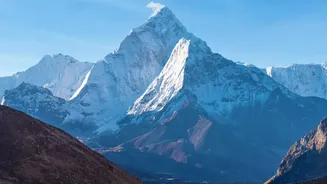
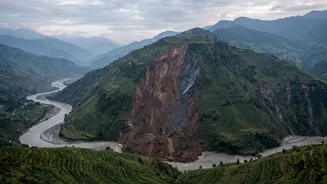
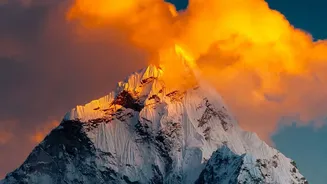
The country’s topography drops from the world's highest peaks to low-lying plains in a very short distance. This creates incredibly steep slopes. The Himalayan range is geologically young and fragile, composed of loose soil and rock that is inherently unstable. This steepness means that when a hazard like an earthquake or heavy rain occurs, the resulting landslides, avalanches, and debris flows can travel downhill at terrifying speeds, leaving little time for communities to react.
3. Intense Monsoon Rains
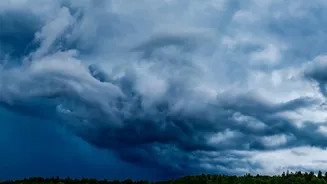
For about four months every year, from June to September, Nepal receives around 80% of its annual rainfall during the monsoon season. This intense precipitation is a primary trigger for thousands of landslides and devastating floods across the country. The heavy rains saturate the already fragile slopes, reducing friction and causing soil and rock to give way. These water-induced disasters are a recurring and deadly feature of Nepali life.
4. The Threat of GLOFs
A growing threat in the high Himalayas is the Glacial Lake Outburst Flood (GLOF). As global temperatures rise, glaciers are melting at an accelerated rate, forming large lakes dammed by unstable moraines (walls of rock and debris). These natural dams can breach suddenly, releasing millions of cubic meters of water, ice, and rock in a catastrophic flood surge. These events have destroyed entire villages, roads, and hydropower plants downstream.
5. A Web of Powerful Rivers
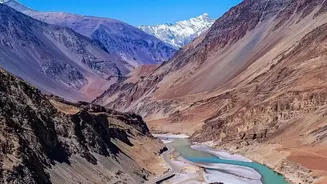
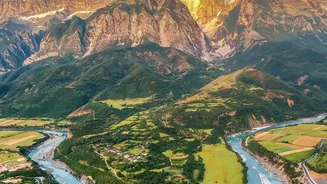
Over 6,000 rivers and streams flow from the high Himalayas down through Nepal, eventually reaching the Gangetic plains. Many of these are snow-fed and perennial. While a vital resource, these powerful river systems also pose a significant flood risk, especially during the monsoon when they swell with rainwater and glacial melt. Communities living in the low-lying Terai plains are particularly exposed to river flooding and erosion.
6. Deforestation and Land Use
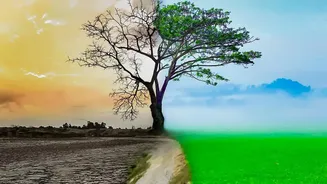
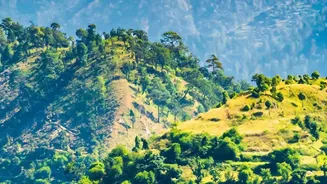
Human activities have amplified Nepal’s natural vulnerability. Widespread deforestation, often to meet demands for firewood, timber, and agricultural land, has left many hillsides bare. Tree roots play a crucial role in binding soil and absorbing excess water. Without this natural protection, slopes are far more susceptible to erosion and landslides, and runoff into rivers increases, worsening floods downstream.
7. Unplanned Urbanization
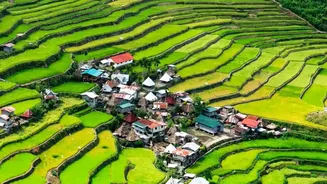
Rapid and often haphazard urbanization, particularly in the Kathmandu Valley, has put millions of people at risk. Many buildings are constructed without adhering to earthquake-resistant engineering standards. This, combined with high population density and settlements expanding into hazard-prone areas like floodplains, means that when a natural hazard strikes a city, the potential for human and economic loss is enormous.
8. The Role of Climate Change
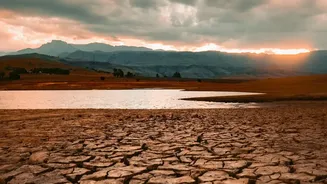
Nepal is ranked as one of the world's most vulnerable countries to climate change. Rising temperatures are accelerating the melting of glaciers, increasing the risk of GLOFs. Climate change is also making rainfall patterns more erratic and extreme, leading to more intense downpours that trigger floods and landslides. This adds another layer of unpredictability to an already hazardous environment.
9. Widespread Poverty and Exposure
Socio-economic factors are critical. According to some reports, over 80% of Nepal's population is exposed to some form of natural hazard. Poverty forces many to live in vulnerable locations, such as on unstable slopes or along riverbanks. It also limits their ability to build resilient homes and their capacity to recover after a disaster strikes, creating a vicious cycle of vulnerability and loss.
10. Cascading Hazards
In Nepal, disasters rarely happen in isolation. Experts often speak of "cascading hazards," where one event triggers a chain reaction. For example, an earthquake can cause devastating landslides and avalanches. A landslide can then block a river, creating a temporary dam that, upon bursting, causes a catastrophic flash flood downstream. This interconnectedness of risks makes disaster management exceptionally challenging.