







The Limits of a Group Chat
The typical group trip planning process is a familiar story of good intentions meeting logistical reality. It starts in a flurry of messages. Someone wants to see ancient ruins, another is dreaming of beachfront cafes, and a third just wants to find the best
street food. A group chat or email thread quickly becomes a tangled mess of links, screenshots, and opinions. The core problem is that text is a terrible format for understanding geography. It's impossible to sense the distance between two 'must-do' activities or the time it takes to get from one side of a city to another. Everyone agrees to a vague plan, but each person has a different mental map of how the day will unfold. This is the fertile ground from which most travel arguments grow.
From 'Maybe' to Map Pin
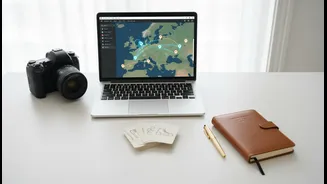
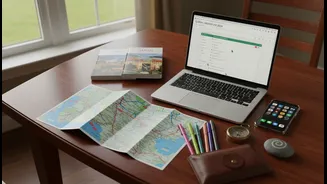
This is where a collaborative digital map changes the game. Using a tool like Google My Maps or a dedicated travel planner app like Wanderlog, the group moves from abstract desires to concrete points on a map. Ask every person in the group to drop pins for their top three priorities: the restaurant they have to try, the museum they've been dreaming of, the viewpoint they want to hike to. Suddenly, the trip's 'wish list' is no longer a jumble of words but a visual dashboard. You can color-code pins by person or by category—food, culture, nightlife—to see who wants what and where.
When Dreams Collide Geographically
The moment of truth arrives when all the pins are on the board. The map immediately reveals the trip's hidden conflicts. You might see that one friend's chosen boutique is a 45-minute drive from another's preferred hiking trail, making a single-afternoon plan impossible. Or, the group that wanted a relaxed, walkable holiday has chosen attractions scattered across opposite ends of a sprawling metropolis. These aren't personal disagreements; they are simple, immovable geographic facts. Seeing that the art museum and the famous market are an hour apart makes it obvious you can't do both before lunch. The map doesn't take sides; it just shows the reality of space and time.
A Tool for Negotiation, Not Conflict
This visual clarity transforms the conversation. Instead of arguing about the merit of one idea versus another, the group can now tackle a more practical puzzle. The question changes from "Why would you want to go there?" to "Since these are far apart, should we do them on different days, or should we pick one?" The map depersonalizes potential conflict. It externalizes the problem, turning it into a logistical challenge the group can solve together. This process often reveals natural daily itineraries, with geographically clustered activities forming a logical plan for each day. It also encourages compromise and discussion about priorities before anyone has even packed a bag.
Your Blueprint for Harmony
Getting started is simple. Choose a platform—Google My Maps is a free and powerful option that most people can access. Create a new map and share the editable link with your travel group. Set some ground rules: everyone gets to add a few non-negotiable pins, and a few 'nice-to-haves.' Use layers to organize the map, perhaps creating one layer per day or one for each major neighborhood you plan to explore. Add notes to pins with booking information or why a particular spot is important. This shared document becomes the single source of truth for the trip, ending the endless scroll through the group chat to find that one address someone shared a week ago.