


More Than Just a Bigger Lens
For years, the race for the best smartphone camera was a battle of hardware—more megapixels, larger sensors, and complex lens arrays. While hardware still matters, the frontier of mobile photography has decisively shifted to software. The secret behind
your phone’s ability to see in the dark and capture distant stars lies in a field called computational photography. Instead of relying purely on optics to gather light, this approach uses digital computation and algorithms to assemble a final image that far exceeds what the small sensor could capture on its own. It's a powerful fusion of image processing, artificial intelligence, and clever engineering that overcomes the physical limitations of a device you can slip into your jeans.
How Your Phone Photographs the Stars
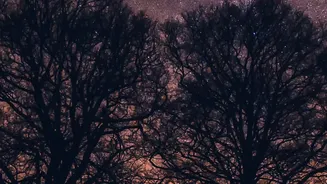
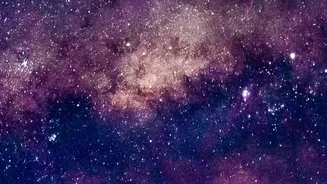
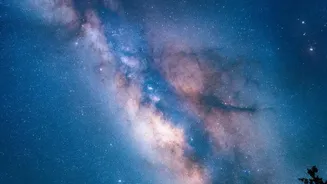
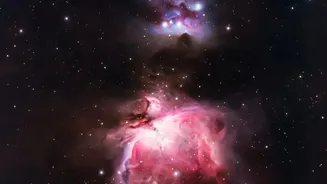
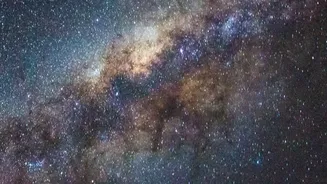
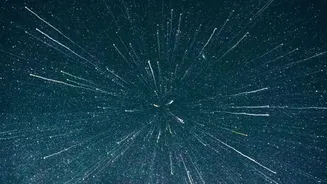
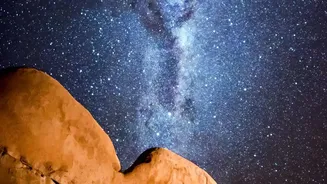
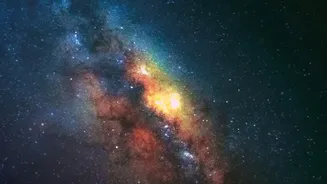
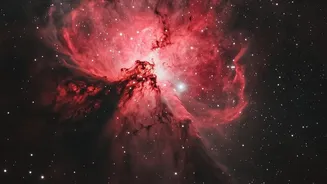
So, how does your phone turn a faint, dark sky into a vibrant starfield? The process, often automated in a dedicated 'Astrophotography' mode, is a symphony of digital techniques. When you hit the shutter button, the phone doesn't just take one picture. Instead, it captures a series of long-exposure shots over several minutes. For example, a mode might take up to 15 frames, each with an exposure time as long as 16 seconds. An internal AI then gets to work. First, it aligns all these separate images, correcting for the slight movement of the stars caused by the Earth's rotation. Next, it stacks them, averaging the data to dramatically reduce digital noise—the grainy effect common in low-light photos. The software also identifies and removes 'hot pixels' (glitches from long exposures) and uses AI to selectively enhance the sky, making stars pop without unnaturally brightening the landscape. The result is one clean, detailed, and surprisingly brilliant image, all processed in moments.
The Pioneers of Pocket Stargazing
Google's Pixel line of phones was a trailblazer in this domain, introducing a dedicated Astrophotography mode that automated the entire complex process. When the phone detects it is on a stable surface like a tripod and pointed at a dark sky, Night Sight can automatically engage its astro-specific settings, taking the guesswork out of capturing the cosmos. This move pushed competitors to innovate. Samsung responded by incorporating a powerful Astrophoto feature into its Expert RAW app, available on its flagship Galaxy devices. This mode offers users more manual control over settings and even includes a 'Sky Guide' to help identify constellations. While Apple's iPhone does not have a single-tap 'astro mode' in the same way, its advanced Night mode, when used on a tripod for its maximum exposure time (up to 30 seconds), can also capture impressive starscapes by blending multiple shots.
Managing Your Cosmic Expectations
While the results can be breathtaking, it’s important to know the limitations. This isn't a simple point-and-shoot affair. To get a good shot, you absolutely need a tripod or a completely stable surface; any handshake will ruin the long exposure. You also need to be far away from city light pollution on a clear, dark night. And patience is key, as a single shot can take four minutes or more to capture. The images, while incredible for a phone, won't rival those from a dedicated DSLR or mirrorless camera attached to a star-tracking mount. Those setups allow for much longer exposures and use significantly larger sensors. But the goal of mobile astrophotography isn't to replace professional equipment. It's to democratize the hobby, making the beauty of the night sky accessible to anyone with a modern smartphone and a little patience.