


Why Your Neck Aches
Before we dive into the poses, it's helpful to understand the source of the strain. When you sit for prolonged periods, especially with a computer monitor that isn't at eye level, you tend to adopt a forward-head posture. This posture forces the muscles
in your neck and upper back to work overtime just to hold up your head, which is surprisingly heavy. This continuous, low-level muscle contraction restricts blood flow, leading to fatigue, stiffness, and pain. Poor posture, where shoulders are rounded and the head juts forward, places significant stress on the cervical spine. Over time, this can contribute not just to stiffness but also to chronic pain and headaches. The solution is to introduce movement and correct these postural imbalances, which is where chair yoga comes in.
Seated Cat-Cow Stretch
This classic yoga movement is excellent for improving spinal mobility and releasing tension. Sit upright in your chair with both feet flat on the floor and your hands resting on your knees. As you inhale, gently arch your back, lift your chest, and look forward, allowing your shoulder blades to squeeze together. This is the 'Cow' pose. As you exhale, round your spine, tucking your chin to your chest and drawing your navel in towards your spine. This is the 'Cat' pose. Continue flowing between these two positions for 8-10 breaths, coordinating your movement with your breath. This simple exercise warms up the spine and releases tightness in the neck and upper back.
Gentle Neck Tilts and Rolls
This is a direct and effective way to target the tight muscles on the sides of your neck. Sit tall and slowly, gently tilt your right ear towards your right shoulder. Do not force it; just let the weight of your head create a natural stretch. Hold for 15-30 seconds while breathing deeply, then slowly return to the centre and repeat on the left side. Afterwards, perform some gentle neck rolls. Drop your chin to your chest and slowly roll your right ear toward your right shoulder, then roll back to the centre and over to the left side. Avoid rolling your head all the way back, as this can compress the neck. Do five slow, deliberate rolls in each direction to release accumulated tension.
Shoulder Shrugs and Rolls
Tension often travels from the neck into the shoulders. This exercise helps to release that tightness. While seated, inhale and lift your shoulders up towards your ears, as if you are trying to touch them. Hold this shrug for a moment, then exhale with a sigh as you let your shoulders drop completely. Repeat this 5-8 times to let go of tension. Next, perform shoulder rolls by slowly moving your shoulders forward, up, back, and down in a smooth, circular motion. After five rolls, reverse the direction. This movement helps to improve circulation and reduce stiffness in the upper trapezius muscles, which are often tight in desk workers.
Seated Eagle Arms Stretch
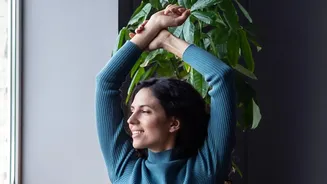
This pose provides a deep stretch for the shoulders and upper back. Extend your arms straight out in front of you. Cross your right arm over your left, then bend your elbows. You can either press the backs of your hands together or wrap your right hand around to press your palms together. Lift your elbows to shoulder height and gently press your hands away from your face to deepen the stretch between your shoulder blades. Hold for 5 deep breaths, then unwind and repeat with the left arm crossed over the right. This pose is fantastic for countering the effects of rounded shoulders.
Chin Tuck for Posture Correction
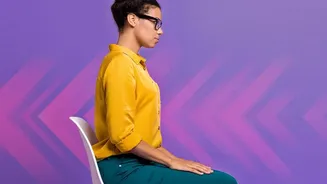
This is less of a stretch and more of a postural realignment exercise that you can do anytime. It directly counteracts forward-head posture. Sit up straight and look directly ahead. Without tilting your head down, gently draw your chin and head straight back, as if you are making a double chin. You should feel a stretch at the back of your neck. Hold this position for 5 seconds and then release. Repeat this exercise 10-15 times. It helps to strengthen the deep neck flexor muscles, which are crucial for maintaining good neck posture throughout the day.