







Understanding Your Body's Master Clock
Deep inside your brain lies the suprachiasmatic nucleus (SCN), a tiny cluster of cells that acts as your body’s master clock. This clock governs your circadian rhythm, the 24-hour cycle that tells you when to feel sleepy and when to be alert. It controls
the release of crucial hormones, including cortisol to wake you up and melatonin to help you wind down. However, this internal clock isn't perfect; it needs daily cues from the outside world to stay synchronized with the 24-hour day. The most powerful cue you have is light. When your light exposure is misaligned—too little during the day, too much at night—your entire system can be thrown off, leading to trouble falling asleep, low daytime energy, and brain fog.
The Power of Morning Sunlight
Exposing your eyes to sunlight shortly after waking is like pressing a reset button on your circadian rhythm. When the blue-spectrum light abundant in the morning sky hits specialized cells in your retinas, it sends a direct signal to your master clock. This signal does two critical things: it triggers a healthy spike in the hormone cortisol to promote daytime alertness and, just as importantly, it tells your brain to stop producing the sleep hormone melatonin. This morning light exposure essentially starts a timer for your sleep. By shutting off melatonin in the morning, it ensures the hormone will begin to rise again about 12 to 14 hours later, making you feel naturally sleepy at bedtime.
Your Morning Sunlight Prescription
Making morning light a habit is simple and free. Experts recommend getting outside within 30 to 60 minutes of waking. On a clear, sunny day, just 5 to 10 minutes is enough to send a powerful signal to your brain. If it’s overcast, aim for 15 to 20 minutes, as outdoor light is still significantly brighter and more effective than indoor lighting. For the best results, leave your sunglasses off and don't try to get your light through a window, as glass filters out some of the beneficial wavelengths. You can pair this with another morning habit, like drinking your coffee on the porch, walking the dog, or doing a few stretches outdoors. Consistency is more important than duration, so even a few minutes every day can make a big difference.
Why Total Darkness at Night is Crucial
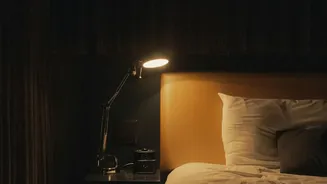
Just as morning light signals 'wake up', darkness signals 'sleep'. Exposure to light in the evening and during the night, especially from screens and indoor lighting, actively works against your sleep. Light suppresses the production of melatonin, the hormone that makes you feel sleepy. Research shows that even exposure to regular room light before bed can delay the onset of melatonin by about 90 minutes, effectively shortening your body's perceived night. Even small amounts of light from a streetlamp, a charging indicator, or a TV can be enough to disrupt melatonin production and fragment your sleep, increasing the chances of waking up at night and feeling groggy in the morning.
How to Create a Pitch-Black Sleep Sanctuary
The goal is to make your bedroom so dark you can't see your hand in front of your face. The most effective step is to block external light. Blackout curtains or blinds are excellent for this, but pay attention to the light that seeps in around the edges, top, and bottom. You can seal these gaps with adhesive strips or use layered curtains for better coverage. Next, conduct a 'light audit' of your room. Unplug non-essential electronics or cover their tiny LED indicator lights with a small piece of black electrical tape. Turn your alarm clock away from your bed or switch to a model with a dimmable display. If you can't achieve total darkness, a comfortable sleep mask can be a simple and highly effective alternative.