



A Telescope of Unprecedented Scale
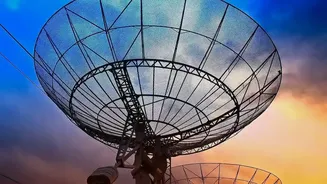
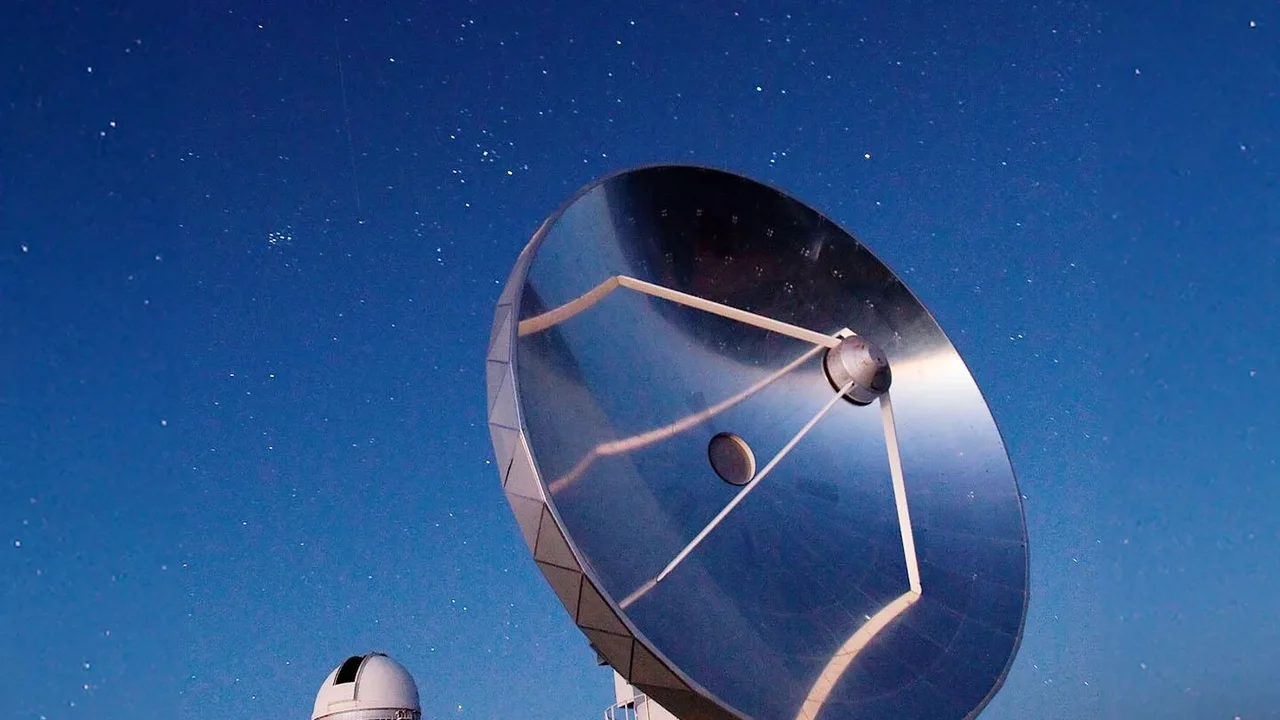
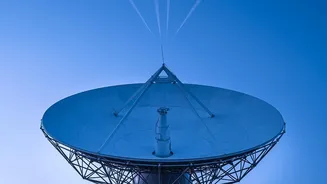
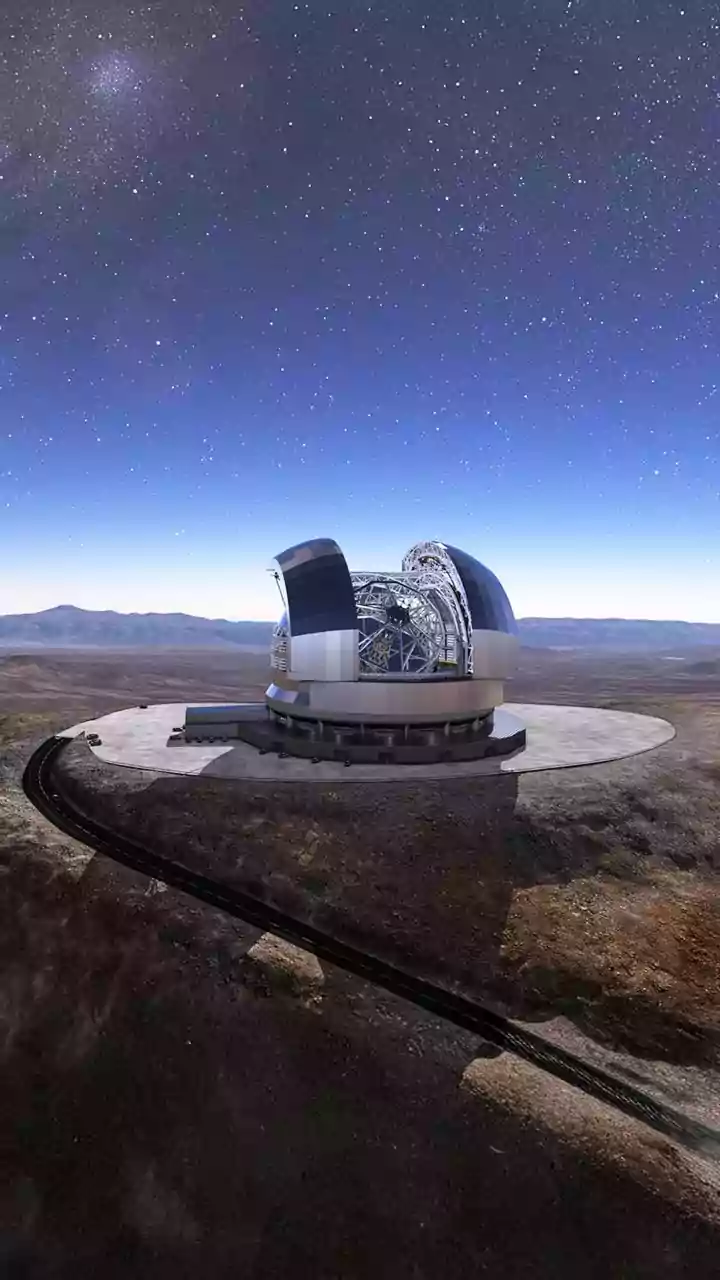
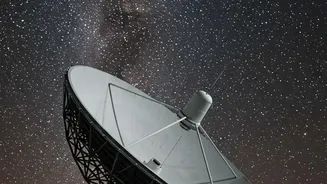
The Square Kilometre Array (SKA) isn't a single telescope but a globe-spanning network of instruments, poised to become the largest of its kind on Earth. It comprises two main sites: SKA-Mid in South Africa, featuring hundreds of traditional dish antennas,
and SKA-Low in Western Australia, which will use over 131,000 smaller, Christmas tree-like antennas. This monumental project, a collaboration of 16 countries including India, aims to create a virtual telescope with a total collecting area of one square kilometre. India is playing a crucial role, contributing ₹1,250 crore and leading the development of the complex software—the telescope's 'nervous system'—that will control and monitor observations. This effort builds on the expertise honed at India's own Giant Metrewave Radio Telescope (GMRT) near Pune, a key pathfinder facility for the SKA.
Hunting for the 'Cosmic Dawn'
The primary target for the SKA-Low telescope is an era known as the Cosmic Dawn. For millions of years after the Big Bang, the universe was a dark, starless place filled with a fog of neutral hydrogen gas. The Cosmic Dawn marks the period, beginning a few hundred million years after the Big Bang, when the very first stars and galaxies ignited. Their intense light began to burn through the hydrogen fog, ionising it and transforming the universe from a uniform, dark expanse into the structured, light-filled cosmos we see today. This transitionary period is called the Epoch of Reionisation. Observing this pivotal moment in cosmic history is one of the final frontiers in cosmology, as the signals are incredibly ancient and faint.
The Faint Whisper of Ancient Hydrogen
The 'waves' the SKA is searching for are not from the first stars themselves, but from the hydrogen gas that surrounded them. During the cosmic dark ages, neutral hydrogen atoms would occasionally emit a faint radio signal with a specific wavelength of 21 centimetres. As the first stars lit up, their radiation changed this signal before eventually ionising the hydrogen and switching it off. By mapping this 21cm signal across different stages, astronomers can create a 3D picture of the early universe. However, because the universe has expanded enormously over 13 billion years, this 21cm wavelength has been stretched, or 'redshifted', to much longer wavelengths of several metres. It is these stretched, low-frequency radio waves that the SKA-Low telescope in Australia is specifically designed to detect.
A 'Mathematical' Telescope
While the headline mentions 'dishes', the SKA-Low telescope works differently. It uses more than 130,000 fixed dipole antennas spread across 74 kilometres. These antennas have no moving parts and see the whole sky at once. The magic happens through a technique called interferometry. By precisely combining the data from thousands of individual antennas, a supercomputer acts as if it's a single, gigantic telescope with a diameter equal to the distance between the farthest antennas. This 'aperture synthesis' technique allows the telescope to achieve incredibly high resolution, picking out fine details. More antennas also increase sensitivity, crucial for detecting the whisper-faint 21cm signal, which is thousands of times weaker than the radio 'noise' from our own galaxy.
Overcoming a Universe of Noise
Detecting the Cosmic Dawn is one of the most challenging experiments in astronomy. The target signal is buried under overwhelming foreground noise from our own Milky Way, distant galaxies, and even human-made radio interference. This is why the SKA's sites in Australia and South Africa are located in some of the most remote, radio-quiet places on Earth. The immense volume of data collected by the antennas must be processed by powerful supercomputers, which use sophisticated algorithms to filter out this noise and isolate the faint cosmological signal. As of 2026, construction is well underway, with thousands of antennas already installed and initial test images produced, marking significant milestones on the journey to full operation. Scientists are running advanced simulations to prepare for the data flood and refine the techniques needed to finally unveil a picture of the universe's first light.