



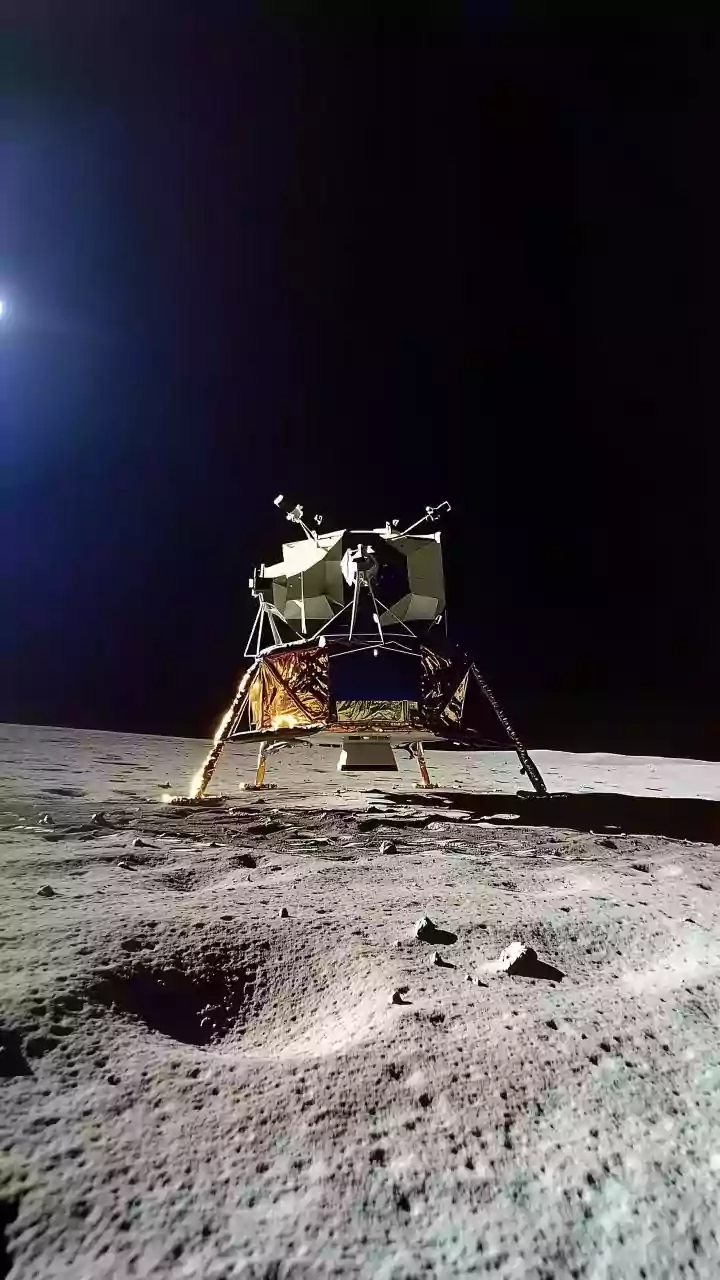
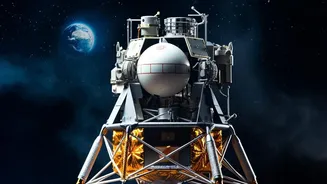


The Unforgiving Lunar Night
A night on the Moon lasts for about 14 Earth days. Without an atmosphere to hold onto heat, the surface temperature plummets dramatically when the Sun goes down, reaching as low as -173 degrees Celsius (-280 degrees Fahrenheit) near the equator and even
colder in permanently shadowed craters at the poles. This extreme cold is a death sentence for standard electronics and batteries, whose chemical processes slow down and fail in such conditions. Fluids can thicken, materials can become brittle, and sensitive scientific instruments would be destroyed without a source of warmth. For any rover to operate beyond a single lunar day, it must first survive the night.
The Classic Solution: A Nuclear Heartbeat
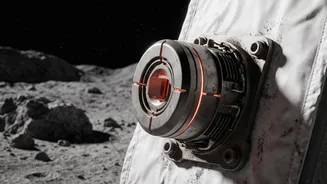
For decades, space agencies have relied on a remarkably simple and effective solution: the Radioisotope Heater Unit, or RHU. The headline's "Self-Heating Power Modules" generally refer to this category of technology. An RHU is a small, passive device that generates a steady supply of heat. It works through the natural process of radioactive decay. Inside a rugged, C-cell battery-sized casing is a small pellet of a radioactive material, typically Plutonium-238. As this material naturally decays over many years, it releases energy in the form of heat—usually about one watt per unit. This constant, gentle warmth is enough to keep a rover's critical components above their survival temperatures, without needing any electrical power.
How a 'Self-Heating' Unit Works
The genius of the RHU is its simplicity. It's not a complex machine, but a small, hot rock wrapped in a protective shell. The term "self-heating" is apt because the process is entirely internal and continuous, lasting for decades as the isotope slowly decays. These units are strategically placed inside the rover, near sensitive components like the battery, computer, and scientific instruments. The heat radiates outward, directly warming the nearby hardware. This prevents freezing and allows the rover to 'hibernate' through the long night, saving its precious battery power for when the Sun rises again. Missions like the Mars rovers Spirit and Opportunity, as well as the Voyager probes exploring deep space, have all depended on RHUs to stay alive in the cold.
Beyond Heaters: Generating Power in the Dark
A more advanced version of this technology is the Radioisotope Thermoelectric Generator (RTG). While an RHU's primary job is just to produce heat, an RTG uses that same heat from radioactive decay to generate electricity. It does this using thermocouples, which are devices that can convert a temperature difference directly into an electrical voltage. So, while RHUs keep the rover warm, RTGs can actively power its systems, allowing it to operate during the long lunar night or in permanently shadowed regions where solar panels are useless. NASA's Perseverance and Curiosity rovers on Mars use RTGs for continuous power, a technology being considered for future advanced lunar rovers.
The Future of Lunar Night Survival
The ability to survive and even operate during the lunar night is a game-changer. It transforms robotic missions from short sprints into long-duration marathons, enabling more extensive scientific research and resource prospecting. As commercial companies like Firefly Aerospace and Astrobotic join government agencies in exploring the Moon, they are developing and testing next-generation night survival technologies. Some concepts involve more efficient thermal insulation and heat storage, while others focus on new types of power systems like regenerative fuel cells or advanced RTGs. These innovations are critical for establishing a sustainable human presence on the Moon, as envisioned by programs like Artemis, where reliable power and warmth through the long night will be a matter of survival.