
Sailing on Sunlight
Imagine a vast, shimmering sheet, thinner than a human hair, catching not wind, but sunlight. This is the essence of a solar sail. The technology relies on a fundamental principle of physics: light particles, or photons, have momentum. While each individual
photon carries a minuscule push, billions upon billions of them streaming from the sun can exert a constant, gentle force on a large, reflective surface. Unlike a traditional chemical rocket that provides a powerful, short-lived burst of energy by burning heavy fuel, a solar sail provides continuous acceleration. It’s the ultimate fuel-free propulsion system; the fuel tank is 150 million kilometres away and will not run out for another few billion years. This continuous push, though slight at any given moment, adds up over time, allowing a spacecraft to achieve incredibly high speeds.
The Breakthrough: Lightweight and Efficient
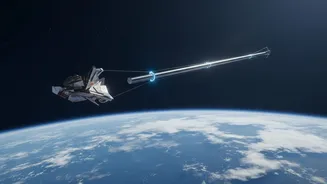
The core challenge for solar sails has always been making them large enough to catch sufficient sunlight, yet light enough to be accelerated effectively. Recent advancements, particularly in composite materials, are making this possible. NASA's Advanced Composite Solar Sail System (ACS3), which launched in April 2024, is testing new booms made from flexible polymer and carbon fibre. These booms are designed to be 75% lighter and significantly more stable under temperature changes than previous metallic designs. This allows a massive sail, about the size of a small apartment, to be packed into a satellite the size of a microwave oven. This reduction in mass and volume is a game-changer. By eliminating the need for heavy propulsion systems and bulky fuel tanks, solar sails enable the use of tiny, cost-effective spacecraft known as CubeSats for deep space missions—a task previously thought impossible for such small probes.
Targeting Our Cosmic Neighbours
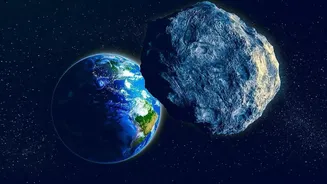
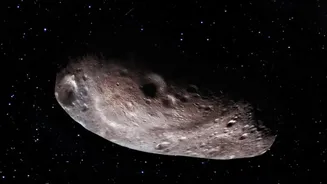
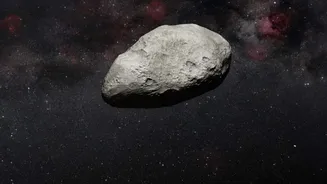
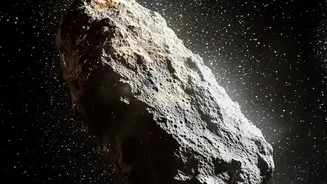
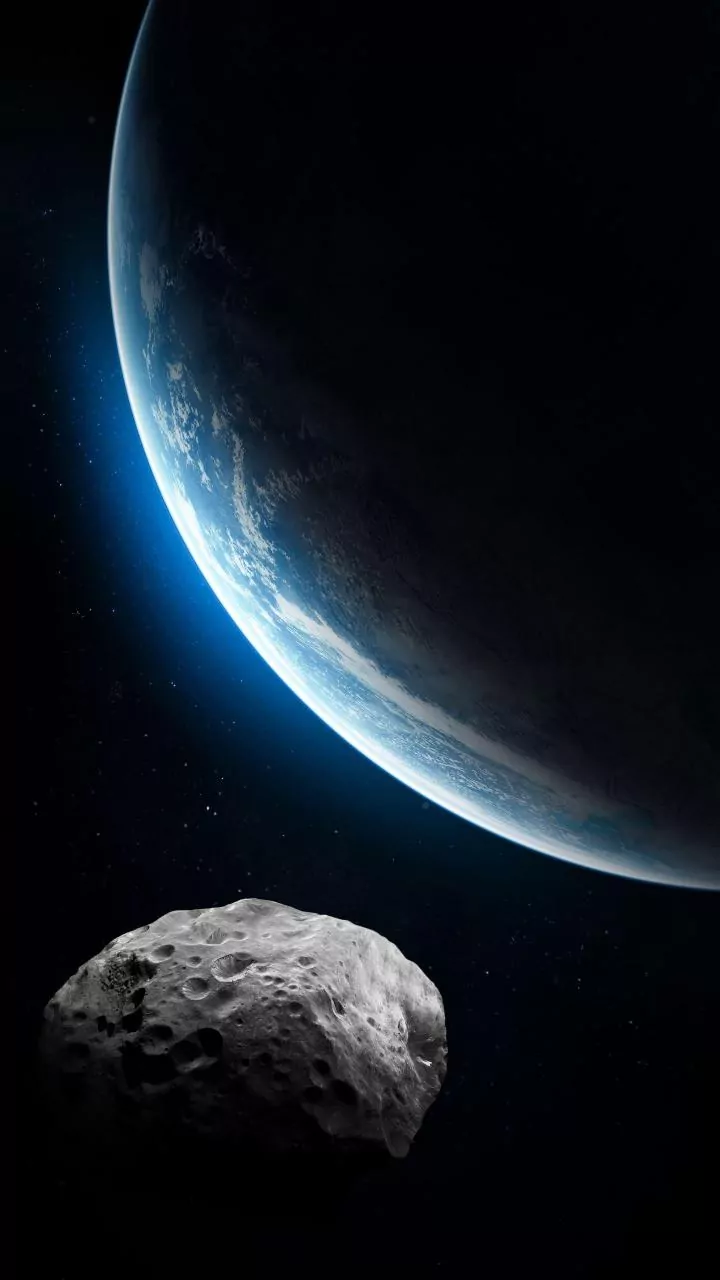
The first prime targets for this new generation of probes are Near-Earth Asteroids (NEAs). These are remnants from the formation of our solar system that orbit the sun on a path that brings them close to Earth. Exploring these objects is a major priority for scientists. They hold clues about the origins of our solar system and potentially even life. More pressingly, they represent a potential impact threat, making their study a critical part of planetary defence. NASA’s NEA Scout mission, which launched in 2022, was designed as a key test of this concept. Although contact with the spacecraft was lost after launch, its objective was to use a solar sail to reach and photograph 2020 GE, an asteroid smaller than a school bus, demonstrating a low-cost method for asteroid reconnaissance.
A New Era of Asteroid Hopping
The combination of lightweight probes and fuel-free propulsion heralds a new strategy for space exploration. Instead of launching one massive, expensive mission to a single target every decade, space agencies can now envision launching fleets of small, affordable probes. These 'swarms' could visit multiple asteroids in a single outing, gathering vast amounts of data far more efficiently. This approach drastically lowers the financial barrier to entry for deep space exploration, making it accessible to smaller countries, universities, and private companies. The technology also opens up possibilities for future applications, from stationing early-warning satellites for space weather closer to the sun to the long-term prospect of asteroid resource mining. The ability to perform slow, controlled flybys, as planned for NEA Scout, provides invaluable high-resolution imagery and data on the composition and structure of these small celestial bodies.