




Choose Your Recycled Container
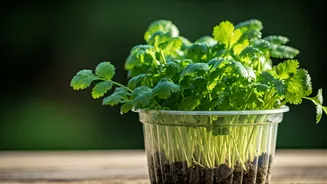
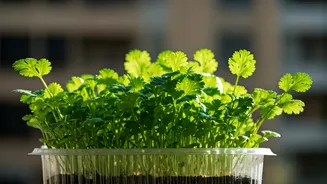
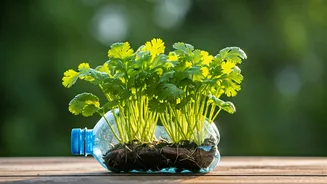
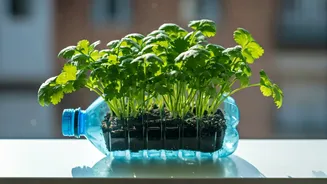
The first step is to find a suitable plastic container. Look for sturdy plastic bottles, such as large 2-litre soft drink bottles, milk jugs, or even take-away containers. These are ideal because they are readily available and would otherwise end up as waste.
[8, 14] When selecting your container, ensure it is clean and free from any chemical residues. [14] A pot with a depth of at least 8 to 10 inches is recommended to give the coriander's taproots enough space to grow. [10] This method not only reduces plastic waste but also makes gardening accessible and affordable for everyone. [8]
Prepare Your Planter for Success
Proper preparation is key to turning a plastic bottle into a healthy home for your plant. The most critical step is creating drainage holes. Without them, water will pool at the bottom, leading to root rot. [7, 18] You can easily make holes using a drill with a standard bit, or even carefully with a hammer and a screwdriver. [7, 18] For larger pots, aim for a central hole plus three or four smaller ones around the edge. [18] Once the holes are made, thoroughly wash the container with soap and water to remove any lingering contents. [14]
Create the Perfect Soil Mix
Coriander thrives in loose, well-draining soil that is rich in organic matter. [1, 10] A good mix for containers combines equal parts garden soil, cocopeat, and compost or vermicompost. [17] The compost provides essential nutrients, while cocopeat helps retain moisture without making the soil heavy or soggy. This is especially important for container gardening. [20] Before sowing, mixing in a quality compost will give the plants a strong start. Healthy soil is the foundation for growing lush, green leaves. [1]
Sowing Coriander Seeds
For better and faster germination, it's a good practice to prepare the coriander seeds. Gently crush the whole seeds to split them into two halves, as each round husk contains two seeds. [1, 17] Soaking these split seeds in water for 24 hours can further speed up germination. [17, 24] Sow the seeds about half an inch deep into the soil, spacing them a few inches apart to avoid overcrowding, which can lead to weaker plants. [5] After sowing, cover them with a thin layer of soil and water gently, preferably with a spray bottle to avoid dislodging the seeds. [17] Keep the soil consistently moist but not waterlogged. You should see seedlings emerge within 7 to 14 days. [1]
Sunlight and Watering Needs
Coriander needs a good balance of sunlight and moisture. It grows best with about four to six hours of sunlight a day. [1] In hotter climates, morning sun is preferable, as intense afternoon heat can cause the plant to 'bolt'—flower prematurely and stop producing leaves. [4, 6] Water the plant regularly, but allow the top layer of soil to feel slightly dry before watering again. [1] Consistent moisture is crucial, as drying out can stress the plant and trigger bolting. [3] Good drainage in your recycled planter will help prevent the soil from becoming soggy. [4]
Harvesting for a Continuous Supply
Once the plants are about six inches tall and have developed plenty of leaves, you can start harvesting. [24] The best way to ensure a continuous supply is to snip the outer, larger leaves first, using scissors. [1] This encourages the plant to keep producing new growth from the center. [16] Avoid pulling out the whole plant unless you are done with the crop. For an endless cycle of fresh coriander, it's a great idea to sow a new batch of seeds every two to three weeks. [10] This succession planting method ensures you'll always have fresh dhaniya ready for your kitchen. [10]