



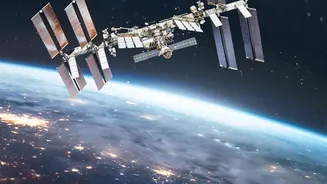
A Human-Made Star In Your Sky
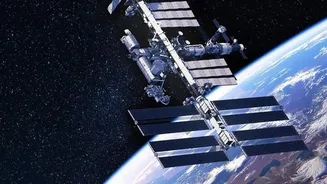
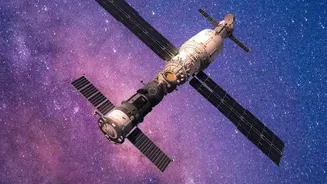
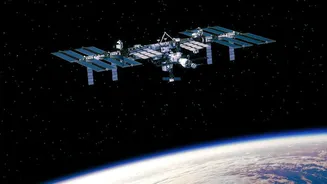
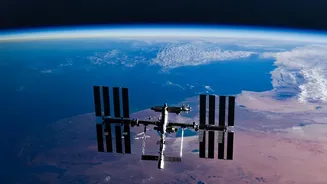
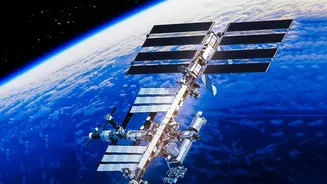
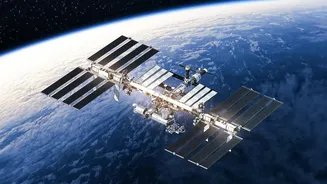
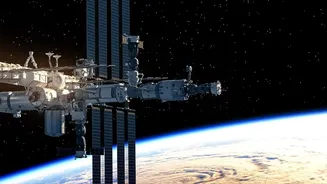
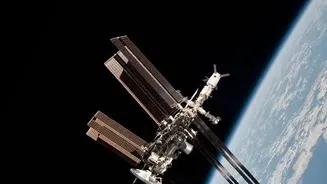
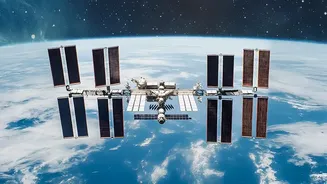
Orbiting about 400 kilometres above our heads, the International Space Station is a sprawling multinational laboratory and a home for astronauts. It zips around the Earth at a staggering 28,000 kilometres per hour, completing about 16 orbits every single
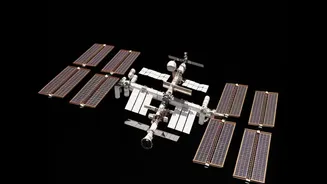
day. What makes this incredible feat of engineering visible to us on the ground is its sheer size and reflectivity. The station’s massive solar arrays and modules reflect sunlight, causing it to appear as a brilliant, steady pinpoint of light against the dusk or dawn sky. In fact, aside from the moon, it is often the brightest object in the night sky, bright enough to be seen even from the middle of a city.
Know What To Look For
First-time satellite spotters often confuse the ISS with other objects. Here’s how to tell the difference: the ISS looks like a very bright, fast-moving star that moves in a steady, straight line. Unlike an airplane, it does not have flashing or blinking lights. And unlike a star, it does not twinkle; it shines with a constant, solid light. A typical pass can last for several minutes as it travels from one horizon to the other. The best viewing times are shortly after sunset or before sunrise, when the sky is dark but the station is still high enough to catch the sun's rays.
Your Pocket Guide to the Cosmos
This is where technology makes things incredibly simple. A variety of free smartphone apps use your device's location and clock to predict exactly when and where the ISS will be visible from your specific spot on Earth. These apps provide detailed information, including the exact time a pass will start, the path it will take across your sky, its maximum height, and how bright it will appear. Many even offer push notifications to give you a heads-up a few minutes before a flyover is about to begin, so you never have to miss a chance to look up.
Top Free Apps for Spotting the Station
While many apps offer satellite tracking, a few stand out for their simplicity and robust features for beginners. NASA’s official Spot The Station app is a fantastic starting point, offering simple lists of upcoming sightings and an augmented reality (AR) view that uses your camera to show you the station’s path. Another popular choice is ISS Detector, which is highly praised for its user-friendly interface, reliable alerts, and even a weather check feature to tell you if clouds will spoil the view. For those who want more detail, Heavens-Above provides comprehensive data on the ISS and a vast catalogue of other satellites, making it a long-time favourite among amateur astronomers.
Planning Your First Sighting
Ready to give it a try? First, download an app of your choice and allow it to access your location. Check the app for a list of upcoming visible passes. Look for passes with a high 'maximum height' (closer to 90 degrees means it will pass more directly overhead) and a bright magnitude. Set an alert for a promising pass. When the time comes, head outside a few minutes early to let your eyes adjust to the dark. Use the app’s compass or AR feature to determine where the station will appear on the horizon. Then, just watch as a tiny, brilliant beacon of human exploration sails silently across your sky.