



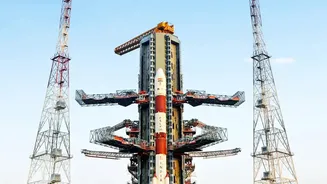
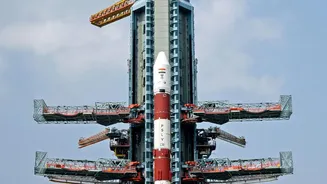
Meet Pushpak: India's Winged Rocket
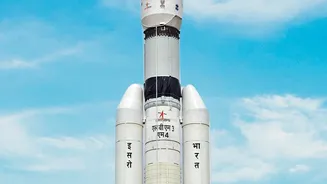
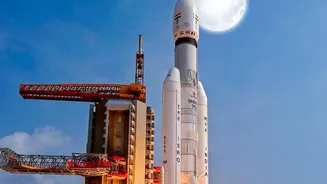
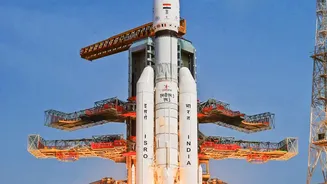
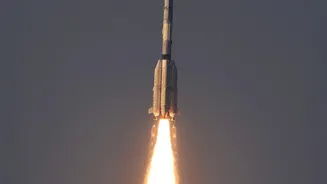
At the heart of India's ambition for cheaper space access is the Reusable Launch Vehicle - Technology Demonstrator (RLV-TD), nicknamed 'Pushpak'. Unlike conventional rockets that are discarded after a single use, Pushpak is designed like a spaceplane.
The goal is for it to fly to space, deploy satellites, and then return to Earth, landing horizontally on a runway like an aircraft. This concept is a cornerstone of ISRO's strategy to drastically cut the expense of launching satellites, which could make space more accessible for communication, research, and business. The ultimate aim is to reduce the cost of placing a payload into Low Earth Orbit by as much as 80-90%, a revolutionary shift in space economics.
A Hat-Trick of Perfect Landings
ISRO has recently achieved a major milestone by successfully completing a series of three critical landing experiments, known as the RLV-LEX. The final test, LEX-03, was conducted in June 2024 and was the most challenging yet. For the test, an Indian Air Force Chinook helicopter lifted Pushpak to an altitude of 4.5 kilometres and released it. The vehicle then had to autonomously navigate, correct its course against severe winds and a deliberate 500-meter offset from the runway, and execute a precise, high-speed landing at over 320 km/h. Crucially, the LEX-03 mission used the exact same winged body and flight systems from the previous LEX-02 test without any modifications, proving the hardware's robustness and true reusability.
The Billion-Dollar Goal: Reusability
Why is reusability such a game-changer? Traditionally, the most expensive parts of a rocket, including its powerful engines and complex structures, are used just once. Imagine an airline having to build a brand new aeroplane for every single flight; the cost would be astronomical. This is precisely the problem ISRO's RLV program aims to solve. By recovering and reusing the launch vehicle, the enormous manufacturing cost can be spread across multiple missions. This doesn't just make launches cheaper; it makes them more frequent. It opens the door for deploying large satellite constellations, conducting more ambitious scientific research, and securing a competitive edge in the global commercial launch market for ISRO's commercial arm, NewSpace India Ltd.
India's Unique Path in a Crowded Field
While ISRO is making significant strides, it's not alone in the quest for reusable rockets. Companies like SpaceX in the US have already operationalised vertical-landing reusable boosters with their Falcon 9 rockets, achieving hundreds of successful recoveries. ISRO, however, has chosen a different, technologically complex path with its winged-body, horizontal-landing spaceplane. This approach, similar to NASA's retired Space Shuttle but unmanned and autonomous, presents its own unique challenges and potential advantages. The headline claim of being a "leader" is best understood in this context: ISRO is pioneering a sovereign, cost-focused approach to reusability that plays to its strengths in frugal engineering, positioning it not to beat competitors tomorrow, but to command a significant share of the affordable launch market in the long term.
The Road Ahead: From Landing to Orbit
With the successful completion of the landing experiment series, ISRO has validated the critical autonomous navigation, guidance, and control systems needed for a vehicle returning from space. The next major step is the Orbital Re-entry Experiment (OREX). This will involve launching a version of Pushpak into orbit on a conventional rocket, having it spend time in space, and then tasking it with performing a controlled re-entry through Earth's atmosphere before landing autonomously. This phase will test the vehicle's thermal protection systems against the extreme heat of re-entry. Mastering this next phase will be the final gateway to realising a fully reusable two-stage-to-orbit launch vehicle, securing India's place as a major power in sustainable, affordable spaceflight.