




The Final Frontier Narrative
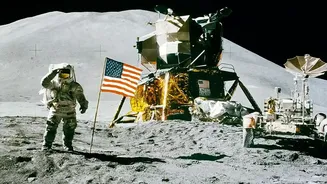
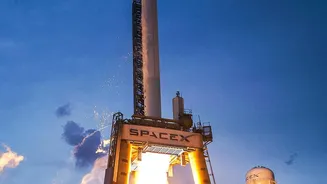
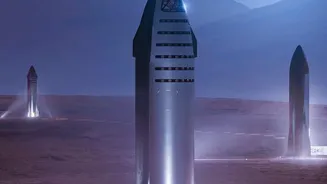
Space has a powerful grip on the public imagination, framed as humanity’s 'final frontier' and a backup plan for civilization. This narrative, fueled by decades of science fiction and the spectacle of rocket launches, creates a cultural and investor momentum
that deep sea exploration struggles to match. The cosmos is a source of inspiration, representing expansion and infinite possibility. In contrast, the deep ocean is often perceived as a dark, hostile, and alien environment right here on Earth. While both are inhospitable, space is visible; we can look up at the stars and dream. The abyss below is out of sight and, for many investors, out of mind.
Engineering and Technological Hurdles
Counterintuitively, it can be easier and cheaper to engineer for the vacuum of space than the crushing pressure of the deep sea. A spacecraft must withstand a pressure differential of about one atmosphere, while a deep-sea submersible faces pressures up to 1,000 times greater. This makes designing materials and vessels to avoid being crushed exponentially more difficult and expensive. Furthermore, space is transparent, allowing for communication and mapping via light and radio waves. Saltwater, however, is largely opaque to electromagnetic radiation, forcing deep-sea explorers to rely on tethered robots or acoustic systems, which severely limits large-scale autonomous operations.
The Murky Legal Landscape Below
One of the most significant barriers to commercial deep-sea ventures is the complex and uncertain legal framework. Under the UN Convention on the Law of the Sea (UNCLOS), minerals on the seabed beyond national jurisdiction are considered the 'common heritage of mankind'. The International Seabed Authority (ISA) is tasked with regulating this area, with a mandate that includes ensuring that the financial benefits of mining are shared among all countries. This creates a bureaucratic and financially disincentivizing environment for private companies, which face uncertain ownership rights and operating requirements. In stark contrast, international space law, while still evolving, is more permissive. The Outer Space Treaty prevents national appropriation but has been interpreted by countries like the U.S. and Luxembourg to allow private companies to own and sell resources they extract, spurring investment.
A Clearer Return on Investment in Space
The path to profitability in space, while long, appears clearer to investors. The existing satellite economy is already a multi-hundred-billion-dollar industry, and new ventures in space tourism, in-orbit manufacturing, and asteroid mining present tangible, if futuristic, markets. Asteroid mining, for instance, offers the promise of accessing resources on a scale that could dwarf the global economy without directly harming Earth's biosphere. Deep-sea mining, while targeting valuable minerals needed for green technologies, faces immense challenges. The commercial viability is unproven, the environmental risks are enormous and potentially irreversible, and public opposition is growing, leading many financial institutions to view it as an unacceptably risky investment.
The Future is Not Zero-Sum
Despite the funding disparity, interest in the 'blue economy' is growing. Proponents argue that as terrestrial mines are depleted, the vast mineral resources on the ocean floor—estimated to be worth trillions—will become indispensable. Technological advances are slowly lowering access costs, and a small but growing number of companies are navigating the regulatory hurdles. While government spending on ocean exploration remains a fraction of space exploration budgets, the rising demand for critical resources may eventually force a re-evaluation. The deep sea isn't competing with space as much as it is waiting for its own moment, when its economic and strategic importance finally outweighs the immense risks.