




A World of Water, Locked in Ice
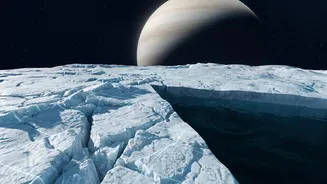
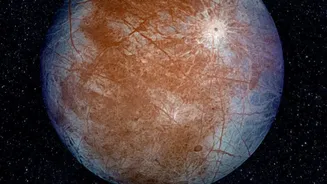
For decades, scientists have been captivated by Europa, one of Jupiter's largest moons. While its surface is a vast, frozen wasteland, evidence strongly suggests that a massive, salty liquid water ocean is churning beneath its icy shell. It is estimated
that this hidden ocean could contain more than twice the amount of water found in all of Earth's oceans combined. On our own planet, wherever we find water, we find life. This simple fact makes Europa one of the most compelling places in our solar system to search for habitable environments beyond Earth. The moon is believed to have the three essential ingredients for life as we know it: liquid water, the right chemical elements, and a source of energy.
The Long Journey to Jupiter
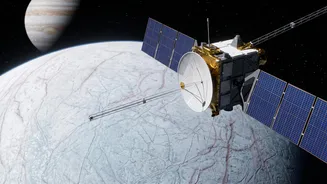
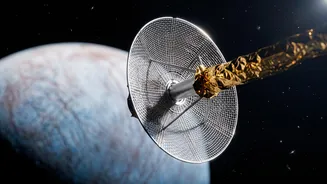
The headline's mention of "today" speaks to the mission's constant, ongoing importance, but the spacecraft itself has a long road ahead. The Europa Clipper launched on October 14, 2024, and it will not arrive in the Jupiter system until April 2030. The probe is currently in its cruise phase, a multi-year voyage across the solar system. To build up enough speed for its journey, it performed a gravity-assist flyby of Mars in March 2025 and is scheduled for a crucial Earth gravity assist in December 2026. Each of these milestones is a critical step that nudges the spacecraft along its 2.9-billion-kilometre path to its final destination.
What 'Critical Data' Will Clipper Send?
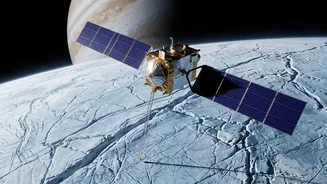
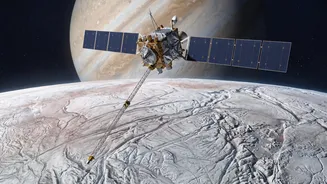
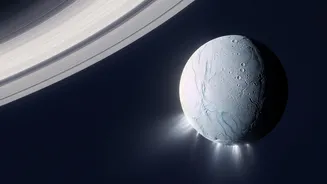
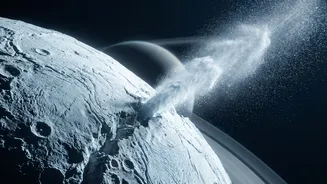
Once it arrives, Clipper will not orbit Europa directly. The moon sits within Jupiter's intense radiation belts, which would quickly damage the spacecraft's sensitive electronics. Instead, it will enter a long, looping orbit around Jupiter and perform dozens of close flybys of Europa—some as low as 25 kilometres above the surface. During these passes, a suite of nine advanced science instruments will collect the data everyone is waiting for. An ice-penetrating radar will measure the thickness of the ice shell, searching for the ocean below and any pockets of water trapped within the crust. Spectrometers will analyze the composition of the icy surface to understand its chemistry, while other instruments will sample any water vapor plumes that might be venting into space from the ocean below.
Searching for Signs of Habitability
It is important to note that Europa Clipper is not a life-detection mission; its goal is to determine if the moon has the potential to support life. By analyzing the magnetic fields around Europa, scientists can confirm the ocean's existence, estimate its depth, and even gauge its saltiness. Cameras will produce high-resolution maps of the cracked and grooved surface, helping researchers understand the moon's geology and identify potential sites for a future lander. The mission will hunt for the chemical building blocks of life, like organic molecules, that may exist on the surface or in the atmosphere. It will also investigate potential energy sources, such as heat generated by the constant tidal flexing of the moon by Jupiter's immense gravity or possible hydrothermal vents on the ocean floor, similar to those found on Earth.