


A Universe of Rocky Worlds
For decades, astronomers have been discovering exoplanets—planets orbiting stars other than our Sun. Among the most exciting are rocky, terrestrial worlds similar in size to Earth. Many of these have been found orbiting surprisingly close to their host
stars, which makes them easier for telescopes like the JWST to study. These 'close-in' rocky exoplanets became prime targets in the search for a potential Earth 2.0. The famous TRAPPIST-1 system, located about 40 light-years away, is a perfect example, hosting seven Earth-sized planets packed tightly around a cool, dim red dwarf star. Several of these planets, including TRAPPIST-1e, orbit within the star's 'habitable zone'—the orbital region where temperatures could theoretically allow for liquid water to exist on a planet's surface. But as scientists are learning, location isn't everything.
The Peril of Living Too Close
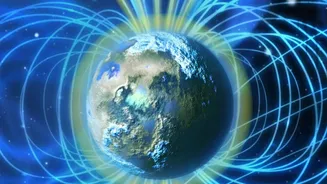
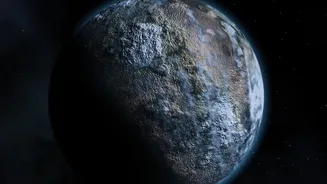
The very proximity that makes these planets easy to detect also exposes them to immense danger. Their parent stars, especially active red dwarfs, bombard them with powerful stellar winds and intense radiation. This constant onslaught can physically strip a planet's atmosphere away over millions of years, a process known as atmospheric erosion or stripping. Without a protective magnetic field, which many of these planets may lack, there's little to stop the star from scouring the planet down to bare rock. This process is particularly brutal for planets orbiting red dwarfs, the most common type of star in our galaxy, because their habitable zones are much closer to the star, putting any would-be habitable worlds right in the line of fire.
What Webb Is Actually Seeing
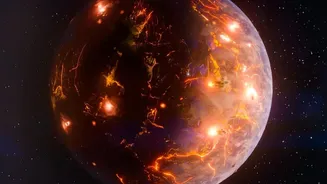
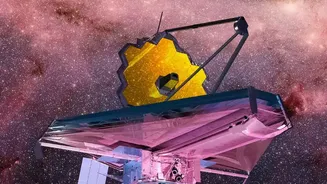
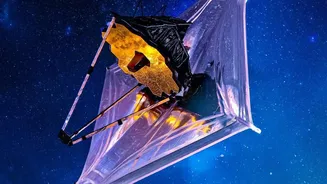
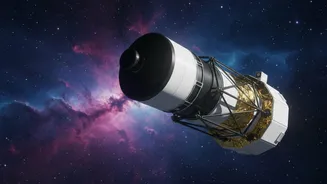
This is where the James Webb Space Telescope has become a game-changer. By analyzing the starlight that passes through a planet's atmosphere during a transit, JWST can detect the chemical fingerprints of different gases. The findings have been both fascinating and sobering. For several of the inner TRAPPIST-1 planets, JWST has found no evidence of a substantial atmosphere at all, suggesting they are likely bare rock. For TRAPPIST-1e, one of the most promising candidates, the data so far has ruled out thick carbon dioxide or hydrogen-dominated atmospheres, though a thinner, nitrogen-based atmosphere remains a possibility that requires more observation to confirm. In a surprising twist, however, JWST found evidence for a substantial atmosphere around another super-hot, rocky world called 55 Cancri e. This planet is so hot its surface is thought to be a magma ocean, and its atmosphere appears to be rich in gases like carbon monoxide and hydrogen, likely being constantly replenished by volcanic outgassing from its molten interior.
Redefining the Search for Life
These findings are forcing a major rethink of what makes a planet truly habitable. It’s no longer enough for a planet to be the right size and in the right orbital location. The presence and stability of an atmosphere is a crucial, non-negotiable ingredient. Without an atmosphere, a planet cannot maintain liquid water on its surface, as it would either freeze or boil away into space. An atmosphere also provides crucial shielding from the star's harmful radiation. The work of JWST suggests that many planets previously considered top candidates for habitability, particularly those around red dwarfs, may in fact be sterile, airless worlds. The discovery on 55 Cancri e, however, shows that even extreme planets can hold onto an atmosphere if it's being actively replenished, though its hellish conditions make it uninhabitable. This challenges the simple idea that close proximity to a star is an automatic disqualifier for having an atmosphere.