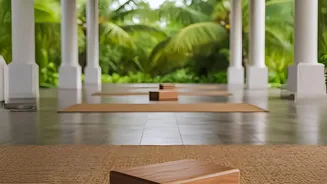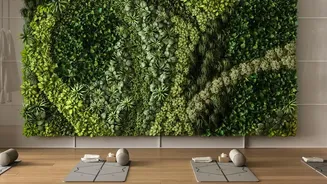



Start by Choosing Your Space
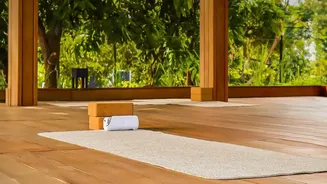
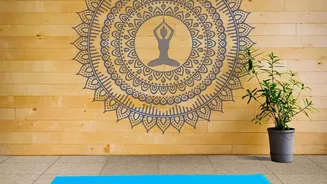
Before you gather any props, find your spot. This doesn't need to be a whole room; a quiet corner in a bedroom or living room works perfectly. Look for a space with minimal distractions and, if possible, some natural light. The goal is to choose a place
that you can consistently keep clean and clutter-free. An uncluttered environment helps create a focused, peaceful mind before you even begin your first pose. Just ensure you have enough room to roll out a mat and stretch your arms and legs without bumping into furniture. This simple act of designating a space, no matter how small, signals to your brain that this is a place for calm and self-care.
The Block: Use a Sturdy Stack of Books
Yoga blocks are used to 'bring the floor closer to you', providing support in poses like Triangle Pose or Half Moon. Instead of buying foam or cork blocks, grab a stack of thick, hardcover books. Dictionaries, old textbooks, or large coffee table books are ideal. You can wrap them with a rubber band or twine to keep them secure. A sturdy shoebox or even a small, overturned waste bin can also work in a pinch. The key is stability; make sure your substitute is firm and won't slide or collapse under your weight.
The Strap: A Belt, Scarf, or Tie Will Do
A yoga strap helps you deepen stretches and maintain good alignment, especially for tight hamstrings and shoulders. There's no need for a special strap when you likely have perfect substitutes in your wardrobe. The belt from a bathrobe is a fantastic, soft option. A regular clothing belt (fabric ones are often more comfortable than leather), a long scarf, or a necktie also work perfectly. You can even use a folded towel. Just ensure the item you choose isn't stretchy, as you need it to provide stable resistance.
The Bolster: Pillows and Blankets for Support
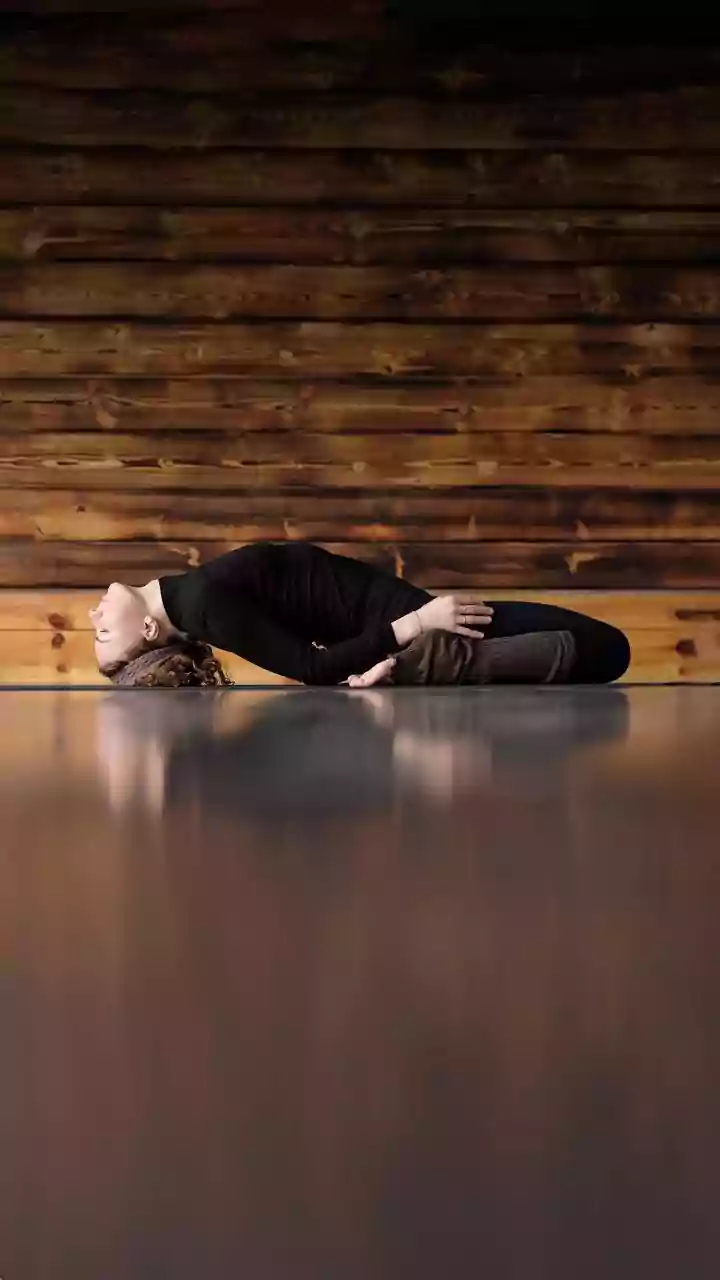
Bolsters are firm pillows used to support the body in restorative and gentle poses, allowing for deep relaxation. They can be one of the pricier props, but creating a substitute is easy. A couple of firm couch cushions or bed pillows can do the trick. For a more robust option, tightly roll up a few thick blankets or beach towels and tie them with a string to create a firm 'sausage' shape. You can even wrap a blanket around a rolled-up yoga mat for extra firmness. This DIY bolster is perfect for placing under your knees in Savasana or for supporting your spine in a gentle backbend.
The Mat: Ground Yourself on a Rug or Towel
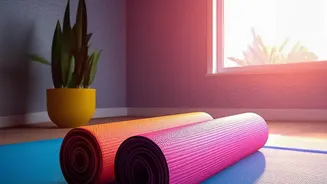
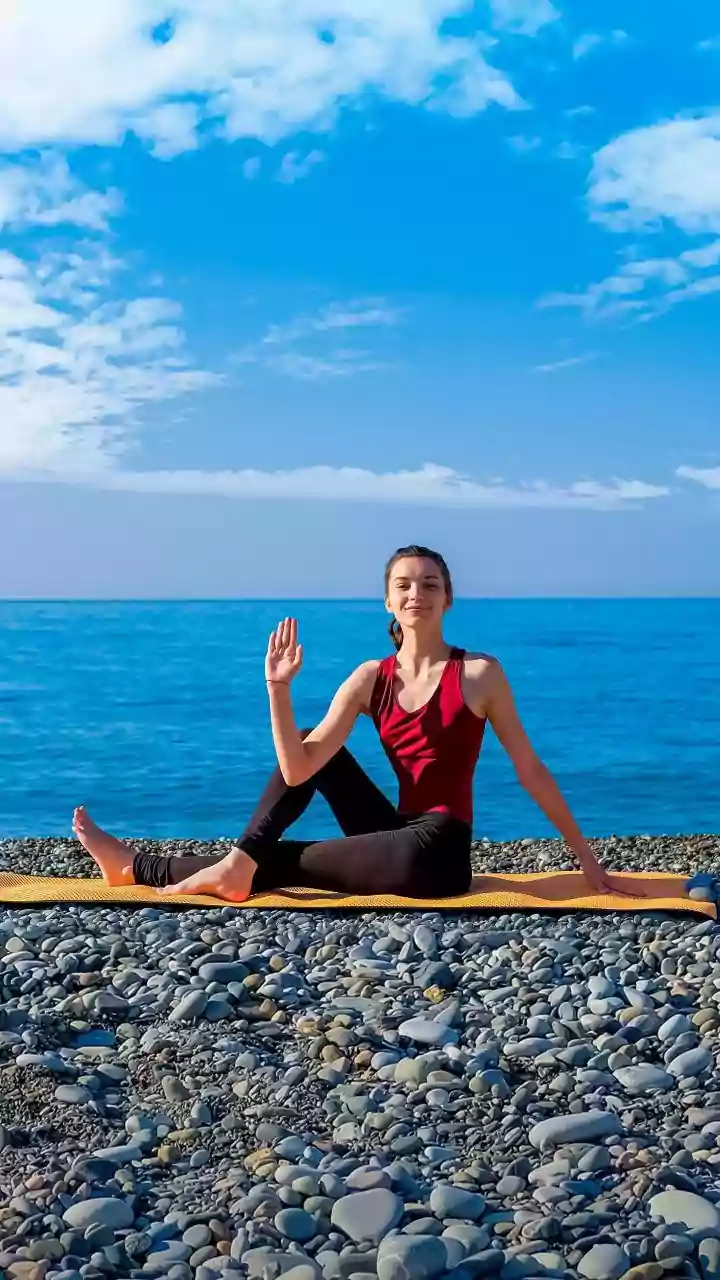
While a good yoga mat provides non-slip grip and cushioning, you don't have to pause your practice without one. A non-slip rug or a carpeted floor can serve as a great alternative. If you're on a hard surface like wood, a large, slightly damp towel can offer some grip and padding. The most important thing is to ensure your surface is stable and won't slide around, which can be a safety hazard. For many poses, simply having a dedicated, clean patch of floor is all you truly need to begin.
Setting the Atmosphere: Sight, Sound, and Scent
A yoga space is about more than just props; it's about the feeling. You can create a calming atmosphere without spending anything. Instead of buying special candles, dim the overhead lights and use a small table lamp for soft, gentle lighting. For a soothing scent, you don't need a diffuser; simply brewing a cup of herbal tea can fill the corner with a relaxing aroma. For sound, you can find countless free meditation playlists online, or simply embrace the quiet. The goal is to engage your senses in a way that signals relaxation and helps you transition from the rush of daily life to the peace of your practice.