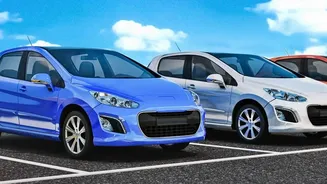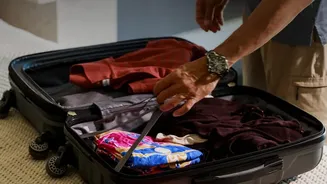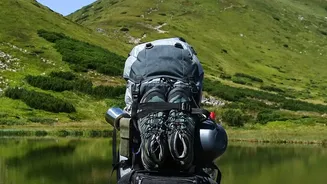








The great Indian road trip often begins with a frustrating game of luggage Tetris. But what if the secret to a stress-free start isn't a bigger car, but a smarter way to pack? Here’s how to conquer that small boot space.
Choose Your Gear Wisely
Success starts before you even
think about the boot. First, declutter your packing list. Lay everything out and be ruthless—if it’s a “just in case” item you’ve never used, leave it behind. Next, consider your luggage. Hard-shell suitcases are space wasters in a compact boot. Opt for soft-sided backpacks or duffel bags instead. Their flexible structure allows them to be squeezed into tight corners and moulded against the car’s interior, making use of every available inch. This flexibility is crucial for fitting multiple bags. Four medium, soft-shell backpacks are far more likely to fit than two rigid suitcases. By choosing pliable bags, you’re already giving yourself a significant advantage in the battle for boot space.
Master the Art of Rolling
This is the core technique that will transform your packing. Folding clothes creates bulky squares with trapped air, but rolling expels that air and creates dense, compact logs of fabric. This method, often used by military personnel for its efficiency, dramatically reduces the space your garments occupy. To do it properly, smooth out an item like a t-shirt or a pair of trousers, fold in any sleeves or awkward edges, and then roll as tightly as you can from one end to the other. This works best for casual wear like t-shirts, pants, and sweaters. Not only does tight rolling save an immense amount of space inside your backpack, but it also helps to minimise wrinkles, keeping your clothes ready to wear upon arrival.
Embrace Packing Cubes
Packing cubes are the secret weapon of organised travellers. These small, zippered fabric containers take your tightly rolled clothes and compress them even further. Think of them as creating modular, stackable blocks out of your soft, shapeless backpacks. You can categorise your items into different cubes—one for tops, one for bottoms, another for underwear and socks. This system not only saves space but also keeps your bag incredibly organised, preventing you from having to pull everything out just to find one item. Some packing cubes even have a second compression zipper that squeezes out even more air, which is perfect for bulkier items like jackets. Using cubes transforms your backpacks into neat, manageable units that are far easier to arrange in the boot.
Pack the Backpack Strategically
How you load the individual backpacks is just as important as how you load the car. Once your clothes are rolled and cubed, it's time to pack the bags. For stability and comfort if you need to carry the backpack, place the heaviest packing cubes in the middle and closest to what would be your back. Fill the gaps around the cubes with smaller items. Shoes, which are notoriously awkward to pack, can have socks or chargers stuffed inside them to make use of that empty space. Roll up belts and place them inside shirt collars. By thinking about every nook and cranny within the backpack itself, you ensure that the bag is as dense and compact as possible before it even gets near the car.
The Final Puzzle: Loading the Boot
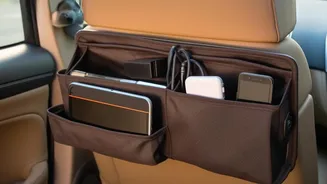
Now for the main event. Treat packing your boot like a game of Tetris. Start with an empty, clean space. Place the two largest and heaviest backpacks flat on the floor of the boot, pushed up against the back seats to keep the car's centre of gravity stable. Then, stack the remaining two backpacks on top or beside them, depending on the shape of your boot. Because you used soft bags, you can now squeeze them to fit. Use any remaining gaps to your advantage. Small, soft items like jackets, blankets, or towels can be wedged between the backpacks to stop them from shifting during the drive. Make sure not to pack so high that you block your view out of the rear window. Finally, items you might need during the journey—like snacks, water, or a first-aid kit—should be kept in the passenger cabin for easy access.