







The End of an Era
For decades, the path to a coveted engineering job was well-defined: master core subjects, secure a high GPA, and demonstrate proficiency in a specific coding language or domain. This model produced generations of specialists. However, the rapid integration
of Artificial Intelligence and Machine Learning (AI/ML) across every industry, from finance to manufacturing, has rendered this traditional approach insufficient. Companies are no longer just looking for engineers who can code; they need engineers who can build, deploy, and leverage intelligent systems to solve complex, real-world problems. Recruiters report that a candidate's ability to simply write Java or C++ code is now a baseline expectation, not a differentiator. The new differentiator is fluency in the language of data, algorithms, and AI.
Moving Beyond a Single AI Course
The initial response from many institutions was to simply add an 'Introduction to AI' elective. While well-intentioned, this is proving to be a temporary fix. Leading engineering colleges across India are now realising that AI is not just another subject to be taught in isolation. It is a fundamental tool, much like calculus or physics, that must be woven into the very fabric of engineering education. The new approach isn't about creating more Computer Science engineers who specialise in AI, but about creating civil, mechanical, chemical, and electrical engineers who can apply AI within their own domains. This paradigm shift is forcing a complete overhaul of syllabi and teaching methods that have remained unchanged for years.
What the New Training Modules Look Like
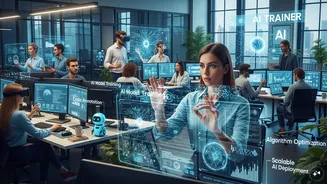
So, what does this new training look like in practice? For starters, many colleges are making data science and Python programming mandatory for all first-year students, regardless of their branch. The focus is shifting from theory-heavy lectures to project-based learning. A mechanical engineering student might now design a predictive maintenance system for factory equipment using ML models. A civil engineering student might use AI-powered imaging to detect structural weaknesses in a bridge. These are not just final-year projects anymore; they are becoming integral parts of core coursework. Furthermore, institutions are replacing outdated lab experiments with hackathons, data-thons, and mandatory internships that expose students to live industry problems. The goal is to simulate the agile, problem-solving environment of a modern tech workplace long before a student sits for their first placement interview.
The Rise of the 'T-Shaped' Engineer
This educational restructuring is designed to produce what industry leaders call 'T-shaped' professionals. The vertical bar of the 'T' represents deep expertise in a core engineering discipline (like electrical engineering). The horizontal bar represents a broad skill set, including data analysis, AI/ML literacy, communication, and business acumen. This cross-disciplinary fluency is what makes an engineer valuable today. They can not only design a circuit but also analyse performance data from that circuit to suggest AI-driven optimisations. This adaptability is crucial in a world where job roles are constantly evolving. The engineer of 2026 won't just be a builder; they will be a strategist, an analyst, and an innovator, all rolled into one.
Industry Demands Fuel the Change
This transformation isn't happening in a vacuum. It's being driven by intense pressure from the industry. Companies are no longer passive participants who just show up on Day Zero for placements. They are now active collaborators. Tech giants and innovative startups are partnering with universities to co-create curricula, set up on-campus AI labs, and provide faculty with updated training. They offer real-world datasets for student projects and mentor students through complex challenges. This industry-academia partnership ensures that what is taught in the classroom is directly relevant to the skills needed in the workplace, closing a gap that has long plagued Indian technical education.