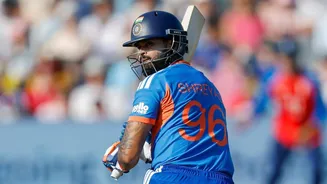

The Sheer Pace Factor
First and foremost, Mayank Yadav brings something to the bowling attack that cannot be coached: raw, blistering pace. Ever since he burst onto the scene in the IPL, consistently clocking speeds north of 150 km/h, he has been on every cricket fan's radar.
In a sport where batsmen are becoming increasingly powerful and innovative, the ability to hurry them with sheer velocity remains a timeless weapon. This isn't just about the number on the speed gun; it's about the psychological pressure it creates. A batsman has a fraction of a second less to see the ball, decide on a shot, and execute it. This X-factor, the ability to rush even well-set international players, is a rare commodity in Indian cricket, and Yadav possesses it in abundance.
More Than Just Speed
While his pace grabs the headlines, what makes selectors and coaches truly excited is his control. During his impressive initial outings, Yadav demonstrated a remarkable ability to maintain a tight line and length even while bowling at maximum velocity. His high-arm action allows him to extract extra bounce from the pitch, a difficult challenge for any batsman. This combination of speed, accuracy, and bounce is what elevates a bowler from being merely fast to being genuinely threatening. It prevents batsmen from simply camping on the back foot, waiting for a short ball, or lining him up for a drive. This well-rounded skill set is what makes his return to the national setup so significant.
The Zimbabwe Context
The conditions in Harare could make Yadav particularly effective. The pitch at Harare Sports Club is known to be balanced, often slowing down as the game progresses, which tends to aid spinners or medium pacers who rely on cutters. However, this is precisely where a bowler like Yadav becomes a trump card. On a surface that may not offer much natural pace, his ability to generate his own velocity can be doubly effective. Batsmen might get accustomed to a certain rhythm and pace from the pitch, only to be caught off guard by a 150 km/h delivery. It's a phenomenon seen before, as former Zimbabwe captain Brendan Taylor once noted about Dale Steyn on a slow Harare pitch: "he is quick through the air so it doesn't matter how slow the pitch is." Yadav can create his own hostility, making him a weapon in any conditions.
A Strategic Selection
Yadav's inclusion in a squad for a tour like this is a shrewd piece of management. With several senior players rested, this series provides a lower-pressure environment for him to reintegrate into international cricket. It's an opportunity to give a high-potential asset valuable game time against international opponents without the intense scrutiny of a World Cup or a high-profile series. The selectors are giving him a platform to test his body and skills, build confidence, and find his rhythm after a long and challenging recovery from injury. This tour is as much about building a future asset for Indian cricket as it is about winning the series.
Managing the Fragile Asset
The biggest question surrounding Mayank Yadav has always been his fitness. His career has been unfortunately interrupted by injuries, most notably a back stress fracture that required surgery and kept him on the sidelines for an extended period. He has played only a handful of IPL matches and three T20Is for India since his debut. His management team at Lucknow Super Giants handled his return in the 2026 IPL with caution, carefully managing his bowling load even after he was declared fully fit. The Indian team management will need to adopt a similar strategy. Protecting and intelligently managing Yadav's workload will be paramount to ensuring his long-term success. His presence in Zimbabwe is a testament to his successful rehabilitation, but the road ahead requires careful planning.