




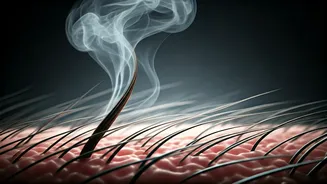




The Science of a Greasy Scalp
It’s not just your imagination; there’s a scientific reason your hair feels heavier and oilier during the monsoon. The culprit is humidity. Your scalp, like the rest of your skin, has sebaceous glands that produce a natural oil called sebum. Sebum is essential
for keeping your scalp and hair moisturised. However, when the air is saturated with moisture, the sweat and sebum on your scalp cannot evaporate as quickly. Instead, they sit on the surface, mixing with environmental pollutants and creating a greasy film. This makes your hair look flat, limp, and oily, even if you’ve just washed it. For some people, the constant moisture can also signal the scalp to either overproduce or underproduce oil, throwing its natural balance completely off-kilter.
It's Not Just Oil, It's Buildup
While sebum is the primary factor, it’s working with a few accomplices. The high humidity often makes us sweat more, and this sweat mixes directly with the scalp's oils. Furthermore, the damp environment is a perfect breeding ground for bacteria and fungi, which can lead to scalp issues like dandruff, further exacerbating the feeling of uncleanliness. To combat the grease, many of us reach for styling products like serums, mousses, or sprays. While these might provide a temporary fix, they can contribute to product buildup over time. This layering of products on top of the natural oil and sweat cocktail is a recipe for weighed-down, perpetually greasy-feeling hair. It becomes a frustrating cycle where the solution contributes to the problem.
The Temptation to Over-Wash
When your hair feels like an oil slick, the most logical instinct is to wash it more frequently. However, this can be counterproductive. Most shampoos contain surfactants that are designed to strip away oil and dirt. When you use them too often, you strip away not just the excess grease but also the essential, protective layer of sebum. In response, your scalp panics. Thinking it's too dry, it goes into overdrive and produces even more oil to compensate for the loss. This is known as reactive seborrhea, and it traps you in a vicious cycle: your hair gets greasy, you wash it, your scalp produces more grease, and the problem worsens. The key isn't necessarily washing more, but washing smarter.
Your Monsoon Hair Care Game Plan
Regaining control starts with a few strategic adjustments to your routine. First, switch to a gentle, sulphate-free shampoo for daily or alternate-day use to avoid stripping your scalp. Once a week, use a clarifying shampoo to deep-clean and remove all traces of product buildup, sweat, and excess oil. When it comes to conditioner, less is more. Choose a lightweight formula and apply it only from the mid-lengths to the ends, avoiding the scalp entirely. A weekly scalp scrub or a clay-based hair mask (like one with Multani mitti) can work wonders to absorb excess oil and exfoliate dead skin cells. Finally, finish your wash with a cool water rinse to help seal the hair cuticles and control oil production.
Simple Lifestyle Tweaks That Help
What you do outside the shower matters, too. For starters, invest in a good dry shampoo. It’s a lifesaver for non-wash days, instantly absorbing oil at the roots and adding volume. Make a conscious effort to avoid touching your hair throughout the day, as your fingertips can transfer oils and dirt to your strands. When you’re at home or out for a walk, tie your hair up in a loose bun or a high ponytail. This keeps hair off your face and neck, reducing its contact with sweat. Diet also plays a role; ensure you're well-hydrated and consider cutting back on excessively oily and sugary foods, which can sometimes influence sebum production. These small changes, combined with a smart washing routine, can make a huge difference.