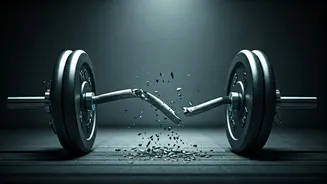









Ego Lifting: Too Much Weight, Too Soon
One of the most frequent and dangerous mistakes is 'ego lifting'—prioritizing the amount of weight on the bar over proper form to impress others or oneself. [1] This often leads to using momentum, partial reps, and poor mechanics, which dramatically increases
the risk of injury and yields minimal results. [1, 6] True strength is built by mastering the movement first. Focus on a weight you can control through the full range of motion for all your reps. [9] The goal is to challenge your muscles, not your joints. If your form breaks down, it's a clear sign the weight is too heavy. [9] Start light, master the technique, and the weight will come. [5]
Skipping the Warm-Up and Cool-Down
Many beginners are eager to jump straight into their main lifts, but skipping a proper warm-up leaves your muscles cold and unprepared for the stress of lifting. [9] This reduces your range of motion and significantly increases your risk of injury. [9, 14] A good warm-up, including light cardio and dynamic stretches like squats and lunges, prepares your joints and muscles for the work ahead. [9] Similarly, a cool-down with gentle stretching helps your body begin the recovery process and can ease post-workout soreness. [14]
Focusing Only on 'Mirror Muscles'
It’s common for new lifters to focus on the muscles they can see in the mirror—chest, biceps, and abs—while neglecting the posterior chain (back, glutes, hamstrings). This is sometimes called 'early specialization'. [5] This approach creates muscle imbalances that can lead to poor posture and injury down the line. A balanced physique is a strong physique. Ensure your program is well-rounded, incorporating compound exercises like squats, deadlifts, rows, and overhead presses that work the entire body as an integrated unit. [5, 12]
Inconsistency and 'Program Hopping'
Results in the gym come from consistency, not from finding the 'perfect' workout. Many beginners fall into the trap of 'program hopping,' changing their routine every week because they get impatient or see a new workout online. [7, 11] Your body needs time to adapt to a new stimulus. Sticking with a structured program for at least 4-6 weeks allows you to apply progressive overload—gradually increasing the weight, reps, or sets—which is the fundamental driver of muscle and strength gain. [9] Instead of constantly searching for a new routine, focus on showing up consistently and improving on the one you have. [14]
Doing Too Much, Too Soon
Enthusiasm is great, but going from zero to one hundred often leads to burnout and extreme soreness that can derail motivation. [4, 5, 11] Some beginners try to train for two hours a day, hitting every exercise they know. This excessive volume can be counterproductive, hindering recovery and preventing you from training optimally in your next session. [5] A more effective approach is to start with 2-3 full-body workouts per week, focusing on 5-6 key exercises per session. [15] Keep workouts under an hour and prioritize quality over quantity. [15]
Neglecting Form and Technique
Lifting with improper form is a fast track to injury and stalled progress. [6] Common errors like rounding your back on a deadlift, letting your knees cave in on a squat, or flaring your elbows on a bench press put stress on your joints instead of your muscles. [2, 6] It’s crucial to learn the correct mechanics of each lift before adding significant weight. [5, 16] Watch videos from reputable sources, consider hiring a coach for a few sessions, or film yourself to check your form. [6] Building a house on a sandy foundation is a recipe for disaster; the same is true for building strength on poor movement patterns. [6]