




What is Reflective Paint Technology?
Reflective paint, often called 'cool roof' or 'heat reflective' paint, is a specially engineered coating designed to bounce sunlight away from your building. Unlike standard paint that absorbs the sun's energy and turns it into heat, these coatings contain
special pigments that reflect a significant portion of solar radiation, including the invisible infrared and UV rays that carry most of the heat. This means the surfaces of your building—particularly the roof and exterior walls—don't heat up as much, which in turn helps keep the inside of your flat cooler. Think of it as a layer of high-tech sunblock for your home.
The Science of Staying Cool
The effectiveness of these paints is measured by two key properties: solar reflectance and thermal emittance. Solar reflectance indicates how much sunlight a surface reflects, while thermal emittance measures how efficiently a surface releases the heat it has absorbed. Together, these values are used to calculate the Solar Reflectance Index (SRI), a score that rates a material's ability to reject solar heat. A standard black surface has an SRI of 0, while a standard white is 100. High-performance reflective coatings can even score over 100, meaning they stay cooler in direct sun than standard white paint. A higher SRI value directly translates to a cooler roof and a more comfortable living space below.
Tangible Benefits for Flat Dwellers
For anyone living in a top-floor flat or a home with high sun exposure, the benefits are significant. Studies and real-world applications show that using reflective coatings can lower indoor temperatures by as much as 3–5°C, and in some cases even more. This reduction in heat gain means you'll rely less on air conditioning, leading to noticeable savings on your electricity bills—potentially between 10% and 30%. Beyond cost savings, it creates a more comfortable living environment, day and night. Concrete structures, common in Indian cities, tend to absorb and trap heat, radiating it indoors long after sunset. Reflective paint helps mitigate this effect, making evenings more pleasant. Additionally, these coatings protect your roof and walls from UV degradation and thermal stress, extending the life of the structure.
Application and Best Practices
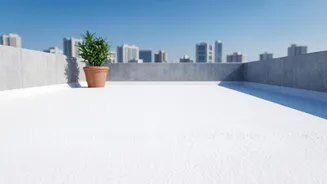
Reflective paint is most effective when applied to surfaces with maximum sun exposure, primarily the building's terrace or roof. Exterior walls, especially those facing west and south, are also excellent candidates. While it can be a DIY project for those with experience, professional application is often recommended to ensure proper surface preparation and uniform coating, which are critical for performance. The paint needs to be reapplied every few years, typically every 3 to 5 years, to maintain its reflective properties. Many modern formulations are water-based acrylics, making them relatively easy to work with and environmentally friendlier.
Choosing the Right Product in India
A growing number of paint brands in India, including Asian Paints, Dr. Fixit, Nerolac, and Berger, offer a range of heat reflective products. When choosing a paint, look for the SRI value on the product's technical data sheet; a higher number is always better. Many products are available in various price ranges, typically starting from around ₹250 to ₹550 per litre, with 20-litre buckets offering better value for larger areas. While white offers the highest reflectivity, modern pigment technology has made it possible to get good reflective performance from lighter shades of other colours too, giving you more aesthetic flexibility.