
Cosmic Engines of Creation
At the heart of nearly every large galaxy, including our own Milky Way, lurks a supermassive black hole millions or even billions of times more massive than our sun. Traditionally viewed as points of no return, these gravitational titans are now understood
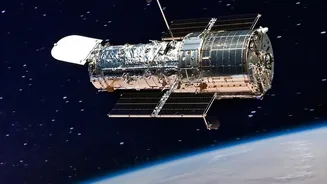
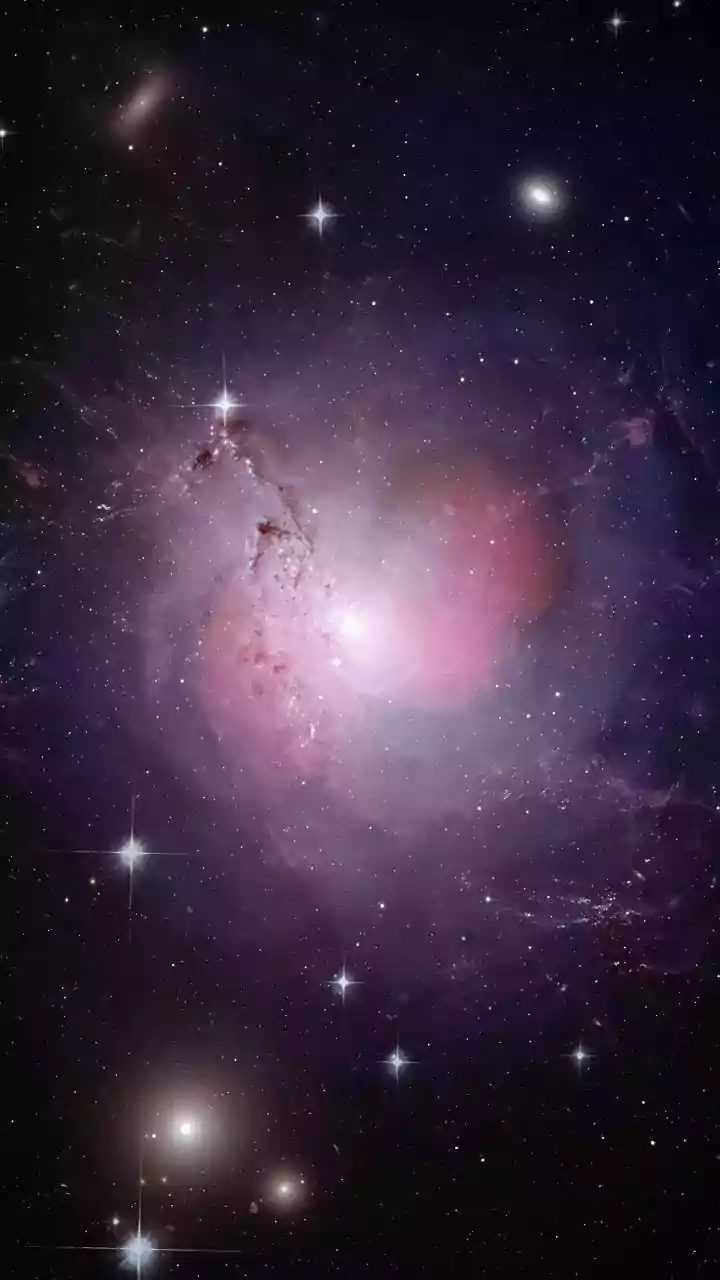
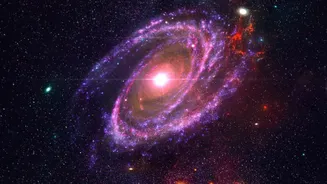
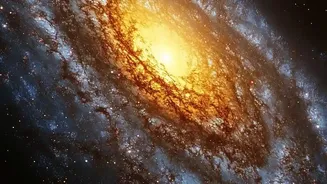
to play a pivotal role in how their host galaxies grow and evolve. When black holes are actively feeding on surrounding gas and dust, they become what astronomers call an active galactic nucleus (AGN) or quasar. This process releases colossal amounts of energy, often outshining all the stars in the galaxy combined. New images, primarily from powerful observatories like the James Webb Space Telescope (JWST), are providing the clearest views yet of this incredible phenomenon in action.
The Feedback Loop Explained
The process by which a black hole influences its galaxy is called 'feedback'. As a black hole devours matter, it doesn't just swallow it quietly. The material swirls into a superheated accretion disk, which radiates immense energy and can launch powerful jets and winds. These outflows act like cosmic tsunamis or blowtorches, blasting through the galaxy at incredible speeds. Recent JWST observations of galaxies in the early universe have detected galactic winds moving at thousands of kilometres per second, capable of expelling enormous quantities of gas from the galaxy each year. This feedback can be both positive and negative, creating a complex, self-regulating system that dictates the galaxy's fate.
Putting the Brakes on Star Birth
One of the most significant effects of black hole feedback is its ability to stop, or 'quench', star formation. Stars are born from vast, cool clouds of gas. The powerful winds and radiation from an active black hole can heat this gas or blow it out of the galaxy entirely. Without this raw material, the galaxy's star-making factories shut down. A recent study of a distant galaxy nicknamed the "Red Potato" found strong evidence of this process. Despite having plenty of gas, its star formation was mysteriously suppressed, and new observations confirmed that energy from its central black hole was violently disrupting the gas, effectively starving the galaxy.
Triggering New Generations of Stars
Counterintuitively, these same powerful outflows can also trigger bursts of star formation. While the winds can clear out gas, they can also compress the interstellar medium, creating dense pockets where gravity can take over and ignite new stars. This is known as positive feedback. Some studies suggest that the compression from AGN winds can lead to a significantly higher star formation efficiency. Furthermore, some theories propose a cycle where the gas pushed out by the black hole eventually cools and falls back towards the galaxy's center in long, thin filaments, providing fresh fuel for another round of feeding and star birth. This delicate balance between pushing gas away and compressing it makes the black hole a primary regulator of a galaxy's life cycle.
Rewriting the Story of the Universe
These new images and discoveries are challenging long-held theories about how the universe evolved. For instance, astronomers have found enormous black holes existing very early in cosmic history, which grew much faster than their host galaxies. This suggests that black holes might form first and then shape the galaxy around them, a reversal of the traditional 'galaxy-first' model. By observing these processes in the early universe, scientists can connect the dots between the first massive black holes and the diverse galaxies we see today. Each new image provides a vital piece of the puzzle, helping us understand not just how black holes work, but how they have been shaping the evolution of galaxies from the very beginning.