



Japan's space agency has embarked on one of its most ambitious missions ever. On October 20, the Martian Moons eXploration (MMX) spacecraft began its long journey, not just to visit Mars's moons, but to bring a piece of one back to Earth.
A Successful Start to a Long Journey
On October 20,
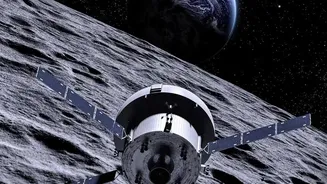
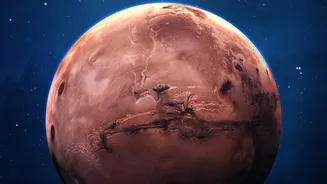
2026, the Japan Aerospace Exploration Agency (JAXA) successfully launched its MMX spacecraft aboard an H3 rocket from the Tanegashima Space Center. The launch was flawless, marking the start of a complex, five-year round trip to the Martian system. This isn't a quick visit; the spacecraft will spend about a year travelling to Mars, scheduled to arrive in August 2027. From there, it will manoeuvre into orbit around Mars's largest moon, Phobos, beginning a multi-year campaign of observation and exploration before it even attempts its primary goal. This mission is an international effort, with collaboration from NASA, the European Space Agency (ESA), and the German and French space agencies (DLR and CNES).
The Central Mystery: Are Phobos and Deimos Moons or Asteroids?
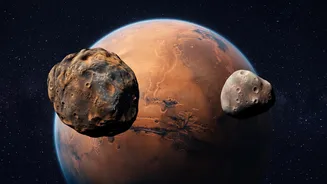
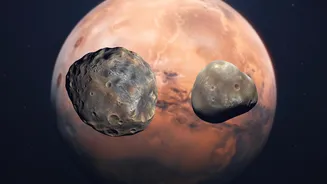
The core purpose of the MMX mission is to solve a long-standing puzzle about Mars's two tiny moons, Phobos and Deimos. Scientists are divided on their origins. One theory suggests they are captured asteroids, wanderers from the asteroid belt between Mars and Jupiter that were snared by the Red Planet's gravity long ago. However, their nearly circular orbits around Mars's equator challenge this idea, as captured objects would typically have more irregular, tilted orbits. The alternative theory is that a giant object slammed into a young Mars, and the resulting debris coalesced to form the two moons, much like how Earth's Moon is thought to have formed. By analysing a sample from Phobos, scientists hope to finally determine which story is true. If it's a captured asteroid, it will hold clues about the early outer solar system; if it’s made of Martian crust, it could tell us about the planet's ancient environment.
The Heist: Collecting a Piece of Phobos
The most daring part of the mission will be landing on Phobos to collect a surface sample. JAXA is building on its world-leading experience from the Hayabusa and Hayabusa2 missions, which successfully returned samples from asteroids. The MMX spacecraft is equipped with two sampling systems. One is a corer that will drill about two centimetres into the surface, while the other uses a pneumatic system to blow gas and kick up loose surface material, or regolith, into a collection container. The goal is to collect at least 10 grams of material. Before the main spacecraft lands, it will deploy a small German-French rover named 'Idefix'. This rover will explore the surface for about three months, studying its composition and helping mission controllers identify the best and safest spot for the main spacecraft to touch down and perform its historic sample collection.
A Long Road Home with Precious Cargo
After observing both Phobos and Deimos, and successfully grabbing its sample from Phobos, the MMX spacecraft will begin its long journey back to Earth. The full mission is not expected to conclude until 2031, when a small Sample Return Capsule separates from the main spacecraft. This capsule, protected by a heat shield, will re enter Earth's atmosphere and parachute down to a secure landing in the Woomera Prohibited Area in Australia, the same remote site used for previous Japanese sample return missions. Once recovered, the precious cargo will be transported to specialised labs for years of detailed analysis by scientists around the world. This tiny amount of dust could rewrite our understanding of how planets and moons form, and how water and other ingredients for life were distributed throughout the early solar system.