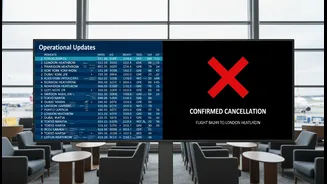









The Ambiguous Operational Update
Think of an operational update as the airline thinking out loud. It’s a notification that things are in flux, but a final decision has not been made. These messages often mention a “rolling delay” or use phrases like “monitoring weather” or “new departure
time estimated.” Common triggers for such updates include air traffic congestion, a late inbound aircraft, minor technical snags, or waiting for a flight crew to arrive. An operational update is informational, not final. It’s the airline’s way of managing expectations and telling you, “Stay tuned, we’re working on it.” At this stage, your flight is still very much on the schedule, even if that schedule is slipping.
The Decisive Cancellation Notice
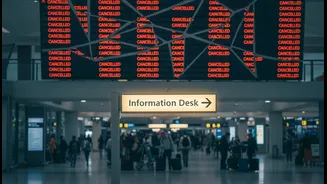
A confirmed cancellation notice is the opposite: it's a final, definitive action. The airline has officially given up on operating that specific flight. The message you receive will be clear and unambiguous, using words like “cancelled,” “will not operate,” or “rebooking required.” This happens for more severe reasons, such as major technical faults, extreme weather events making flight impossible, significant crew shortages due to regulatory rest periods, or airport closures. When you receive a cancellation notice, your original travel plan is void. The focus immediately shifts from waiting to taking action.
Why This Distinction Is Crucial
Confusing an update with a cancellation can lead to costly mistakes. If you treat a simple delay update as a cancellation and leave the airport, you risk missing your flight if it eventually departs. Airlines can and do make up for lost time, and a two-hour delay can sometimes shrink to 90 minutes. You need to be at the gate. Conversely, if you treat a cancellation notice like a mere update and just wait, you lose precious time. Seats on the next available flights are snapped up quickly by proactive passengers. By the time you realize you need to rebook, your options may be severely limited, potentially leaving you stranded overnight. Understanding the message dictates your next move: patience or action.
Your Action Plan for an Operational Update
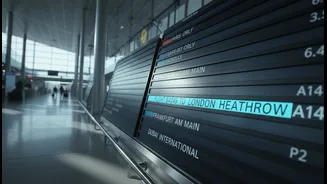
When you receive a delay or operational update, your primary job is to wait intelligently. Do not leave the airport. First, check multiple sources for information; don't rely solely on the SMS. Look at the official airport departure boards, check the airline’s mobile app, and keep an ear out for gate announcements. These are often the most current sources of information. Use the delay time productively: ensure your phone is charged, locate your gate, and perhaps grab a meal nearby. Stay put and stay informed. Proactively ask gate agents for information, but understand their knowledge may be limited until the airline makes a final decision. The key is to be ready to board if the situation improves.
Your Action Plan for a Confirmed Cancellation
Once your flight is officially cancelled, it's time to act fast. Your goal is to secure a new booking or a refund. While everyone else rushes to the gate agent, pull out your phone. Often, the airline's app or website is the fastest way to rebook yourself onto the next available flight. Simultaneously, you can call the airline's customer service helpline. Doing both doubles your chances of getting through quickly. Know your rights under India's Directorate General of Civil Aviation (DGCA) regulations. For cancellations with little notice, airlines are obligated to offer you an alternative flight or a full refund, and in some cases, provide compensation, meals, and even hotel accommodation for long waits. Do not accept a travel voucher if you prefer a cash refund; you are entitled to it.