








A New Final Frontier
When we think of India in space, the mind immediately goes to the Indian Space Research Organisation (ISRO). From the Mars Orbiter Mission (Mangalyaan) to the recent triumph of Chandrayaan-3, ISRO has been the sole, formidable protagonist in our national
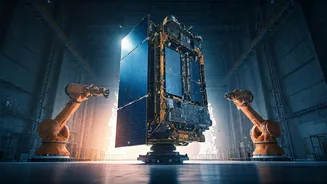
space saga. But quietly, and then all at once, the script has changed. A vibrant, ambitious, and well-funded private space-tech sector has emerged, not as a competitor to ISRO, but as a powerful new partner. Startups with names like Skyroot, Agnikul, and Pixxel are no longer just concepts on a whiteboard; they are building rockets, launching satellites, and aiming for the stars, creating a bustling new industry from scratch.
The Policy That Opened the Stars
This boom didn’t happen in a vacuum. The pivotal moment came in 2020 when the Indian government unlocked the space sector, traditionally a government monopoly, for private participation. This wasn't just a suggestion; it was a structured policy shift. The government established the Indian National Space Promotion and Authorisation Centre (IN-SPACe) to act as a single-window agency. Its mission is to promote, guide, and regulate private space activities. Suddenly, startups had a clear path to accessing ISRO’s world-class facilities, testing grounds, and decades of expertise. This move transformed the landscape from a closed garden into an open playground, providing the regulatory certainty and institutional support that investors and entrepreneurs had been waiting for. It was the government handing over the baton for commercial sprints, while it continued to focus on long-distance marathon missions of deep space exploration and national security.
Meet the New Astronauts of Industry
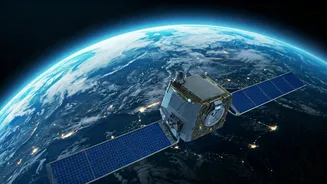
The results have been spectacular. Hyderabad-based Skyroot Aerospace made history in 2022 by launching India's first privately developed rocket, the Vikram-S. They are now developing a series of launch vehicles designed to place small satellites into orbit, catering to a booming global market. Meanwhile, Chennai's Agnikul Cosmos is pioneering 3D-printed rocket engines, a technological leap that drastically cuts down manufacturing time and cost. Their Agnibaan rocket is designed for 'on-demand' launches, a service as revolutionary as it sounds. Then there’s Pixxel, a Bengaluru-based startup building a constellation of hyperspectral imaging satellites. These are not your average cameras; they can see the unseen, analysing the chemical and physical properties of the earth below. This data has profound applications in agriculture, mining, and climate change monitoring. These companies, and dozens more like them, form the core of India’s new space ecosystem.
More Than Just Rockets
The Indian space-tech revolution is about more than just launchpads. It's about the entire value chain. While 'upstream' companies like Skyroot and Agnikul build the rockets to get to space, a whole ecosystem of 'downstream' companies is emerging to use what’s up there. These are the firms that will use satellite data to provide farmers with crop health information, help cities manage resources, enable fishermen to find better catch, and track industrial emissions to enforce environmental policies. This is where space technology stops being an abstract concept and starts delivering tangible benefits to everyday life and business. Companies are working on satellite-based communication systems, ground station services, and data analytics platforms, creating a multi-layered industry with the potential for exponential growth and job creation.
Challenges on the Horizon
The trajectory is promising, but the journey is not without its challenges. The space industry is notoriously capital-intensive and high-risk. While early-stage funding has poured in, Indian startups will need access to larger pools of long-term capital to compete with global giants like SpaceX and Blue Origin. Scaling up from successful test launches to a regular, reliable cadence of commercial flights is a massive engineering and logistical hurdle. Furthermore, while the policy framework is in place, regulatory processes must remain agile and responsive to the fast-paced nature of the industry. The dream is real, but turning it into a sustainable, multi-billion-dollar industry will require continued grit, innovation, and unwavering policy support.