







The Great Monsoon Myth: Clouds Don't Block UV Rays
It’s a common belief: if you can't see the sun, you can't get sun damage. Unfortunately, this is a myth that leaves skin vulnerable. While dense cloud cover and rain reduce the sun's visible light and heat, they are not a complete barrier against harmful
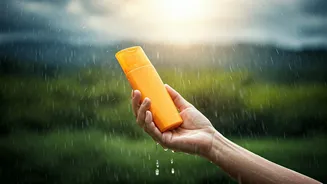
ultraviolet (UV) radiation. [14] In fact, studies show that up to 80% of UV rays can penetrate clouds and reach your skin. [4, 5, 22] There are two main types of rays to consider: UVB, which are responsible for immediate sunburn, and UVA, which penetrate deeper. While clouds can filter some UVB rays, they do very little to stop the more insidious UVA rays. [4, 23]
UVA: The Silent Damager in Monsoon
UVA rays are the primary reason sunscreen is non-negotiable, even during a downpour. Accounting for about 95% of the UV radiation that reaches us, UVA rays are present with consistent intensity throughout the year, regardless of the season or weather. [4, 5] They can penetrate not only clouds but also glass, meaning your skin is exposed while driving or sitting near a window on a gloomy day. [4, 17] This type of radiation is a major contributor to premature ageing—breaking down collagen and elastin, which leads to wrinkles, fine lines, and sagging skin. [3, 4] It also triggers hyperpigmentation and can intensify dark spots, undoing the hard work of your skincare routine. [3, 14]
The Humidity and Water Factor
Monsoon weather introduces another challenge: humidity. High humidity and the associated increase in sweat can compromise the effectiveness of your sunscreen. [2, 6, 7] Moisture can dilute the product and cause it to break down faster, creating an uneven protective film on the skin. [2] This makes your skin more vulnerable. Furthermore, water from rain doesn't protect you; it can wash away your sunscreen and even slightly magnify UV exposure. [3, 10] For this reason, dermatologists strongly recommend using water-resistant formulas during the monsoon to ensure your protection remains stable and effective against sweat and rain. [11, 12, 13]
Choosing Your Monsoon Sunscreen Shield
Not all sunscreens are created equal, especially for the unique conditions of an Indian monsoon. Dermatologists recommend looking for a 'broad-spectrum' sunscreen, which protects against both UVA and UVB rays. An SPF of 30 is the minimum, but for India's climate, SPF 50 is often advised for better protection. [9, 12, 18] The texture is equally important. In high humidity, heavy creams can feel sticky and clog pores. [19] Gel-based, fluid, or lightweight lotion formulas are ideal as they absorb quickly without leaving a greasy residue. [9, 15, 18] Look for labels like 'non-comedogenic' (won't clog pores) and 'water-resistant' to ensure comfort and durability. [15, 19]
Application is Everything: Making It Last
To get the most out of your sunscreen, apply it about 20-30 minutes before stepping out to allow it to form a protective layer on your skin. [16] Be generous with the amount—most people apply too little. A good rule of thumb is enough to cover all exposed skin, including your face, neck, and ears. During the humid monsoon season, reapplication is crucial, especially if you've been sweating or got caught in the rain. Even water-resistant sunscreens need to be reapplied. If you're outdoors for an extended period, aim to reapply every two to three hours. [20] For reapplication over makeup, powder or spray SPFs can be convenient options. [13]