


What Are Living Root Bridges?
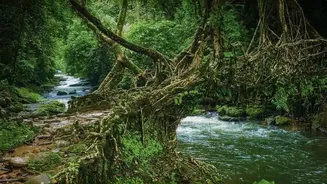
Deep in the lush, rain-soaked valleys of the Khasi and Jaintia Hills, a unique form of natural engineering exists. For generations, local tribes have guided the aerial roots of the Ficus elastica, or rubber fig tree, across rivers and gorges. Using hollowed-out
betel nut trunks to direct their growth, these roots are woven together over 15 to 30 years to form sturdy, living structures. Unlike concrete or steel, these bridges get stronger with age, some lasting for hundreds of years and capable of holding dozens of people at once. They are a testament to a harmonious relationship between humans and nature, built to withstand the region's intense monsoons.
The Classic Trek: Nongriat's Double-Decker Bridge
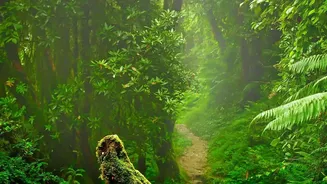
The most famous of these natural wonders is the Umshiang Double-Decker Root Bridge in Nongriat village. This unique two-tiered structure is the ultimate prize for most trekkers. The journey begins from Tyrna village, a short drive from the town of Cherrapunji (also known as Sohra). From Tyrna, the trek involves a challenging descent of approximately 3,500 stone steps into the valley. The path, which takes about two to three hours each way, leads you through dense forest, past smaller root bridges, and across swaying suspension bridges over turquoise river water. While demanding, the trek itself is a core part of the unforgettable experience.
Backpacker Budgeting: Costs and Stays
Meghalaya can be surprisingly budget-friendly. The trek to Nongriat itself has minimal costs, with small entry fees for the village and bridges that support community maintenance. For backpackers, the real savings come from accommodation. Nongriat village offers several basic homestays run by local families, with prices often ranging from ₹500 to ₹900 per night. These stays are simple, often with shared bathrooms and no WiFi, but they provide clean lodging, fresh Khasi meals, and an authentic experience. Staying overnight is highly recommended; it allows you to see the bridges in the quiet hours of the early morning or evening, free from the crowds of day-trippers. Shared taxis from Shillong to Sohra are also an economical way to travel.
Beyond the Famous Trail
While the Nongriat trek is iconic, it's not the only option. For those seeking solitude or a less strenuous walk, other bridges await. The Riwai Root Bridge, located near Mawlynnong (often called Asia's Cleanest Village), is very accessible with just a short, flat 15-minute walk. This makes it perfect for those short on time or not prepared for a major trek. For the more adventurous, trails to other, less-visited bridges can be found. Villages like Rangthylliang offer a chance to see these marvels without the crowds, though it may require hiring a local guide to navigate the paths.
Essential Tips for Your Trip
Proper preparation makes all the difference. The best time to visit is during the drier winter months from October to May, as monsoon rains can make the stone steps dangerously slippery. Sturdy trekking shoes with good grip are non-negotiable. Pack light, but include essentials like a raincoat for unpredictable showers, a water bottle, energy snacks, and a power bank, as electricity in Nongriat can be unreliable. Hiring a local guide (around ₹500-₹800) is a great way to support the community and gain deeper insight into the forest and Khasi culture. Finally, remember to start your trek early to make the most of the daylight and enjoy the cool morning air.