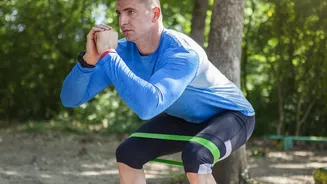







Looking for a single exercise that builds power, improves balance, and enhances mobility? The walking lunge is a dynamic movement that strengthens your entire lower body and core, making it a highly efficient addition to any fitness routine.
What Are Walking Lunges?
Unlike a static
lunge where you return to the starting position after each repetition, a walking lunge involves continuous forward movement. You step forward into a lunge, and instead of pushing back, you bring your rear foot forward to begin the next lunge. This creates a flowing, 'walking' motion that challenges your muscles, balance, and coordination in a way that stationary exercises do not. It's a functional exercise, meaning it mimics movements used in daily life, like climbing stairs or simply walking, making your body stronger and more resilient for everyday activities.
The Core Benefits: Strength, Stability, and Coordination
The walking lunge is a compound exercise, engaging multiple muscle groups simultaneously. The primary muscles worked are the quadriceps, hamstrings, and glutes. Your calves, adductors, and core muscles also play a crucial secondary role, working hard to stabilize your body throughout the movement. This constant stabilization is what makes the exercise so effective for improving balance and coordination. Each step is a controlled 'fall' that your body must catch, training your brain and muscles to work together to keep you upright and steady. This process not only builds raw strength but also corrects muscle imbalances between your right and left sides, as each leg works independently.
A Step-by-Step Guide to Proper Form
Executing the walking lunge with correct form is crucial for maximizing benefits and preventing injury. Start by standing with your feet hip-width apart and your torso upright. 1. Take a controlled step forward with your right leg, about two feet or a comfortable stride length. Plant your right foot firmly on the ground. 2. Lower your hips until both knees are bent at approximately a 90-degree angle. Your front thigh should be parallel to the floor, and your front knee should be aligned over your ankle, not drifting past your toes. 3. Your back knee should hover just above the ground without touching it. Keep your chest up and your core engaged to maintain a straight spine. 4. Push off your back (left) foot and drive through the heel of your front (right) foot to propel yourself forward. 5. Swing your left leg forward to step directly into the next lunge, and repeat the movement. Continue alternating legs as you 'walk' across the floor.
Common Mistakes to Avoid
To get the most out of your lunges, be mindful of these common errors: - Leaning too far forward: This often happens due to a weak core and shifts stress to your lower back instead of your legs and glutes. Keep your chest lifted and your gaze forward. - Front knee caving inward: This indicates weak hip stabilizers. Actively track your front knee so it stays in line with your foot. - Taking steps that are too short or too long: An overly long stride can strain your knee and hamstring, while a short step limits your range of motion. Aim for a stride that allows both knees to comfortably reach a 90-degree angle. - Rushing the movement: Walking lunges are about control, not speed. Moving too fast can lead to poor form, loss of balance, and potential injury. Focus on slow, deliberate movements.
Modifications and Progressions
Walking lunges are versatile and can be adapted to any fitness level. - For beginners: If you're new to lunges, master the static forward and reverse lunge first to build baseline strength and balance. When you start walking lunges, take shorter steps and don't go as deep. You can also briefly tap your back foot to the ground between steps to regain balance. - For a greater challenge: The most straightforward way to increase the difficulty is by adding weight. Hold dumbbells in each hand or a kettlebell in the goblet position. For an added core and coordination challenge, hold a medicine ball and twist your torso over your front leg with each lunge.