



The Next Eclipse: A Deep Partial Event
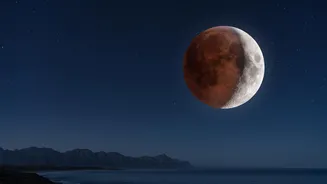
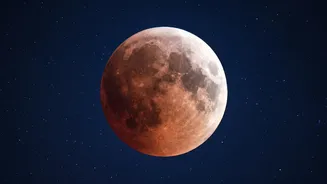
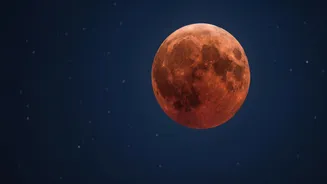
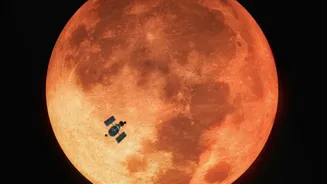
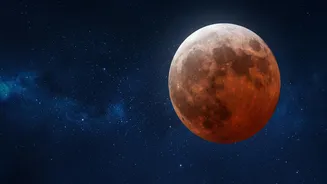
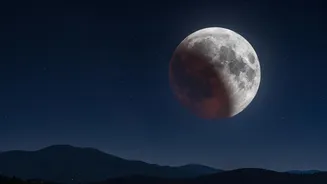
The next major event for sky-watchers is a deep partial lunar eclipse on August 28, 2026. During this event, a significant portion of the Moon will pass through the darkest part of Earth's shadow, known as the umbra. At its peak, about 93-96% of the Moon's
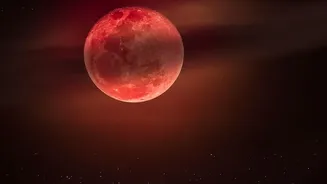
surface will be covered, giving it a dramatic, reddish appearance that closely mimics a total eclipse. This specific eclipse coincides with Raksha Bandhan, generating considerable interest in India. However, the event will occur during daytime hours in India, making it not visible from the subcontinent. The eclipse will be visible to observers across North and South America, as well as parts of Europe and Africa.
Breaking Down the Duration
So, how long will the August 28, 2026, eclipse last? The entire event, from the moment the Moon first touches Earth's faint outer shadow (the penumbra) to the moment it leaves, will last for about five hours and 38 minutes. However, the most interesting part for viewers is the partial eclipse phase, when the Moon is in the dark umbral shadow. This more dramatic phase will last for approximately 3 hours and 18 minutes. The sequence of a lunar eclipse unfolds in stages: a faint penumbral dimming, the more obvious partial phase, and then the reverse. For total eclipses, there would be a period of totality in the middle where the Moon is completely submerged in the umbra.
Why This Isn't a 'Total' Eclipse
While the August 2026 event will be impressive, it remains a partial eclipse because a small sliver of the Moon will remain outside the Earth's dark umbral shadow. Total lunar eclipses occur when the alignment is perfect, and the entire Moon passes through the umbra. These are the events often called 'Blood Moons' due to the coppery-red glow the Moon takes on. The length of totality during a total eclipse can vary significantly, from just a few minutes to a maximum of about 1 hour and 47 minutes. The entire process of a total eclipse, including the partial phases, can take a few hours from start to finish.
The Science of Eclipse Length
The duration of any lunar eclipse, whether partial or total, depends on how centrally the Moon passes through the Earth's shadow. Think of the Earth's umbra as a large, circular target in space. An eclipse where the Moon passes directly through the center of this target will be much longer than one where it only skims the edge. Earth’s shadow is also significantly larger than the Moon, which is why lunar eclipses last for hours, unlike the brief minutes of a total solar eclipse. Furthermore, the Moon’s own orbit is elliptical, not perfectly circular. When an eclipse happens while the Moon is farther from Earth (at its apogee), it moves more slowly and can spend more time in the shadow, potentially leading to a longer eclipse.
How to Watch an Eclipse Safely
One of the best things about a lunar eclipse is that it is completely safe to view with the naked eye. Unlike a solar eclipse, you don't need any special filters or protective glasses. For those in regions where the August 2026 eclipse is visible, finding a spot away from bright city lights will enhance the experience, allowing you to see the colour changes on the lunar surface more clearly. While no equipment is necessary, using a pair of binoculars or a small telescope can provide a stunning, close-up view of the Earth's curved shadow moving across the Moon's craters and plains. For those in India, the only way to see this particular event will be through live streams online.