
Why Pot Size Is So Important
Choosing a pot is a balancing act. A container that’s too small will restrict a plant's growth, while one that's too large can be surprisingly dangerous. The key lies in the relationship between soil, water, and roots. A plant's roots absorb water and nutrients
from the surrounding soil. The amount of soil in the pot dictates how much moisture is held after watering. The right-sized pot provides just enough soil for the roots to access what they need without being overwhelmed. An incorrectly sized pot throws this delicate balance off, leading to common problems that can stunt or even kill a plant.
The Danger of a Pot That's Too Big
It might seem logical to give a plant plenty of room to grow, but 'over-potting' is a frequent mistake that can lead to root rot. When there is a large volume of soil that the plant's roots don't yet reach, that excess soil holds onto water for too long. The roots are unable to absorb all the moisture, creating a consistently damp, low-oxygen environment. This is the perfect breeding ground for fungus and bacteria, which can cause the roots to decay. A plant in a pot that is too large may paradoxically show signs of dehydration, like wilting or yellowing leaves, because its rotting root system can no longer effectively absorb water. Growth may also slow down as the plant puts all its energy into expanding its root system to fill the vast space, rather than producing new leaves.
The Problem with a Pot That's Too Small
On the other end of the spectrum, a plant left in a pot that's too small will become 'root-bound' or 'pot-bound'. This occurs when the roots have completely filled the container and have nowhere left to grow. Instead of spreading out, they begin to circle the inside of the pot, forming a dense, tangled mass. You might notice roots poking out of the drainage holes or creeping up over the soil surface. A root-bound plant will dry out extremely quickly because there is very little soil left to hold moisture; water may run straight through the pot when you try to water it. This lack of soil and space also means fewer available nutrients, leading to stunted growth, smaller new leaves, and a general failure to thrive.
Finding That 'Just Right' Fit
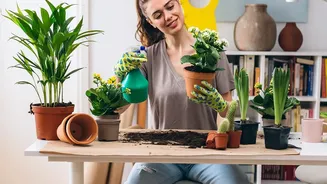
The golden rule for repotting is to choose a new container that is just slightly larger than the current one. For most houseplants, this means selecting a pot that is only 1 to 2 inches wider in diameter than the old pot. For larger, faster-growing plants, you can go up by 2 to 4 inches. To determine the right size, gently remove the plant from its current container to look at the root ball—the mass of roots and soil. The new pot should be about 1-2 inches wider than this root ball, giving the roots enough new space to expand without creating a swampy soil environment. For slow-growing plants like succulents, an upgrade of just one inch is often sufficient.
Drainage and Material Matter, Too
While size is paramount, don't forget about drainage. A pot of any size must have drainage holes to allow excess water to escape, which is a primary defense against root rot. If you fall in love with a decorative pot that lacks holes, use it as a 'cachepot' by placing a slightly smaller plastic nursery pot (with holes) inside it. The material of the pot also plays a role. Porous materials like terracotta allow soil to dry out more quickly, which is great for plants that are prone to overwatering, such as succulents. Plastic or glazed ceramic pots retain moisture longer, which can be beneficial for thirsty tropical plants but requires more careful watering habits. Considering both size and material will set your plant up for success.